
Questions About the Safety and Efficacy of the Russian Vaccine
05/10/2020 14:54:52 Analysis
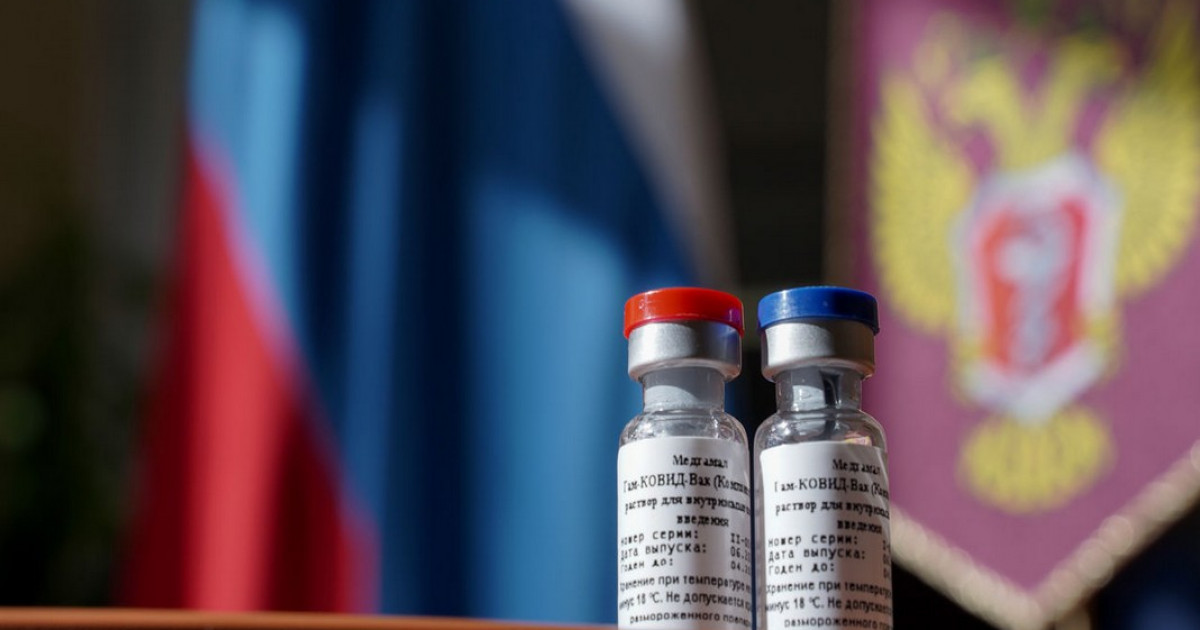
According to information from Abkhazian media, the de facto government of Abkhazia has approached Russia regarding the purchase of the coronavirus vaccine ("Sputnik V"). The intention is to acquire 15,000 to 20,000 doses. As the de facto Ministry of Health of Abkhazia announced, the Russian side is considering the request.
Russia claims the vaccine is already ready. According to Moscow's assurances, production began in September and mass vaccination will begin in October. President Putin states that the vaccine has passed all necessary trials and, what is more, has already been tested by his own daughter. He claims the vaccine is effective and enables the development of strong immunity.
In reality, however, testing of the Russian vaccine was conducted at an extremely accelerated pace. Researchers have also stated that, in order to save time, they tested it on themselves. The Russian Association of Clinical Research Organizations assessed this as a gross violation of trial principles. Since the Russian vaccine did not undergo full testing, it is characterized by a high risk of side effects and inefficacy. As Daniel Salmon, Director of the Institute for Vaccine Safety at Johns Hopkins University, states, Russia's complete omission of the third phase of required testing is a dangerous step — since it is precisely this phase in which the efficacy and safety of vaccines must be confirmed. Like Salmon, many other scientists consider the Russian vaccine to be dangerous.
The chief epidemiologist of the United States, Anthony Fauci, also has doubts about the safety and efficacy of the Russian vaccine. In his view, anyone can claim to have invented a vaccine — what matters is that its safety and efficacy be proven through trials. Fauci expresses hope that "the Russians (and the Chinese) are actually testing the vaccine before administering it to anyone." In one interview, he expressed his concerns about the vaccine openly, stating that he had heard nothing of trials demonstrating its safety and efficacy.
Denis Logunov, Deputy Director for Science at the Gamaleya Center, spoke about the registration procedure, the trial results, and vaccination plans for Sputnik. According to him, "38 people participated in each of the first and second phases, 76 in total"; "the two protocols differed in that the active substance of the vaccine was the same while the aggregate form differed"; and "volunteers for the first and second phases were selected from age groups between 18 and 60." When asked how many people would participate in the third phase of trials, he stated: "We are thinking through the final figures, but I can say that approximately 30,000 to 40,000 people will join the trials. One of the working options envisages 2,000 people participating in clinical studies to establish immunogenicity parameters, while 28,000 volunteers will participate in trials to establish epidemiological efficacy. At present, we are finalizing the protocol to ensure it meets all standards, including international ones."
In response to the question of why the third phase would only be conducted after provisional registration — the very basis of criticism of the Russian vaccine — Denis Logunov stated: "The idea and purpose of provisional registration is to allow risk groups to access the vaccine, thereby protecting people from the severe consequences of infection and death. At the same time, the use of the vaccine will be strictly monitored and provisional registration can be suspended at any time. The purpose of the third phase is large-scale evaluation of safety and efficacy on a large number of volunteers within controlled trials." And in response to the World Health Organization's statement that "no one has seen any scientific studies," Logunov replied that "we have an established practice in Russia — the results are first reviewed by experts of the Ministry of Health." "The objective was to produce a safe and effective vaccine in the shortest possible time — and that was accomplished. After that, one can translate the data into English and write scientific papers."
The Gamaleya Center explains that "in September, the results of full animal trials — on primates, Syrian hamsters, and transgenic mice, in which the vaccine showed 100% efficacy — will be submitted for publication, while the first results of post-registration clinical trials already underway, involving 40,000 volunteers — these being the third-phase trials — will be published in October and November."
The results of the first and second phases were indeed published in The Lancet. However, both the publication of the official results and the above-cited interview with Gamaleya Center Deputy Director Denis Logunov resembled more of a confession than a vindication. Through these, Russia confirmed that it had registered the vaccine before the completion of third-phase trials — the very trials that were supposed to confirm its safety and efficacy. Moreover, in the first and second phases, the vaccine was tested on only 76 volunteers. By comparison, the British Oxford vaccine was tested on 1,077 people in its first and second phases. Accordingly, at this stage there are more questions than answers about the safety and efficacy of the Russian vaccine. It should also be noted that Russia has been promoting its vaccine with considerably greater zeal than it has been testing it.
The Director of Georgia's National Center for Disease Control, Amiran Gamkrelidze, draws attention to the fact that the Russian vaccine has not yet undergone large-scale third-phase trials — at least, the results of such trials have not been published. He is therefore skeptical about the Russian vaccine: "There is a skeptical attitude toward this vaccine in the international scientific press. The results of neither the first and second phases nor, especially, the third phase of trials have been published." And the Deputy Director of Georgia's National Center for Disease Control and Public Health and Head of the Lugar Center, Paata Imnadze, similarly states that "the trials of this vaccine were conducted at an extremely accelerated pace, and unfortunately he can say nothing about its quality, the trial results, the phases, or the number of subjects."
Koba Lachashvili