
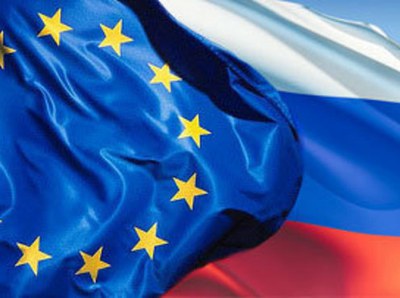
Why Europe, and Not Russia?
20/10/2020 16:22:36 Myth vs Reality
For several months now, against the backdrop of the coronavirus pandemic, I have been trying to leave home only when necessary. Once every seven or eight days I stock up on groceries for the week, along with other essentials — medical masks and disinfectant, of course — then return and shut myself back in my "fortress" for another week. Unplanned excursions I allow myself extremely rarely. And having no car of my own, on those rare occasions I have to use taxis.
Tbilisi taxi drivers are a special category of citizen. Of course, not all of them are equally talkative or courteous — and recently, in this coronavirus era, some have started charging quite serious prices. But in general I have always enjoyed talking with them. Interacting daily with large numbers of the most varied clients, they keep, as it were, their finger on the pulse of the country — they know everything about everything (not always correctly, not always from reliable sources, but still) and they certainly have a sense of the mood in society. So even if a driver turns out to be not particularly talkative, I try to start a conversation myself.
My most recent trip turned out to be a special one — for the first time I encountered a taxi driver who was outraged that the Georgian traffic police don't take bribes. "I've been here almost six months now. Before that, I was driving around Russia for years. I fled Moscow when the pandemic hit hard. So the other day we had a little get-together with the boys — had a few drinks, chatted, then I got in my car and headed home. I was already in the courtyard of our building — I'd got out and was standing next to the car — when a patrol car pulled up. They checked my documents and held out this thing — you know, for checking alcohol. I say to them: guys, I only had a little, and besides, you showed up when I was no longer behind the wheel, so proving a violation won't be easy. Take these 100 lari and we'll go our separate ways quietly. But no — they wouldn't take it, not for anything! Tell me — why create problems for each other like that for no reason? Back there in Russia it's not like this; everything is simpler, and you know, as far as I'm concerned it's better there: if you violate something, you pay a bribe — and that's also a form of punishment in its own way: pay out of your own pocket twice and you'll wise up without all the stress of dealing with the law. And it's good for the traffic cop too — he's human, he has a family to feed."
Then he smoothly moved on to nostalgia for the Soviet past — the plane ticket for the Tbilisi-Moscow flight at 37 rubles, how "Russian beauties worshipped Georgian men," how "Georgians were kings in the Union," how "apartments were given out for free and heating in the buildings was free, and the food was much better quality and cost next to nothing." He reminisced with pleasure about how "generally in Georgia, when relations with Russia were good, life was great" — you could, for instance, "make good money shipping diluted wine to Russia, or selling carbonated water as Borjomi."
As for present-day Georgian life, it turns out he sees it as difficult and gloomy. "Yes, there's no 'iron curtain' now — you can go wherever you want, see the world, show yourself. Yes, the variety of goods in the country is enormous, there's a wide choice now and no queues. You can even export your own products to Europe and study at universities there, then come back and get a good job, or even a senior position. But all of this comes with strict rules of law and order, compliance with all norms, diligence, and hard work. Now tell me — are we Caucasians that kind of people? Is it in our blood to confine ourselves to rules, to be law-abiding in everything, and to labor till we sweat? I don't believe it! And don't tell me that before, since state laws weren't observed, there was lawlessness: every Tbilisi neighborhood had its 'thieves-in-law' and they regulated everything perfectly well. Back then even idiots graduated from university — any family could save up money to grease the right palm and get their child into an institute, so no one was left without a diploma. The same with doctors: were our doctors bad? They worked for bribes, yes — but what were they to do? They had grueling work and families to feed. And if you had 'big' people among your acquaintances back then, life was absolutely wonderful. But now what? Not a single official acquaintance will risk helping someone get a job somewhere — they're afraid of being accused of nepotism. It's all unfamiliar, it's not for us. Relations between people used to be different. Personally, it's easier for me in Russia — almost everything is like it used to be there: want to live, learn to hustle; and you can sort things out with the traffic cops without any problem, and with just about anyone."
I did not argue — there was little time left, as we were already approaching the destination. And so, pretending to be completely ignorant of present-day Russian life, I simply asked him a few questions: "And how things stand there in Russia, under such 'rule of law' — what is the situation with human rights? Do you feel protected there? For instance, if someone stronger or more influential violates your rights in some way, would you be able to have them restored in court? Is there any trust among ordinary citizens in state institutions? Do people believe in justice? Do they feel that they matter to those who govern them, to the country?" The answer was brief: "That's a difficult one."
Each of us — wherever we may be — is free to decide for ourselves what is more valuable: the ability to settle matters with a traffic cop through a bribe, or having a guarantee of a fair court and the protection of one's civil rights and freedoms; receiving a quality education through diligent preparation — including at European universities — thereby creating the foundation for a better future, or remaining an ignorant person with a purchased diploma, hoping that some official acquaintance, unafraid of accusations of nepotism and the loss of his position, will manage to get you a job that requires no knowledge and is paid accordingly — then living in daily fear that he will be removed from his post and you will automatically lose even that job; selling Russians a liter of diluted wine for 3 lari, constantly expecting a raid by Rospotrebnazdor — often purely politically motivated — or laboring to produce quality goods and exporting them to Europe, receiving not 3 lari but 7 to 8 euros per liter, and above all a fair and stable market; continuing to buy comparatively cheap, supposedly "ecologically pure" genetically modified products and equally health-hazardous building materials, or compelling the authorities to introduce the appropriate regulations — as in Europe — and having the guarantee that by paying a little more in the shop, you are creating no risk to your health; being "kings" in a country of lawlessness — both violating the law yourselves and living in constant risk of having the law violated against you — or being law-abiding citizens with clear guarantees of the protection of your own rights and freedoms.
In all of these cases, to the left of the word "or" stands what we all observe today in Russia and the other countries that have taken it as their model; and to the right stands what "putrid" and "decaying" Europe has long been built upon. Of course, problems arise there periodically too — as in any other part of the world. But it is precisely these cornerstone principles, founded on the rule of law and the primacy of the human being with all their rights and freedoms, that make it possible to meet every challenge in such a way that the path of development continues — without stagnation and certainly without sliding backward. This is precisely what allows Europe to remain a space for the peaceful and safe coexistence of representatives of different ethnicities, cultures, traditions, faiths, and views.
Yes, the Kremlin's propaganda and disinformation machine is powerful — but in the age of the internet, each of us can easily, if we choose, understand reality and make our own informed choice.
The residents of the territory under official Tbilisi's control have already made their informed choice. Despite periodically recurring problems, the taste of freedom — once genuinely experienced — as well as the sense of being protected, cannot be taken away. And for this reason, the people will never again allow any government to drag them back into the past.
Ekaterine Tsanava
The material was prepared as part of a joint project of the Accent news agency and the non-governmental organization GRASS, implemented with the financial support of the Embassy of the Czech Republic in Georgia.