
Are Western Liberal Values Foreign to Abkhazia?
22/10/2020 09:09:47 Myth vs Reality
Recently, in conversation with Abkhazian colleagues, I found yet another confirmation that the anti-Western propaganda which is quite strong even among us — on the territory under Georgian government control — essentially "rules the roost" in Abkhazia. The "categorical unacceptability" of Western values was being expressed in this instance by representatives of the media — that is, the most informed, and therefore least susceptible to propagandistic disinformation, segment of Abkhazian society. But perhaps there is nothing to be surprised about: after all, we are speaking of a region where the primary sources of information are Russian-language media, social networks, and political, civic, and other organizations and figures who, willingly or not, advance the interests of the "strategic partner" in Abkhazia.
And some of the anti-Western narratives mentioned by my Abkhazian colleagues turned out to be, as they say, painfully familiar: we hear all of this in Tbilisi too — for example, on the television channel "Obiektivi," from the mouths of certain politicians, public figures, clergy, representatives of the cultural sphere, parties such as the Alliance of Patriots of Georgia — already well known in Abkhazia from a recent scandal — and organizations operating under a pseudo-patriotic "banner." We read it in newspapers, on social media, on numerous propaganda websites that are periodically blocked by Google and Facebook, only to return to the internet space after a while and resume their harmful activity.
Pursuing their goals, they employ the most varied methods — from outright lies to more artfully "packaged" information drops, sometimes consisting of entirely real facts but presented to society stripped of context, mixed with false information, or offered in the form of "expert assessments" and "analysis" — which, incidentally, is one of the favorite propaganda techniques of "Sputnik," well known in Abkhazia. And in the latter case, even the most vigilant reader or listener may find it difficult to fact-check the information.
These questions have already been studied quite thoroughly in Tbilisi. A wealth of findings from competent research is available in the public domain. And today I would like to acquaint our Abkhazian readers with some of these findings — in the hope that, drawing on Tbilisi's experience, they might wish to exercise a little more vigilance, rather than immediately taking at face value everything they read or hear about the West and its liberal values.
Broader Plans and Designs
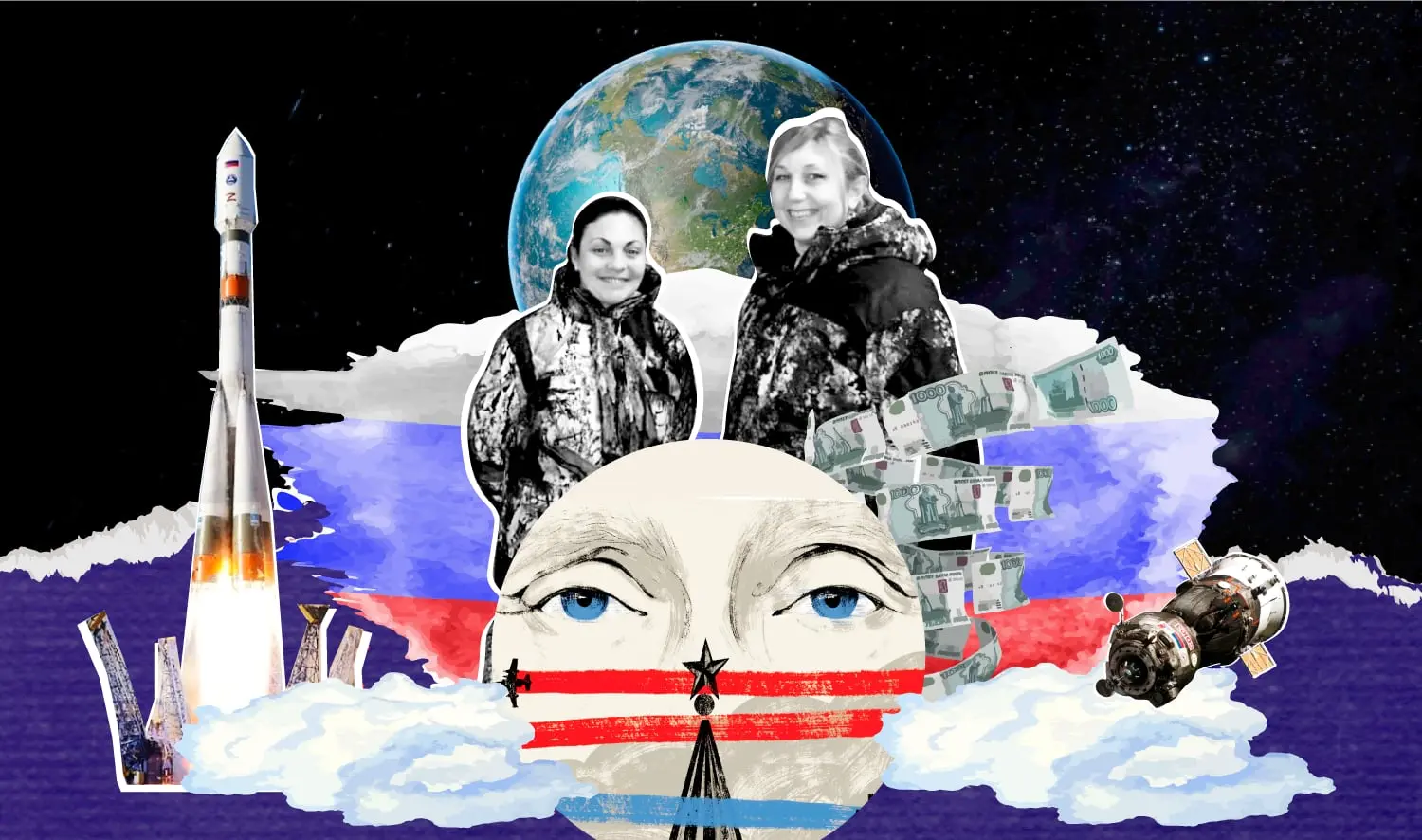
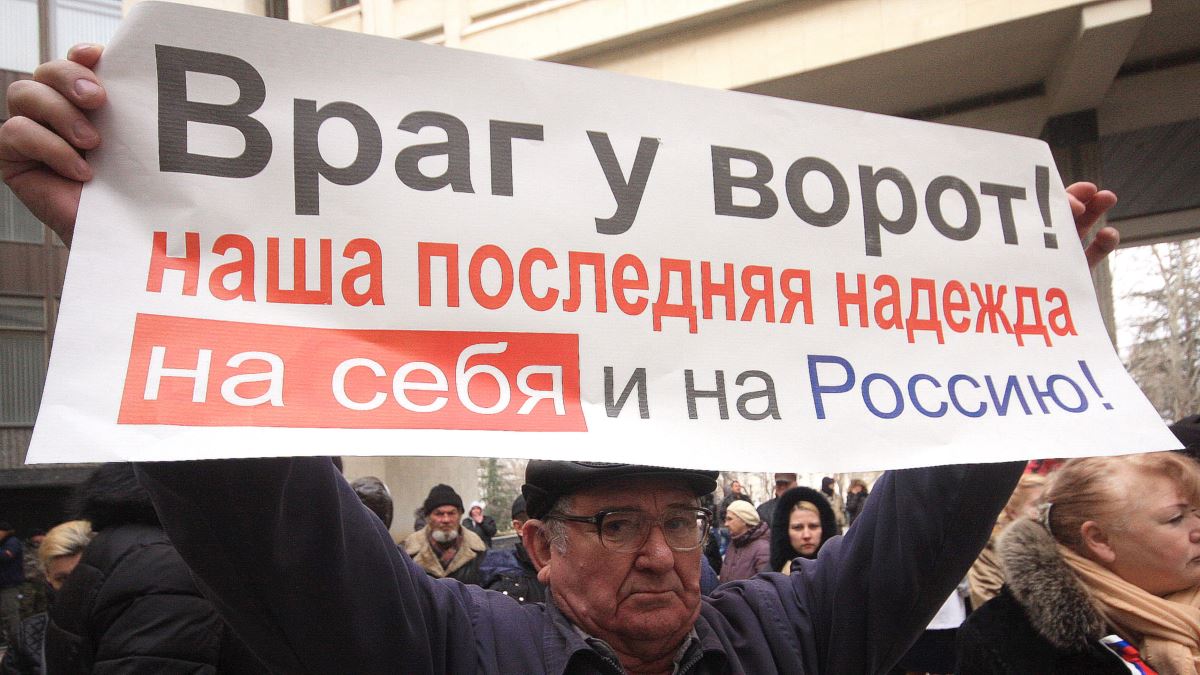
Disinformation and propaganda are, as a rule, part of much broader designs. Russian disinformation and propaganda campaigns, for instance, are conducted across the world in order to advance Moscow's foreign policy objectives and popularize pro-Russian views and sentiments. In Georgia's case, their primary goal is to slow the country's Euro-Atlantic integration process and bring pro-Russian political forces to power.
The specific objectives correspond to this goal: to undermine trust in democratic institutions, in Georgia's Western partners — the United States and the European Union — and their various structures; and simultaneously to present Russia and the Eurasian alternative to Georgian society as "salvation."
The mechanisms are as follows: distorting and demonizing Western values — presenting them to society as "incompatible with" or even "a threat to" Georgian identity; portraying European and Euro-Atlantic integration as "a threat to the country's security and territorial integrity"; belittling the significance and results of Georgia's cooperation with Western partners; disorganizing and demoralizing society by sowing chaos, discord, and intolerance — including toward representatives of various minorities; and mobilizing a wide variety of local groups — media outlets, NGOs, "useful idiots," political forces, clergy, and others — with the aim of influencing the political agenda.
Targeting Different Population Groups
Thematically distinct narratives are crafted for different segments of the population. For those over 55, for instance, the main emphasis is on glorifying the Soviet past — often through blatant distortion of historical facts — while simultaneously demonizing current democratic institutions. The primary propaganda channels here are the traditional ones: television and print media. For the younger generation, the emphasis falls on critiquing liberalism, spreading disinformation about the "stagnation" of the Western order, portraying Western institutions as "weak" and "useless" while simultaneously "threatening Georgian identity." In this case, social media is the primary source.
Separate and active work is conducted on the consciousness of ethnic minority representatives. In regions of compact Armenian and Azerbaijani settlement — Samtskhe-Javakheti and Kvemo Kartli respectively — anti-Western propaganda, taking advantage of the fact that most of the population does not speak the state Georgian language and therefore draws its information primarily from Russian-language sources, presents Georgia's European and Euro-Atlantic integration as a "threat" to their security. In the case of ethnic Armenians, this takes the form of the disinformation narrative of "Turkish expansion," the alleged danger of the Treaty of Kars, and the "invasion of the Turkish army into Georgia in the event of the country's accession to NATO."
Another direction is work with specific social groups. An example is the active disinformation campaign targeting residents of Adjara — the region bordering Turkey. They too are systematically frightened with the "danger of Turkish expansion in the event of NATO membership" — with the convenient omission of the fact that Turkey is itself a member of the North Atlantic Alliance. And of course, Russia is presented as the "only savior" from this threat.
In this way, anti-Western propaganda and disinformation exploits the "weak points" of various groups to capitalize on its narratives. And Abkhazia's population — which also draws its information primarily from Russian-language sources — would do well to fact-check it more frequently.
Why Russia?
You might ask: where do the claims come from that Russia is the primary "puppetmaster" behind anti-Western disinformation and propaganda in Georgia? I will answer, relying solely on facts. 1. Far too often, the ideas, initiatives, and narratives of Georgian anti-Western figures coincide exactly with the Kremlin's messaging. 2. There are concrete facts proving that such figures and organizations are financed from Moscow. For instance, an entire investigation was recently published documenting the political and financial ties to Russia of the Alliance of Patriots.
Moreover, in recent years various ultranationalist organizations have become more active in Georgia — organizations with direct ties to Russian state funds such as the Yevgeny Primakov Russian-Georgian Public Centre, the Alexander Gorchakov Public Diplomacy Support Fund, the Russkiy Mir Foundation, and others. The latter was established in 2007 by presidential decree of the Russian Federation, as was the Gorchakov Foundation in 2010. Accordingly, both are financed from the Russian state budget.
The Primakov Foundation, having formed a "National Forces Agreement" in Georgia and announced a "fight against sodomites," actively cooperates with the ultranationalist movement Georgian March — which in the summer of the current year became a political party and intends to participate in the upcoming parliamentary elections.
This organization — created four years ago as a movement, known primarily for its noisy demonstrations and a whole series of incidents — initially demanded the tightening of migration legislation and the "expulsion" from the country of international NGOs, and has more recently focused on the above-mentioned anti-Western narrative of the "corrupting influence of the West." In connection with this, movement representatives have organized protest actions, fights, and attacks on human rights activists — including women. And at an earlier stage — before becoming a movement — they took an active part in the extremely dangerous events of May 17, 2013, when several thousand Orthodox activists and nationalists attacked a small pro-Western human rights demonstration.
Police were forced to evacuate the participants of that demonstration, many of whom sustained serious injuries. The incident was condemned by both the Georgian authorities and many international organizations.
What Western Liberal Values Actually Represent
In reality, one of the fundamental properties of Western civilization is its drive toward constant renewal and self-improvement based on a critical approach to its own experience — past and present. Its cornerstone principles are: 1. The incontestable supreme value of the human being — the individual, every individual member of society — with all their rights and freedoms; 2. The highest responsibility of every citizen before society and the state; 3. The rule of law and the complete equality before it of all without exception — guaranteeing the harmonious fulfillment of both preceding principles.
It is for precisely this reason that any law-abiding member of such a society — regardless of ethnic, religious, gender, social, or other affiliation; regardless of political or any other orientation; regardless of personal views — can, when approaching a court if necessary, be confident of a fair verdict and feel protected, even when the opposing party is the state. It is precisely this value system that year after year ensures the stable and sustainable development of economies — with all the benefits that flow from this — as well as of societies and states as a whole, despite the various problems that arise in the West just as they do everywhere else in the world. And it is precisely thanks to this value system that everything which Abkhazians who have visited the West even once find so attractive has been created.
And now consider: are Western liberal values genuinely foreign to Abkhazia? Or is their "unacceptability" and "corrupting nature" simply what Russia is compelling you to believe?
Ekaterine Tsanava
The material was prepared as part of a joint project of the Accent news agency and the non-governmental organization GRASS, implemented with the financial support of the Embassy of the Czech Republic in Georgia.