
Abkhazia 2021: The Feast During the Plague Continues
08/01/2021 07:29:48 Conflicts
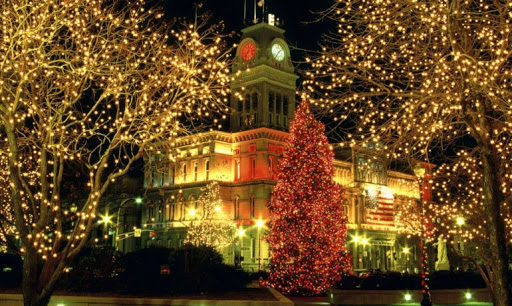
Abkhazia welcomed the New Year of 2021 with an outwardly rather festive appearance. But despite the abundance of attractions, neon lights, and incredibly beautiful Christmas trees that had, as if by magic, appeared only in the republic's most prosperous districts, none of this managed to lift the despondent mood of residents. And then, at the most inopportune moment, came reports from the operational headquarters that poured even more tar into the already bitter life of Abkhazian society — between December 30th and January 4th, twelve people died of coronavirus in Abkhazia. And while some, welcoming the Year of the Ox, were skating on an ice rink in the center of the Abkhazian capital, others were mourning compatriots who had died in hospital.
The ice rink — about which the local authorities had spoken at such length and with such enthusiasm — cost the capital's budget nearly three and a half million rubles. Part of the city assembly of Sukhumi's deputies opposed so expensive an acquisition, arguing that during a pandemic that has already claimed the lives of 129 Abkhazian citizens, it was not only impractical but criminal. With that money, the deputies argued, "you could buy two ambulances" — which the republic currently needs far more than a short-lived entertainment.
"The country is in a pandemic, you build an ice rink, you gather children, you spread infection — it would have been far more just and right to send that money to COVID patients," noted deputy Mizan Zantariya.
Despite all the logical arguments and reasoning put forward by some local deputies, the authorities assured the public that all safety measures would be observed at the rink — and a couple of days later went ahead and opened it anyway. Shortly afterward, social media was flooded with photographs and videos demonstrating that no mask regime was in fact being observed. Moreover, people — having forgotten the need for social distancing — were crowding in enormous queues by the rink. And no one was overseeing any of this.
In general, Abkhazia spent the holidays exactly as it did in pre-pandemic times — in cafes and restaurants which, despite all existing prohibitions, operated at full capacity. And why not? The republic's legislation provides for no punishment whatsoever for violations of the established quarantine measures; there are no fines for the absence of a mask in public places. And the very officials of the agencies whose duty it is to monitor compliance with those prohibitions were themselves indulging themselves in the most fashionable and expensive dining establishments.
Between December 30th and January 4th, more than 1,300 people were tested in Abkhazia. COVID-19 was confirmed in 357 citizens during those days. The total number of cases stands at 9,182, of whom 7,027 have recovered. There are 230 patients currently in hospital.
As the statistics show, the pre-holiday and holiday period triggered yet another surge in infections — which, in the opinion of Abkhazia's chief sanitary physician, is directly connected to the disregard of the established restrictive measures. "All medical recommendations have been violated. We warned that holding corporate events and other mass holiday gatherings could lead to new outbreaks. But the population did not hear us," noted Lyudmila Skorik.
Long before the holiday period began, the administrations of Abkhazia's cities and districts one after another banned banquets and corporate events. But this prohibition somehow took effect only with regard to the republic's traditional holiday program — canceling concerts, entertainment events, and closing theaters. Everything else, despite the stern directives of the authorities and their loud declarations of punishment, continued operating at full strength.
The already dire situation with the spread of the epidemic is being compounded by power and water outages. The rolling blackouts of before are gone, but various districts of Abkhazia regularly go without water and heat for many hours each day. "The feeling is that we have returned to the first post-war years — now no electricity, now no water. And the authorities tell us to be patient. And so we live, no longer hoping for anything," our interlocutor Tariel shared.
On the eve of the New Year it became known that President Aslan Bzhania and Prime Minister Alexander Ankvab had contracted coronavirus. According to official statements, they are experiencing a mild course of illness without complications — a situation shared by a great many people treating the insidious infection at home. The difference is that their treatment costs them a considerable sum, unlike the government officials being looked after at state expense. And those without serious means and substantial savings are forced to cure themselves with old methods — drinking herbal teas, decoctions, and a host of other ineffective remedies from traditional folk medicine.
And what of Abkhazia's Ministry of Health? It reports daily on the receipt of various medical assistance, medications, and much else of value. According to the Minister of Health, in the initial phase more than 68 million rubles were allocated to healthcare needs from the budget and with humanitarian assistance factored in. "To date, 141 million rubles in budgetary funds have been directed to the fight against coronavirus infection," announced the Minister of Health of Abkhazia. But all this money has, it turns out, been "poured down the drain" — since not a single prohibition is genuinely functioning in the republic, and the population ignores all recommendations.
Undeterred by any official prohibitions, doctors are already crying out for help before the entire world; the healthcare system is drowning; medical personnel are collapsing from exhaustion. But beyond their usual appeals to observe all necessary precautions to avoid infection, doctors are powerless to affect the situation. They have no such authority. And the government — which not only can, but must and is obliged to respond — maintains its silence.
Abkhazia, having celebrated the arrival of the New Year 2021 with considerable exuberance, has temporarily gone quiet — either recovering from the festivities, or preparing for new ones, since Old New Year is still ahead.
One way or another, a situation that had been at least partially under control now threatens to turn into a catastrophe that could lead to even greater deaths from a severe and dangerous disease.
And what do we, the population, think about all of this? Nothing, in fact. We continue to live as in that song about fearless rabbits — we don't care about anything. We continue to feast lavishly in restaurants, stroll along the embankment, attend weddings and birthdays. And of course, we do not forget to attend funerals. Most importantly, we do all of this of our own free will — having forgotten and shown utter disregard for the lives of our nearest and dearest.
And the authorities continue to indulge us — still not daring to introduce fines and serious punishments for disobedience, for violations of the very prohibitions they themselves imposed.
And so we live, no longer hoping for anything. For any assistance will continue to be futile as long as we maintain this negligent attitude toward our own lives and the health of our loved ones.
Astanda Bgamba
The text contains place names and terminology used in the self-proclaimed Republic of Abkhazia. Opinions expressed in the publication reflect the views of the author and do not necessarily represent the position of the editorial board.