
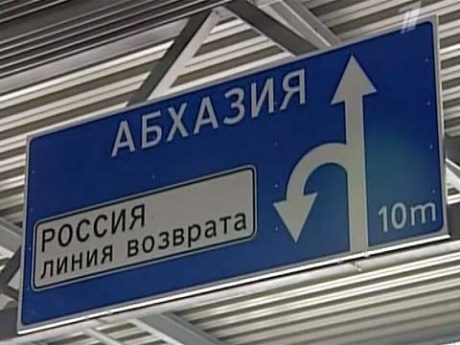
Abkhazia: Friends-Turned-Foes and the "Enemies" Invented by a "Friend"
15/01/2021 09:19:38 Conflicts
After the difficult year of 2020 in every respect, the new year of 2021 has not begun particularly brightly for Abkhazia either. The coronavirus pandemic, and the political, economic, and energy crises of the past year all remain in force — and after a week of forest fires, serious problems in the environmental sphere can now also be predicted with high probability.
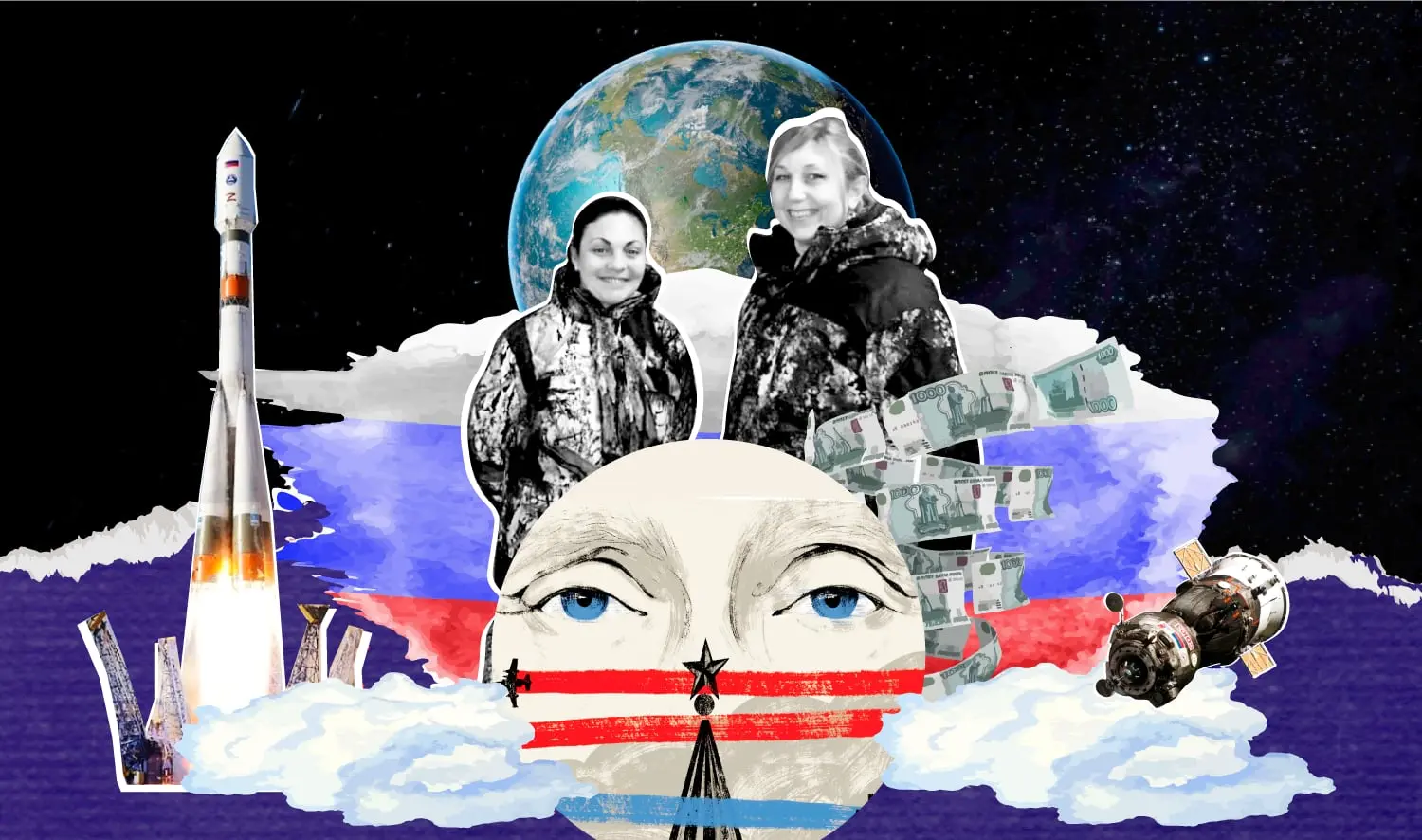
To summarize the current state of affairs: problems are growing like a snowball, Abkhazia has no resources of its own to resolve them, and the sole "friend" and "strategic partner" — Russia — has shown its true face and begun behaving like an adversary, hemming Abkhazia in from all sides in order to drag it directly into the Russian Federation under the cover of some "new Union State" or something of that sort.
I can say in advance that the chorus of Kremlin trolls on social media will now begin howling: "All of this is Georgian propaganda"; "Russia is in fact Abkhazia's only friend and partner"; "If it were not for Russia, Georgia would have long since invaded Abkhazia to wipe it off the face of the earth once and for all."
Whether to believe me or them — that is for the reader to decide. I merely propose thinking the following through: would a friend and "partner number one" — as Russia's president V. Putin described his country at a recent meeting with the Abkhazian leader — spend years hooking a friend on its own financial drip, causing him to forget the need to develop and grow strong independently, only to impose a financial blockade on him at the most critical moment X? Could a friend and partner number one, having cut off funding, close the border during the tourist season to deprive Abkhazia of one of its few sources of its own income — and to this I will add the subject of Abkhazian citrus fruits rotting in trucks at the border by the "kind" will of "partner number one"? Could a friend impose a medical blockade on another friend in the thick of a coronavirus pandemic — and then, when Abkhazia manages on its own to negotiate with Turkey for the purchase of everything necessary to fight the coronavirus in exchange for timber, go and burn the forests — in all likelihood deliberately, dispatching several Russian citizens to Abkhazia for that very purpose, citizens who have already been caught but caught by the Russian side — after crossing from Abkhazia into Russia — meaning it will be Russia that "deals with" them, or rather does NOT deal with them — and then, against the backdrop of an already raging fiery apocalypse, refuse a friend the assistance of its aircraft? Would a friend use the most underhanded methods to force a friend to sell him everything of greatest value — land, real estate, strategic energy and other assets? Would a reliable partner dictate to his friend terms of operation that are advantageous to himself but ruinous to Abkhazia — terms set out in the "Program for the Formation of a Common Social and Economic Space" sent from Moscow? Anyone who has not yet read it may do so on the "president's" official website. The list of questions could go on for a long time — but I think even this is more than sufficient to understand that this is not friendship and not partnership — neither number one, nor number two, nor even number one thousand. This is exploitation, enslavement, absorption. Only an adversary could behave in such a way — a real one, at that, not the invented one with which the trolls have for years been frightening Abkhazia's population with their Georgia scarecrow.
You might ask: why does Russia need this? It needs it in order to veil its own destructive actions and plans — redirecting citizens' attention from real threats to illusory ones and thereby deflecting the population's justified discontent away from itself; to head off any possible inclination or desire to look in any direction other than toward Russia — since this could interfere with the Kremlin's now barely concealed annexationist plans, set out across 45 points of that very same "Program," for the implementation of which the "friend" and "partner" has given Abkhazia a deadline of a couple of years.
It is precisely for this reason that any attempt by the comparatively new Abkhazian authorities to establish cooperation with any third party is being nipped in the bud by Moscow. It is precisely for this reason that the corrupt pro-Russian opposition, nursing its revanchist plans, reared up on its hind legs upon spotting in the "Foreign Policy Concept of Abkhazia" recently approved by Abkhazian leader Aslan Bzhania the provision that reads: "The Republic of Abkhazia allows for the possibility of creating conditions for establishing an additional format of multi-level negotiations between Georgia and the Republic of Abkhazia, within which it will be possible to discuss with the Georgian side issues of mutual interest that cannot be addressed within the framework of the International Geneva Discussions" — a provision allowing for precisely the dialogue and cooperation with Tbilisi that an Abkhazia facing a real threat of absorption by Russia so desperately needs. Watching the behavior of such an opposition, one cannot help recalling Gandhi's well-known saying: "The most dangerous enemy is not the colonizer or the occupant — but your own compatriot, fed by the occupant."
Given everything stated above, it is not difficult at all to imagine how challenging the conditions are in which Aslan Bzhania and his team are working. But the choice before them is a simple one. They can allow Moscow's faithful ally — the corrupt opposition — to take the initiative, influence the political agenda, and push through the "Program" with its ultimate goal of Abkhazia's accession to Russia. Or they can, by defending their position, defend Abkhazia itself — its right to decide for itself with whom to cooperate in order to finally begin developing independently, while preserving the shoots of democracy which, even in such a difficult period, are far more in evidence in Abkhazia than in Russia — and in doing so, create for future generations a genuine prospect of a better future.
Ekaterine Tsanava
The material was prepared as part of a joint project of the Accent news agency and the non-governmental organization GRASS, implemented with the financial support of the Open Information Partnership (OIP).