

Abkhazia: We Want to Be Like Europe, but Will Continue Drawing Closer to Russia?
19/01/2021 12:29:40 Conflicts
Freedom of thought and expression — which presupposes the individual's right to form their own convictions without obstruction, to hold them, and to express them — is the most important hallmark of a democratic state governed by the rule of law. This importance is predetermined by the fact that this freedom is a necessary precondition for the exercise of other constitutional rights of the individual — above all in the political sphere. At the same time, it is a kind of barometer of the state of society: the way it treats the views of minorities speaks to the situation with human rights as a whole. In the modern information society, the genuine exercise of freedom of thought and expression is only possible under conditions of access to the media. With the spread of the internet and digital technologies, the media have undergone rapid development. But simultaneously, attempts to control this freedom have also progressed — in the form of censorship, restrictions on access, or even acts of violence against those whose views or questions are perceived as dangerous in some way.
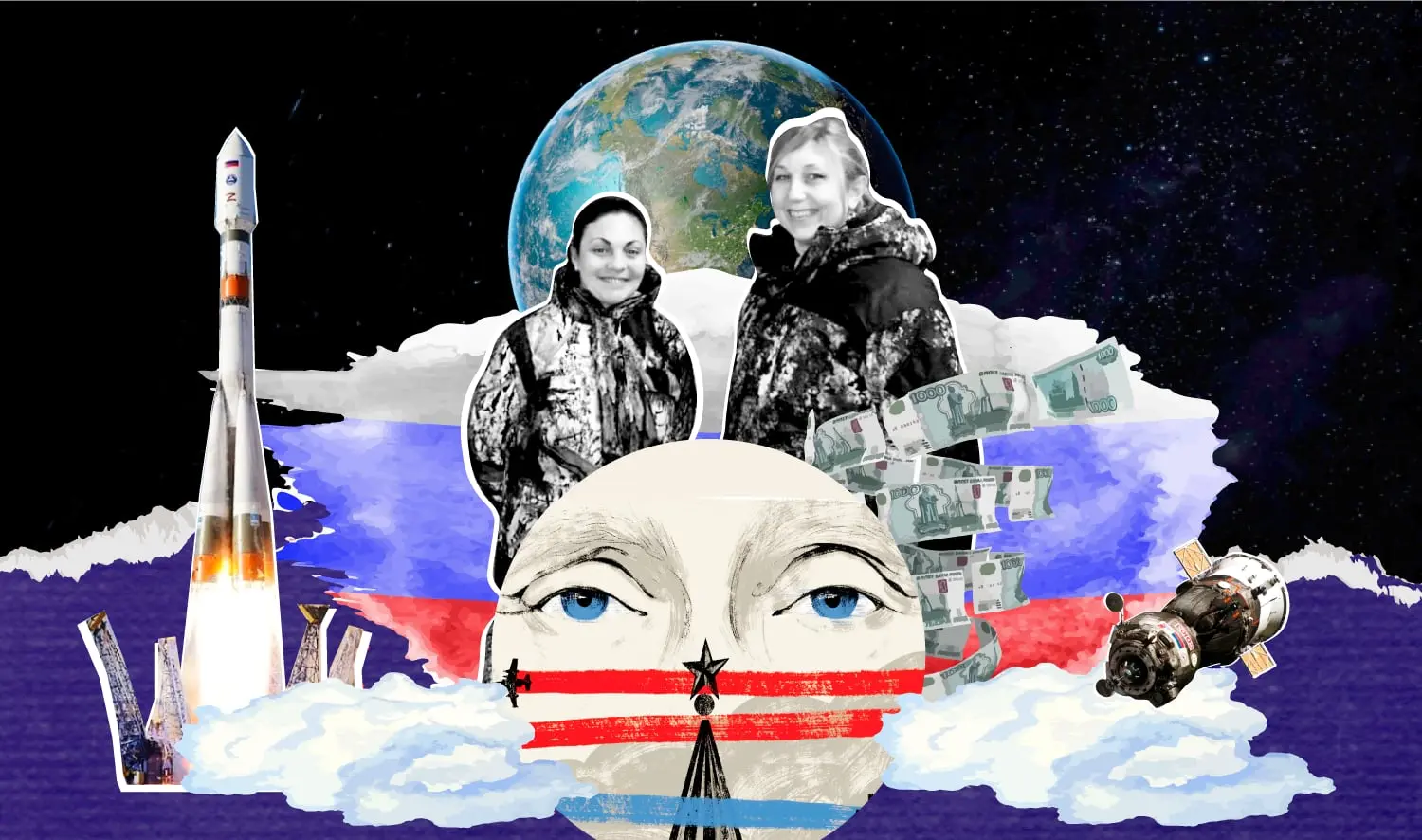
This is precisely what we are now observing in present-day Russia and in the majority of countries that have allowed Moscow to extend its influence over them. Freedom of thought and expression are enshrined in Article 29 of the Constitution of the Russian Federation. However, a whole series of laws and amendments adopted in recent years effectively removes the possibility of exercising this freedom with impunity by any media outlet, NGO, politician, or even ordinary citizen who disagrees with one or another decision of the ruling force. The State Duma has already tightened the relevant laws on several occasions, and any NGO that displeases the authorities — whether a human rights organization or a media outlet — is now subjected to what have become legally sanctioned repressions.
Just recently, for instance, a court fined a resident of Vladivostok 40,000 rubles for a recent meme reading "Robin Put. Steals from the poor, gives to the rich." And on January 12th, Roskomnadzor issued the first eight protocols under Article 19.34.1 of the Code of Administrative Offenses against media outlets recognized in Russia as "foreign agents" — all of them relating to the activities of the media corporation Radio Free Europe/Radio Liberty, which was added to the list of "foreign agent" media as far back as late 2017. According to the agency, approximately 130 such protocols are expected to be processed in total. All will be referred to court, which may impose fines of up to 500,000 rubles on legal entities and up to 50,000 on individual officials for each violation. The total sum of sanctions will likely amount to tens of millions of rubles.
At the same time, in present-day Russia individual persons can also be designated "foreign agent" media. Thus in December of last year, the Russian Ministry of Justice added five people to the register of "foreign media performing the functions of a foreign agent" — among them human rights defender Lev Ponomarev, activist Darya Apakhonchich, editor-in-chief of the Pskov Province newspaper Denis Kamalyagin, and journalists Lyudmila Savitskaya and Sergei Markelov, who collaborate with Radio Liberty. The Ministry of Justice provided no explanation of the grounds on which these individuals were included in the register.
Human rights defenders characterize the actions of the Russian authorities in connection with the "foreign agent" media legislation as "dangerous efforts aimed at persecuting journalists, and steps toward ensuring that citizens receive only Kremlin-approved information." And the cases described above are merely the beginning of an even more "delightful" life in present-day Russia — where pressure on media and NGOs, including their closure; contract violence and even the murder of individual representatives; and the persecution of anyone who "dares" to doubt, express disagreement, or still more to challenge certain decisions of the authorities — already surprises no one.
And in time, all of this same thing awaits Abkhazia — naturally, if it does ultimately implement, under the continuing pressure of the Kremlin, the provisions of the "Program for the Formation of a Common Social and Economic Space Based on the Harmonization of Legislation" sent from Moscow as far back as December 2019, pushed especially aggressively by Moscow in recent months, and ultimately approved by Abkhazian leader Aslan Bzhania on November 12th of last year during his meeting with Russian President V. Putin. Among its many other pitfalls, the Program contains a provision envisaging the introduction in Abkhazia of the above-described pernicious Russian practice of designating NGOs as foreign agents. And judging by the reaction of civic representatives and local social media users, this provision is utterly unacceptable to Abkhazian society.
"Russian officials are already part of world literature. Everyone knows how they understand and implement laws. And for Abkhazia, this provision is directly connected with the protection of our way of life and mentality: our people are accustomed to speaking the truth to people's faces — and the fact that someone is funded from abroad will not shut an Abkhazian citizen's mouth," believes economist Akhra Aristava. "In Moscow there is no understanding that Abkhazia and Russia have different social and operational characteristics. The powerful Russian bureaucratic system has its own logic," points out Abkhazian historian and political analyst, former head of the "presidential" administration, Astamur Tania. "Yes, in Russian legislation there are non-governmental organizations defined as 'foreign agents,' with all the attendant consequences. But the organizations that work in Abkhazia and are registered here — I consider them 'Abkhazian agents.' Throughout 27 post-war years they have carried out an enormous volume of work in the spheres of education, psychological and social assistance, legal counseling, various kinds of research, statistics, public opinion polling, and assistance to veterans and people with disabilities," says Abkhazian civic and political figure Akhra Bzhania.
The Russian proposal is equally unacceptable to Liana Kvarcheliya, member of the board of directors of one of Abkhazia's oldest non-governmental organizations — the Centre for Humanitarian Programs. "There are spheres in which cooperation is necessary. But there are areas that are our internal affair. I believe this cannot be accepted. Work with international foundations represents a certain connection between Abkhazia and the outside world — contacts and transparency. It is a signal to the world that we are a democratic society, that our Constitution is not merely on paper, that processes of strengthening democratic institutions are taking place among us. The adoption of such laws, on the other hand, would be a signal to the world that we have no interest in contacts with it. And when you display such disinterest, what incentive is there for anyone to regard you as a subject?" Kvarcheliya explains.
The unacceptability of this provision was also clearly expressed in the Abkhazian segment of social media. "Our NGO workers deserve medals and awards for their activities over the past decades — not destructive documents being signed against our internal order. The question of NGOs is regularly raised by the strategic partner with a persistence worthy of a better cause: 'Close them, ban them, remove them, bring them into conformity.' Apparently, all other questions have already been resolved? I have a warm regard for President Bzhania, and I would very much not like him to become the first Abkhazian president under whom the demand for their closure is met," writes an Abkhazian woman living in Moscow.
I think Aslan Bzhania himself would very much not want this either — were it not for Moscow's pressure. I am convinced that the Abkhazian leader understands perfectly well what the adoption of Russia's pernicious practice in this and many other matters would mean for his people — as does the general orientation toward Moscow, including the accession to some kind of new Union State being created by Russia that he announced following his Sochi meeting with Putin. The argument "for" that Bzhania put forward — "everyone strives toward something better, and the European Union has made rather a success of this" — sounds, to put it mildly, strange: for present-day Russia, like the other countries under its influence and any formations they might create, is the complete antithesis of modern Europe. And the fundamental reason for this is the complete opposition of the principles on which they rest — including the orientation of their legislation toward the observance of rights and freedoms. This is precisely why the European Union does not propose to any country that looks to it for a model the kind of outrageous laws that Moscow is trying to impose on Abkhazian society. So if Abkhazia genuinely strives toward something better, it must move in that direction — away from Russian laws. I hope that the Abkhazian parliament, currently under pressure from Russia to ratify the directives it has sent, will recognize this and will not allow such a development to take place.
Ekaterine Tsanava
The material was prepared as part of a joint project of the Accent news agency and the non-governmental organization GRASS, implemented with the financial support of the Open Information Partnership (OIP).