
Do Georgian Drones Threaten Abkhazia?
21/01/2021 12:57:10 Conflicts
When Georgia's Defence Minister Irakli Garibashvili recently reported on the work of his ministry for 2020, announced the transition to the final stage of bringing the Georgian armed forces into conformity with NATO standards, and outlined his ministry's planned procurements, this apparently made rather too strong an impression on some — and gave Russian propagandists yet another pretext for frightening the public with talk of an "imminent war."
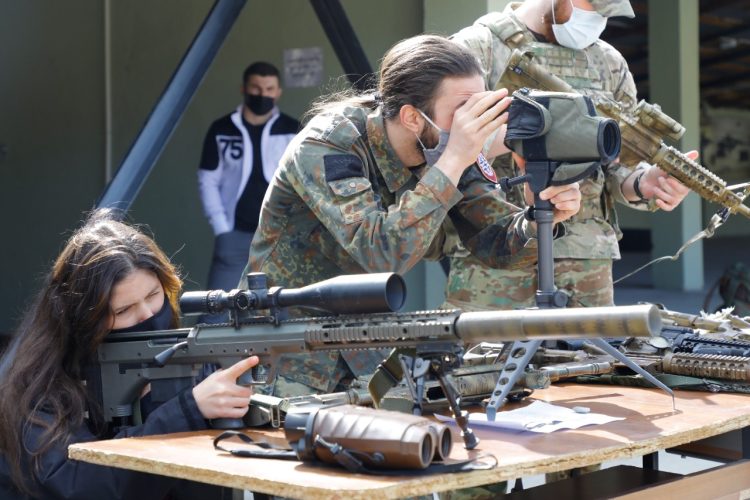
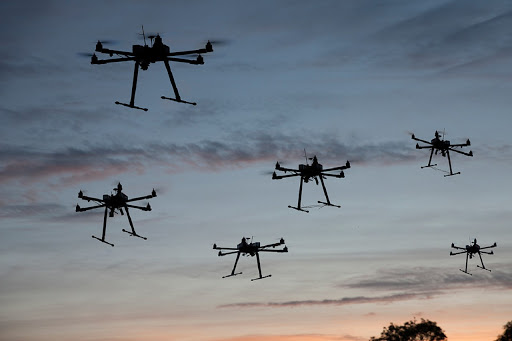
"Georgia will strengthen its security through, among other things, a complete upgrade of armaments and modernization. In particular, in 2021 the Georgian army will be fully equipped with M-4 rifles to NATO standard, modern machine guns, grenade launchers, and other weapons. Special attention will be paid to the development of air defense capabilities: radar systems will be modernized, and operational-tactical unmanned reconnaissance and combat aircraft — drones — will be purchased and attached to all ground forces, from motorized rifle units to artillery," Irakli Garibashvili announced.
Upon hearing of Tbilisi's "unmanned" plans, the Abkhazian Foreign Ministry hastened to accuse Georgia's leadership of actively building up its military potential for "clearly" malevolent purposes. "It is extremely difficult to justify plans to purchase reconnaissance and combat UAVs solely in the interests of self-defence. These modern types of armaments can be used exclusively for offensive purposes," the Foreign Ministry stated — linking this to the recent events in Nagorno-Karabakh, where Azerbaijan's active use of UAVs enabled it to develop a successful offensive operation. "Such actions clearly demonstrate Georgia's openly hostile disposition, completely devalue any of its declaratory steps in support of a peaceful resolution of conflicts, and are capable of generating a new round of tensions in the region," the Abkhazian ministry's statement reads.
In reality, however, nothing stated in it has any factual basis — either in military or political terms. Anyone with even a basic understanding of the subject knows that drones come in three main types: reconnaissance, technological, and strike. Of these, the combat variety are UAVs of the second and third type — the very ones used by the Azerbaijani side during the recent hostilities in Karabakh. Georgia, however, plans to purchase drones primarily of the first — reconnaissance — type, which are merely gatherers of information: effectively flying cameras. "This is a multifunctional modern technology for entirely peaceful purposes — for tourism, for mapping various routes, for monitoring exercises from above, and much else. Such drones are freely sold in shops, are privately owned by citizens and companies, and children in developed countries even use them for entertainment — launching them into the air and watching the video footage with interest. So the drones that Georgia intends to purchase are not designed for conducting any kind of combat operations against anyone. Inflating this issue and building alarmist theories on it about a planned attack on Abkhazia or anyone else is entirely unwarranted and unfounded," explains Nodar Kharshiladze, founder of the Georgia Strategic Analysis Centre.
Moreover, when considering the military aspects of the question, one must understand that Karabakh and Abkhazia represent completely different realities. "In Abkhazia — against the will not only of Tbilisi but, I am convinced, of the overwhelming majority of Abkhazia's own population — stand Russian troops: more than 20 military settlements with specifically offensive armaments directed not only against Georgia but against the entire region. Moreover, the operational range of these armaments extends beyond the region. Given this, it is entirely clear who is actually the source of tension and who is creating a real threat to peace and stability in the region. And all the talk about some possible use of force by Tbilisi in the context of the recent Karabakh events — this is searching for a black cat in a dark room where there is no cat," explains Paata Gaprindashvili, Director of the Georgian Reform Association (GRASS).
It should be noted that even within Abkhazia itself, by no means everyone agrees with the Foreign Ministry's alarmist statement — and among those who disagree is Security Council Secretary Sergei Shamba. "I am not among those who say that Georgia too could carry out an intervention and the result for us would be similar to Nagorno-Karabakh. I am far from that view, because our relations with the Russian Federation — which is the guarantor of our security — are somewhat different," Shamba stated recently.
As for the Abkhazian side's constant appeals to the fact that Tbilisi refuses to sign a non-use-of-force agreement with it in Geneva — Shamba himself has on several recent occasions reminded Abkhazian audiences that such a document between the parties has existed for a long time, in the form of a "memorandum on the renunciation of the use of force and the threat of force" signed back in 1997 by Eduard Shevardnadze and Vladislav Ardzinba. Furthermore, several years ago the Georgian side participating in the Geneva Discussions unilaterally assumed an international obligation not to use force to resolve territorial conflicts. Moscow, on the other hand, to this day refuses to assume an obligation of non-aggression toward Georgia.
So what, in your view, might Georgia need UAVs for in such a situation — UAVs that so alarmed the Abkhazian Foreign Ministry? "I would not object to Georgia purchasing second and third-type drones — but for defensive rather than offensive purposes: after all, we live under conditions of creeping occupation, our borders are being pushed further into the country practically every day, and in such conditions these kinds of drones are a necessary attribute of self-defense. They could be used for any strategic or tactical operation," says Nodar Kharshiladze. "I think any clear-headed person would agree that a sovereign Georgia must have its own armed forces and spend the relevant resources on self-defense — especially in a situation where Russia refuses to sign a non-use-of-force agreement with us. Note: within the Geneva platform, such an obligation has already been assumed by absolutely all relevant participants except Russia. And Russia is the world's largest nuclear power — and at the same time a permanent member of the UN Security Council, however cynical that may sound. And it is Russia that represents the primary danger to peace and stability across the entire region," Paata Gaprindashvili points out.
Of late, Russia has largely stopped concealing its annexationist plans regarding Abkhazia — while simultaneously creating a hostile image of Georgia with great enthusiasm. "NATO is drawing Ukraine and Georgia into its activities, training them for confrontation with Russia. Moscow is concerned about the buildup of NATO's military activity in the Black Sea. The appearance of a new player here — one clearly not coming with the most benevolent intentions — is destabilizing regional stability and driving a wedge between neighboring countries," Russian Foreign Ministry spokesperson Maria Zakharova recently stated. And the internet has been flooded with commissioned Russian propaganda videos propagating such narratives.
Against this backdrop, Tbilisi is calling on all Abkhazian political, civic, and other figures who influence public opinion to cease their voluntary or involuntary service to Kremlin propaganda — propaganda that sows division and thereby prevents Georgians and Abkhazians from finally beginning the communication and cooperation they so desperately need. "Before it is too late, we — Georgians and Abkhazians — must stop all talk of some kind of wars and get on with real matters: the economy, trade, a joint fight against the pandemic, timely and reliable vaccination, and so on. Genuinely, both of us need a dignified life — not to remain perpetual prisoners of propaganda whose sole purpose is to prevent the rapprochement and dignified coexistence of two absolutely kindred peoples," concludes Paata Gaprindashvili.
Ekaterine Tsanava
The material was prepared as part of a joint project of the Accent news agency and the non-governmental organization GRASS, implemented with the financial support of the Open Information Partnership (OIP).