
Abkhazia: "We Want to Be Vaccinated — but Not with Just Anything!"
03/02/2021 13:10:21 Conflicts
The coronavirus continues its march across the planet. Some countries are already speaking of a third wave of the Covid-19 pandemic, whose strain has mutated and is spreading several times faster than its predecessor. And while some states are trying to cope with the new manifestations of the dangerous disease, Abkhazia, in a decidedly protracted fashion, is still fighting the first wave of the pandemic. The situation is approaching catastrophic: hospitals are overwhelmed, medications — like medical personnel — are in short supply, and a vaccine capable of defeating the coronavirus will not be arriving in the republic any time soon.
Over the course of the pandemic, more than 400 million rubles have been spent fighting Covid. Of these, 257 million were allocated from the Abkhazian treasury, while the remaining funds constituted assistance provided to the republic by various organizations.
According to official statistics, the total number of confirmed cases in Abkhazia stands at 11,355. Of these, 17 cases proved fatal. Approximately 500 residents of the republic are tested daily, and judging by the data of the sanitary-epidemiological service, the proportion of those infected is constantly changing.
As it turns out, Abkhazia also maintains an unofficial set of statistics. The data is being independently compiled by Abkhazian doctors — and according to their figures, more than 100,000 people, that is, nearly half the republic's population, have already had the coronavirus infection asymptomatically.
"We are not prepared to speak in detail about who was ill, when, and where. But based on an analysis of the situation, it can be said that more than 100,000 of our citizens have already had coronavirus. They simply did not seek medical assistance, since they had no symptoms of the disease. And some have no idea at all that they have already had Covid. We did some straightforward calculations, analyzed the pattern of the infection's spread, and arrived at these broadly approximate figures — which, incidentally, are based on standards established by the World Health Organization," our interlocutor, doctor Giorgi, recounted.
While the rest of the world has launched a mass vaccination program to curb the coronavirus, Abkhazia's population is ignoring the quarantine measures that have been introduced and trying to live as in the days before the pandemic began. But what choice do they really have? There are no punitive measures in the republic for non-compliance with basic protective rules, or for violations of the operating conditions for catering establishments and venues of mass attendance. The state has no desire to fine the population and organizations that violate the restrictive measures — and this, in the view of doctors, only leads to an even greater surge in the disease.
But despite all the efforts of the medical profession, sanitary services, and the state as a whole, Abkhazia still has no clear understanding of what to do next.
At present, the only way to stop the coronavirus pandemic and save human lives is vaccination. Abkhazia's residents understand this. The problem is that there is a sea of information on the subject of every kind, and it is often very difficult to determine its reliability.
Everyone understands that a vaccine prepares the body to fight the causative agent of a given infection and compels our immune system, firstly, to recognize the invading enemy, and secondly, to produce antibodies in order to learn to fight it. It is clear that one cannot fall ill from the vaccination itself. Having been vaccinated, each person acquires immunity to the disease. This is precisely why vaccines are such a powerful tool in the fight against various diseases: they do not treat the disease — they prevent its development. But which vaccine to choose — and, most importantly, how are Abkhazia's residents to obtain it, given that dozens of the world's leading countries have already queued up for the best ones?
"I have always been opposed to vaccines — I never vaccinated myself and never vaccinated my children. But the coronavirus forced me not only to change the rules of my life, but also my attitude toward vaccinations. If a vaccine becomes available in Abkhazia, I will be vaccinated and I will insist that all my family and loved ones be vaccinated too. It is the only salvation from this terrifying, lethal virus," says our interlocutor Margarita.
She is echoed by another interlocutor, Viktor, who at the very beginning of the coronavirus pandemic was one of the most ardent opponents of any vaccination. "I did not think coronavirus was actually such a dangerous disease — and honestly, I was convinced that the stories about thousands of deaths in China and Italy were a widely circulated lie paid for by pharmaceutical companies. I thought it was a kind of attempt to make millions out of people's fear. But when Covid reached Abkhazia and people I knew personally began to die, I realized I had been wrong. Then I fell ill myself and barely survived. I am grateful to the doctors. I regret that I convinced many people not to believe in the coronavirus or in a vaccine against it. Vaccination is absolutely necessary — it is the only way to avoid contracting this terrible disease," Viktor believes.
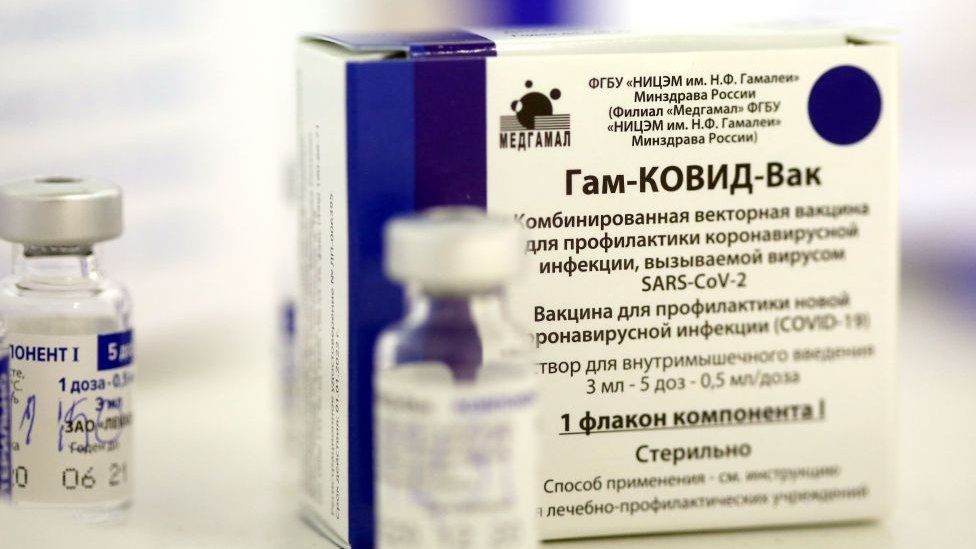
At present, several vaccines against coronavirus exist. According to data as of January 2021, three anti-Covid vaccines have been approved by all authoritative regulators: Pfizer-BioNTech, Moderna, and AstraZeneca. The list also includes the Chinese and Russian vaccines — CoronaVac and Sputnik V. However, they have not yet received approval from all major global regulators. Russia's "Sputnik V," for example, has still not been approved for mass use by either the World Health Organization or the European Union's main regulatory body — although according to the results of late-stage trials published recently by the authoritative journal The Lancet, "Sputnik V" provides approximately 92% protection against Covid-19, having proven both its efficacy and safety. It is therefore currently being used, outside Russia, only in a number of other locations including Argentina, the Palestinian territories, Venezuela, Hungary, the UAE, and Iran.
Before approval, any vaccine goes through several stages of testing. First, the drug's effects are tested on animals to determine whether it can form immunity against a specific virus and whether it is harmful to the organism. The vaccine is then administered to a small group of people to assess how humans tolerate it and to calibrate the dosage. Mass testing follows, and on the basis of its results a decision on approval is made.
The unprecedented speed with which the anti-Covid vaccines were developed raises doubts in some people's minds. It is true that scientists normally spend years developing new vaccines — however, under conditions of the coronavirus pandemic and with the active collaboration of scientists from different countries under the auspices of the WHO, this became possible in a significantly shorter timeframe.
A fierce debate on the necessity of vaccination is taking place worldwide. Scientists and medical professionals state that in order to develop herd immunity, vaccination of at least 60% of the population is required.
For now, vaccination against Covid-19 is not mandatory in any country in the world — and Abkhazia is no exception. The republic's population is not opposed to vaccination itself; the main question is which vaccine they are planned to be inoculated with. Residents of the republic display no particular trust in the Russian "Sputnik V," which by some accounts will be imported to Abkhazia in the near future. The majority of our respondents express a preference for Pfizer-BioNTech, as this company has long established itself exclusively in a positive light.
"Pfizer is a well-known company and I will only be vaccinated with their vaccine. Naturally, the Russian vaccine is being actively promoted — even Putin and his daughters were vaccinated, apparently. Except no one saw this, and no one knows what exactly they were vaccinated with, or whether they were vaccinated at all. I genuinely do not understand why they are trying to force us — the residents of Abkhazia — to be vaccinated with the Russian vaccine. So Russian officials got vaccinated — are we supposed to follow their example? Complete nonsense, honestly!" our interlocutor Grigory stated indignantly. He is convinced that getting a coronavirus vaccine is not merely a necessity but the duty of every resident of Abkhazia — since "otherwise the disease will not go away and will continue to claim our loved ones."
"I hope our state will take the wishes of the population into account and bring the best, the highest-quality vaccine to Abkhazia. I understand that we have no funds for a good vaccine — but that does not mean that citizens should be vaccinated with a free Russian vaccine. Maybe they will conduct experiments on us to complete their research. One must think about this. We want to be vaccinated — but not with just anything," says our interlocutor Marina.
So there is no dispute in Abkhazia about the necessity of vaccination. Virtually all of Abkhazian society is in favor of immunization. The question is solely the choice of vaccine — which is unquestionably the most effective means of preventing the spread of coronavirus infection.
Astanda Bgamba
The text contains place names and terminology used in the self-proclaimed Republic of Abkhazia. Opinions expressed in the publication reflect the views of the author and do not necessarily represent the position of the editorial board.