
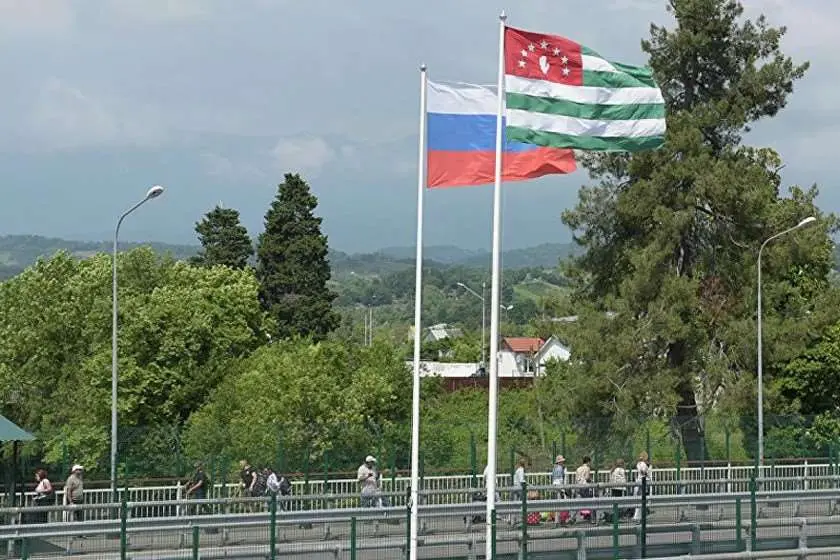
On “Harmonization”: Why Is Abkhazia Expected to Accept What Russia Refuses for Itself?
13/02/2021 15:06:52 Conflicts
Recently, Russian media once again provided clear evidence of just how strange — to put it mildly — the so-called “harmonization” of legislation that Russia is “friendly-wise” imposing on Abkhazia truly is.
According to the Russian outlet Vesti Sochi, foreign citizens and stateless persons are prohibited from owning land plots in 12 municipalities of Russia’s Krasnodar region, including the city of Sochi.
As stated in the report, in order to terminate the property rights of foreign citizens owning land plots, the Property Relations Department of the Krasnodar regional administration has already filed more than 280 lawsuits, 189 of which have been approved by the courts.
“It is necessary to continue this work and resolve all disputes in a timely manner,” Vice Governor Sergey Boldin told the publication.
It should be recalled that, under a decree issued by the President of the Russian Federation, individuals without Russian citizenship and foreign companies are prohibited from owning land in border areas, agricultural land, as well as land in resort and sanatorium zones. The federal list in Krasnodar region includes the territories of 12 municipalities — among them Sochi, Anapa, Gelendzhik, Novorossiysk, and several districts of the region.
In other words, Russia takes considerable care to ensure that outsiders do not acquire its most valuable land. Yet according to Russia’s “strategic partner,” Abkhazia apparently should not do the same. Why? — the Abkhaz people may ask. But what difference does the argument make, so long as Russia gets what it wants?
And please do not remind Moscow that the title of the 45-point document it sent to its Abkhaz “friends” — a document which, among other “benefits,” envisages lifting the legislative ban on the sale of land and real estate to foreigners (naturally, meaning Russian citizens) — explicitly contains the word “harmonization.”
Russia indeed wants to harmonize Abkhaz legislation with its own and is exerting enormous pressure on Sukhumi to achieve this objective. There is no disputing that intention. The problem is that this “harmonization” concerns only those parts of Abkhaz legislation whose alteration directly serves Russia’s own interests.
For example, Abkhazia is being pressured to adopt the Russian “foreign agents” law targeting media outlets and NGOs. Expelling from Abkhazia everyone who today maintains ties with the outside world, and silencing all those capable of challenging the implementation of Moscow’s plans, would greatly simplify the Kremlin’s task of completing Abkhazia’s final annexation.
Yet where harmonization does not benefit the Kremlin, there will be no harmonization at all. On the contrary, Russian and Abkhaz legislation will remain directly contradictory. The issue of selling land and real estate to foreigners is one of the clearest examples of this contradiction.
And all of this pressure from the “strategic friend” comes despite the fact that Russia has already acquired large amounts of land in Abkhazia for symbolic sums. Moreover, this “caring friend” has built virtually impenetrable fortified military zones on Abkhaz territory while paying next to nothing for electricity and water.
Russian security forces enjoy complete immunity there, and even if the Abkhaz side wished to demand payment for utilities, it would be powerless — such were the agreements concluded at the time.
“Doesn’t Russia already have enough land of its own? Hasn’t it already taken enough from us? And by the way, if Russia is truly a friend and partner, then let it pay for the military bases it has deployed on our territory — bases that protect, first and foremost, Russia’s own borders rather than ours,” wrote one Abkhaz internet user.
According to another commenter, “Russia’s attitude demonstrates the true face of this ‘partner’ better than anything else.”
“Russia has signed countless agreements with us. Year after year it frightens us with stories of catastrophic threats. But in reality, Russia itself is the biggest problem for Abkhazia. In what other country do Russians pay almost nothing for military bases? In what other country are Russian troops granted such privileges and immunity? All of this, together with the laws proposed by Moscow, demonstrates Russia’s true attitude toward Abkhazia, its Constitution, and all of us,” another user wrote.
“Does anyone still believe Russia actually cares about our population? What matters to Moscow is maintaining its presence in Abkhazia at any cost. We are not Ukraine or Belarus, to whom Russia is prepared to provide resources almost for free in order to improve its image. We are Abkhazia — a place our large neighbor has already appropriated and absorbed, eventually driving into a dead end. It is all in the spirit of Russia, which destroys everything it touches,” another Abkhaz internet user argued.
It is difficult to disagree with these sentiments, and the public outrage is understandable. Yet the Kremlin pursues its own interests, while protecting Abkhazia’s interests should have been the responsibility of Abkhazia itself.
As the saying goes, debts must eventually be repaid — and Abkhazia has accumulated considerable debts to Russia. For years, its budget has been filled with funds sent from Moscow. At the same time, a significant portion of those funds consistently ended up in the pockets of local officials supposedly “devoted body and soul to Abkhazia” — many of whom are now in opposition and once again seeking power.
Their arrangement with the Kremlin is simple barter:you provide us with full pockets and official positions, and we guarantee the implementation of all Russian plans in Abkhazia.
The fact that funds flowed for years into private bureaucratic pockets rather than into projects capable of helping Abkhazia develop independently mattered little — the important thing was keeping the Kremlin satisfied and allowing it to do whatever it wished in Abkhazia. As long as Moscow remained pleased, neither comfortable offices nor overflowing pockets were under threat.
No one and nothing must interfere with this arrangement. That is why today the Abkhaz opposition, together with the Kremlin, seeks to suppress any initiatives capable of helping Abkhazia escape total financial dependence on Moscow and begin independent development — because such initiatives directly contradict both Russian interests and their own personal interests.
This is also why former officials from the opposition movement “Aruaa” oppose all recent initiatives for dialogue and cooperation with Tbilisi promoted by Aslan Bzhania’s ruling team, while offering no alternatives themselves except frightening the population with tales of a “Georgian threat of universal proportions.”
This was the Kremlin’s design from the very beginning, and it acts similarly toward its “friends” around the world: spending large sums ostensibly to assist peoples, while in reality supporting regimes that, for selfish reasons, help Moscow subjugate their own countries.
And if the people of Abkhazia follow the opposition’s lead, refuse to support initiatives capable of freeing Abkhazia from total economic dependence on Moscow, and instead allow the “parliament” to ratify yet another Moscow-dictated document of subjugation, they will soon be left only to sigh over a territory that has completely passed into Russian ownership — and to write angry comments on social media.
Though if Abkhaz legislation is eventually “harmonized” with Russian legislation in this sphere as well, then even the possibility of freely expressing one’s opinion may disappear like last year’s snow.
Ekaterina Tsanava
The material was prepared within the framework of a joint project of Accent News Agency and the non-governmental organization GRASS, implemented with the financial support of the Open Information Partnership (OIP).