
Who in Abkhazia Is For — and Who Is Against — Perpetual Servitude, and Why
20/02/2021 18:10:05 Conflicts
To describe briefly how Abkhazia lives today, one might characterize the situation as exceedingly complex, bewildering, and volatile. And the reason is not only the cascade of problems that have descended on the republic — the pandemic, the economic crisis, the absence of both money and the most basic conditions for life. What is rocking the already unstable boat of Abkhazian society most of all is internal political squabbling.
The authorities and the opposition have for years been engaged in an uncompromising struggle for the electorate — or in essence, for supporters willing, when necessary, to storm the presidential palace and install a representative of their own clan at the head of the country. And while this "dialogue" between the warring sides had previously been conducted within at least some bounds of decorum, it has now taken on a truly chaotic character. Abkhazia's population is struggling to keep track of who is "allied" with whom and against whom.
One of the latest scandals — gathering ever greater momentum and already elevated to the rank of betrayal — concerns an interview given by Security Council Secretary Sergei Shamba, in which he merely expressed the view that Abkhazia is ready for dialogue with Georgia, since diplomacy is the only possible path for relations between two neighboring states.
"There are questions being resolved in a bilateral format even today — questions related to the operation of the Inguri hydroelectric power station, and the contraband trade that is currently taking place and cannot but concern us. I am in favor of always having multiple channels of communication. We cannot be satisfied with having only one negotiating channel — the Geneva meetings. The point is to find new, additional channels," Sergei Shamba stated.
In response, the opposition veterans' organization Aruaa staged what amounted to a démarch, ending in a demand for Shamba's immediate resignation.
"Having received such a gift from our authorities, Georgia — in pursuit of its political goals through economic means — will begin a policy of dumping in order to displace Russian goods from our market. Certain entrepreneurs will begin importing goods from Georgia, Georgian business partners will appear, horizontal ties will be established — all of this to the detriment of our producers and without recognition of our state. The official opening of a new sales market for Georgian goods will benefit the Georgian economy and, as a consequence, will lead to an increase in the capabilities of the Georgian army, and will have a negative impact on economic relations with the Russian Federation," reads the statement distributed by Aruaa.
But what Russia has to do with any of this, and what bearing it has on Abkhazia's internal affairs, the opposition members were unable to explain.
"The things one reads — it is simply astounding. Does Aruaa even understand what it has written? By selling its goods in Abkhazia, Georgia will apparently raise its economy to such heights that it will immediately rush to arm its military. I have never read greater nonsense. If our Abkhazian market is so enormous that at this very moment the entire population could be made wealthy and armed, then why do we live in poverty? The Abkhazian market is open to all of Russia — which is dozens of times larger than Georgia — and the result is zero. Doesn't Aruaa want to say anything about that? I understand that the opposition must criticize — but reducing criticism to absurdity is unnecessary. Our population is not as foolish as Aruaa thinks, and people will decide for themselves what is best for them," says our interlocutor Elena.
Meanwhile, the topic of normalizing trade relations with Georgia has gained such momentum in Abkhazian society that before long Shamba's initiative was transformed into a kind of "betrayal," a "surrender of state interests," and an abandonment of supposedly well-established economic relations with Russia.
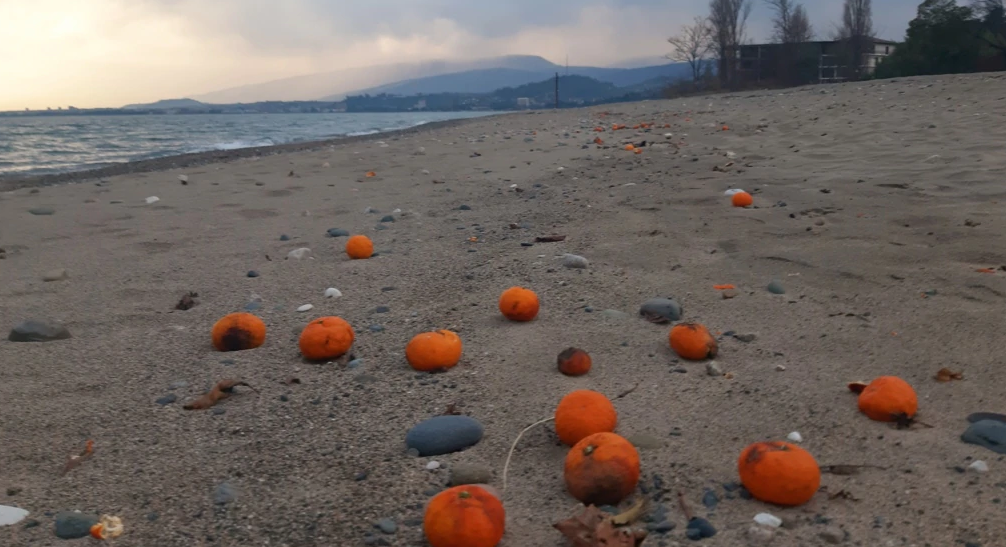
"What 'good economic relations with Russia' are the former officials talking about? It is laughable to read. Perhaps they are unaware of the nightmare that took place at the Russian border during the tangerine season? Or have they forgotten that for the export of any goods from Abkhazia — whether honey, tea, nuts, or anything else — Russia creates inhuman conditions, raises fees, and demands bribes? Before talking about supposedly normal relations with Russia, they would do better to resolve that issue first," says our interlocutor Irakli.
"Our businesspeople are suffocating from these supposedly 'well-established relations' with the Russians. Exorbitant taxes, mountains of documents whose templates they change again and again. First one kind of pest, then another, then another. Russia will not allow Abkhazian goods to be brought in, while their goods come to us at three times the price. And this has been going on for 25 years. If this is what good economic relations look like, then it is better to establish trade relations with an enemy than with such a friend," says our interlocutor, entrepreneur Sergei.
The opposition's struggle for the political electorate has led President Aslan Bzhania to convene a series of meetings on the subject. Abkhazian media covered each of them — yet much of what transpired at these meetings remained off the record: specifically, the fact that establishing trade and economic ties with Georgia is Abkhazia's only opportunity to break free from the stranglehold of the strategic partner and to survive.
"Russia is already pressuring us — blocking finances, revising agreements and treaties, demanding the signing and implementation of projects ruinous for Abkhazia. And now the opposition, as if playing along with the Russians, is trying to burn all the bridges around Abkhazia, around its opportunities for communication and the establishment of dialogue with neighboring countries," our source in the Abkhazian Presidential Administration recounted.
And most importantly — trade relations between Abkhazia and Georgia, despite the unresolved political status, have existed for thirty years. Hundreds of tonnes of goods cross into Georgia and back every day through smuggling channels, recorded nowhere. Accordingly, our state receives no revenue from this, as all the profit settles in the pockets of certain nimble "operators." On this question, the position of Abkhazia's president is unambiguous — state oversight is necessary in this sphere. "The produce that comes from Georgia constitutes a substantial portion of our trade turnover. Something must be done about this. Produce worth billions of rubles is leaving Abkhazia for Georgia," Aslan Bzhania stated.
The opposition, however, holds a very different view on the matter. In its rather patriotic statement, it touched on this subject only in passing — delegating the fight against contraband to the law enforcement agencies. Understandably so: it is no secret to anyone in Abkhazia that the lion's share of the revenue from this very trade with Georgia settles in the pockets of the very oppositionists who are fighting against the establishment of official trade and economic relations.
"The people's trade in the Gali district is flourishing and has long since reached quite considerable volumes. Dozens of trucks loaded with various agricultural goods and construction materials enter Abkhazia in the course of a single night. Everyone has known this for a long time. And the oppositionists' attempt to conceal their own participation in this trade behind a facade of deteriorating relations with Russia looks pitiful. We will not allow them to decide what is best for us — ordinary people," says our interlocutor Giorgi.
No one has asked for the opinion of Abkhazia's residents on the question of establishing trade relations — the issue to which Aruaa so frequently appeals. No mass surveys on this subject have been conducted. The few people we were able to speak with are convinced that if such a survey were conducted, the results would astonish not only the opposition but all those who so zealously resist these entirely ordinary, practical processes. And the reason is simple: people are tired of living badly and with an outstretched hand. They very much want to look toward the future with hope. And if achieving even this minimum requires converting the unofficial trade relations with Georgia into official ones — then so be it. Abkhazia has long needed to engage not only with Russia but with the surrounding world. And this dialogue may yield results — if not tangible, then at least some. And the strategic partner, friend, and neighbor Russia — which has been driving us into a corner — will understand that Abkhazia is choosing an alternative to perpetual servitude.
Astanda Bgamba
The text contains place names and terminology used in the self-proclaimed Republic of Abkhazia. Opinions expressed in the publication reflect the views of the author and do not necessarily represent the position of the editorial board.