
Farkas on Foreign Agents Law: I would imagine that sanctions are absolutely coming if Georgia passes such legislation
10/04/2024 06:40:35 Politic
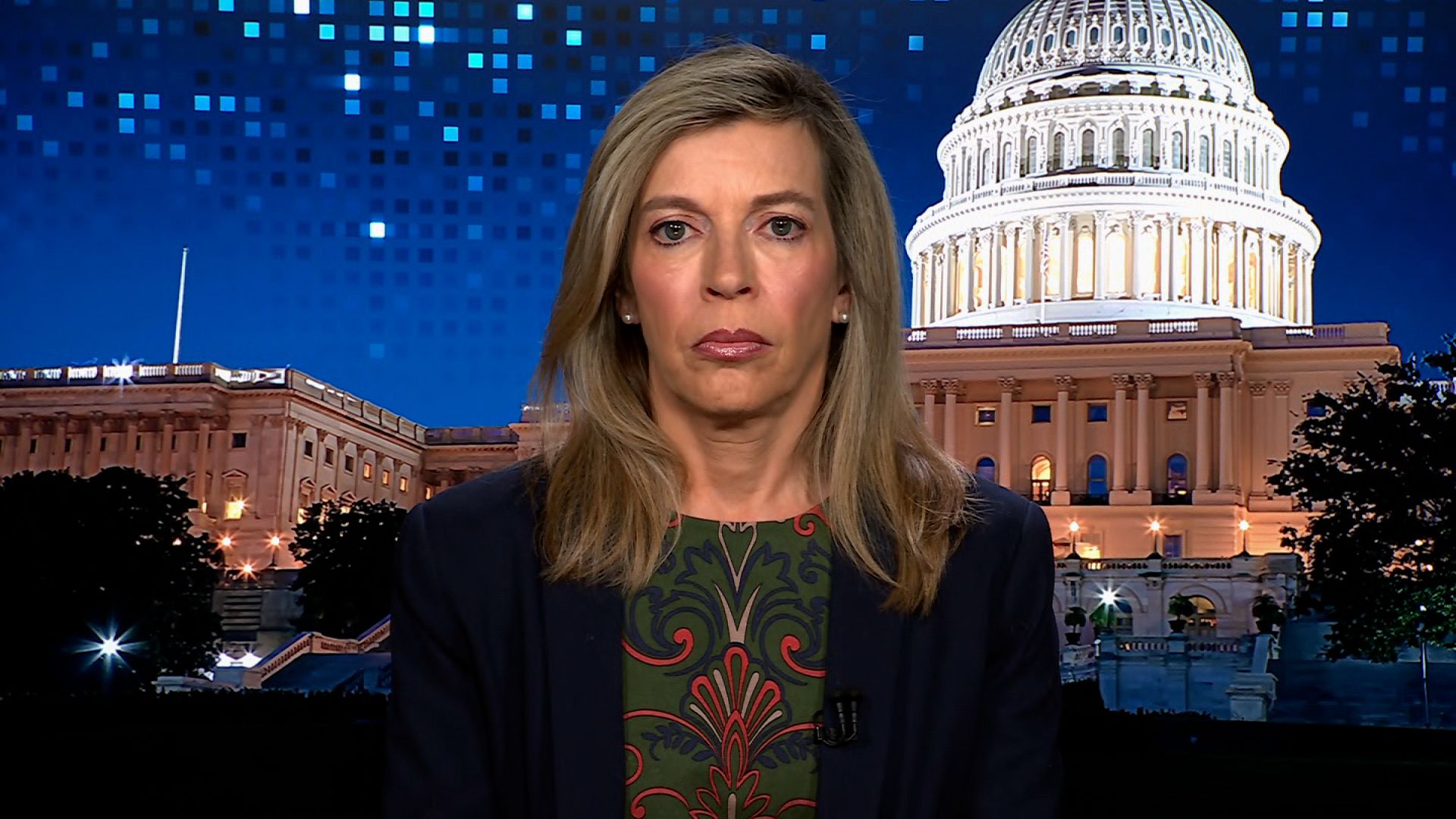
Executive director of the McCain Institute at Arizona State University, Evelyn Farkas on Wednesday didn't rule out the possibility of the U.S. imposing sanctions on Georgia.
During the press briefing on April 8, Matthew Miller, Spokesperson for the United States Department of State once again reacted to the reintroduction of the Foreign Agents law by the ruling Georgian Dream party in Georgia, saying that “right now we are making clear that we are concerned with this draft legislation. With respect to what we might do if it moves forward, stay tuned.”
"I would imagine that sanctions are absolutely coming if the Republic of Georgia passes such legislation. In any event, Georgia has been in violation of sanctions on Russia and so within that context, I can well imagine that the US government has already been considering applying sanctions against those providing funding and material to support Russia’s war of aggression against Ukraine (And for that matter, Georgia)," Evelyn Farkas told the Accent.
"This would only provide an impetus for a quick decision." she added.
After “Georgian Dream” announced on April 3 that it would reintroduce the so-called “agents” draft law to Parliament, Washington responded to the development five times.
Specifically, on April 4, during a State Department briefing, Spokesperson Matthew Miller stated:
“We have seen reports that they are considering potentially advancing the legislation, and I will simply note that tens of thousands of Georgians took to the streets last year to publicly declare their European aspirations and reject passage of this law. Georgia has a historic opportunity to open accession negotiations with the European Union, and we stand ready to continue supporting Georgia in this process.”
On April 5, he made two additional statements regarding the “agents” draft law:
“We are deeply concerned that the bill introduced in the Georgian Parliament will take Georgia off its European path and harm civil society organizations that improve the lives of Georgian citizens. We urge the Government of Georgia to pursue its European aspirations.”
“We are deeply concerned about the bill introduced in the Georgian Parliament, which is based on last year’s so-called ‘foreign agents’ legislation. This bill threatens civil society organizations whose activities benefit Georgian citizens in areas such as healthcare, education, and social support. It undermines Georgia’s commitment to Euro-Atlantic integration and risks distancing Georgia from its European path. We have clearly conveyed this concern to the Government of Georgia.”
At the April 8 briefing, Matthew Miller reiterated that if the bill were adopted, Georgia would deviate from its European trajectory. At the same time, he noted that he would not yet discuss what steps the United States might take should the bill be passed:
“We have clearly stated that we are deeply concerned. If enacted, it would harm civil society organizations working to improve the lives of the Georgian people. It would divert Georgia from its European path. This legislation would hinder the functioning of independent media organizations that work to ensure Georgian citizens have access to quality information. It remains a draft bill; it has not been adopted. Therefore, I will not discuss any potential consequences or steps we might take at this time,” Miller stated.
In response to a follow-up question from journalist Alex Raufoglu — “Are you considering sanctions against members of Parliament who support the bill?” — the spokesperson replied:
“At this time, we are clearly expressing our concern about this legislation. As for what we may do if the process moves forward, stay tuned. I have nothing further to add today.”
On April 10, Washington issued its fifth statement on the matter. This time, Assistant Secretary of State for European and Eurasian Affairs James O’Brien — who previously served as Head of the State Department’s Office of Sanctions Coordination — warned Georgia:
“I am concerned about the legislative initiatives introduced in the Georgian Parliament that risk distancing Georgia from Europe. The United States will always raise its voice in defense of human rights for all, including freedom of expression and peaceful assembly.”
Individuals Sanctioned by the United States in Georgia to Date
On April 5, 2023, the United States imposed sanctions on three sitting judges and one former judge in Georgia. They include: Mikheil Chinchaladze, Chairman of the Tbilisi Court of Appeals; Levan Murusidze, member of the High Council of Justice; Irakli Shengelia, Deputy Chairman of the Tbilisi Court of Appeals; and Valerian Tsertsvadze, former Chairman of the Tbilisi Court of Appeals (former judge). The sanctions apply not only to the judges themselves but also to their family members.
As stated in Secretary of State Antony Blinken’s announcement, “These individuals abused their positions as court chairpersons and members of the High Council of Justice, thereby undermining the rule of law and public trust in Georgia’s judicial system. The United States continues to support the people of Georgia in strengthening democracy and the rule of law and will continue to promote accountability for those who abuse public office for personal gain. We stand with all judges who demonstrate the courage and integrity to act impartially and independently.”
On the same topic: James O’Brien explains why the sanctions were imposed.“No Other Option Left”: The Possible Consequences of an Unprecedented Decision in Georgia–U.S. Relations.
On September 14, 2023, the United States sanctioned Georgia’s former Prosecutor General, Otar Partskhaladze.
According to the U.S. State Department, Partskhaladze collaborated with an individual involved in the activities of the Russian government — an FSB officer, Alexander Vladimirovich Onishchenko — and the FSB used Partskhaladze “to influence Georgian society and politics in favor of Russia.” The Department’s published document further indicated that Partskhaladze had allegedly obtained Russian citizenship with the assistance of the FSB. The State Department placed sanctions on Partskhaladze under the heading “Russia’s Malign Influence in Georgia,” linking the former Prosecutor General’s designation to Georgia’s national security.
Gvantsa Pipia