
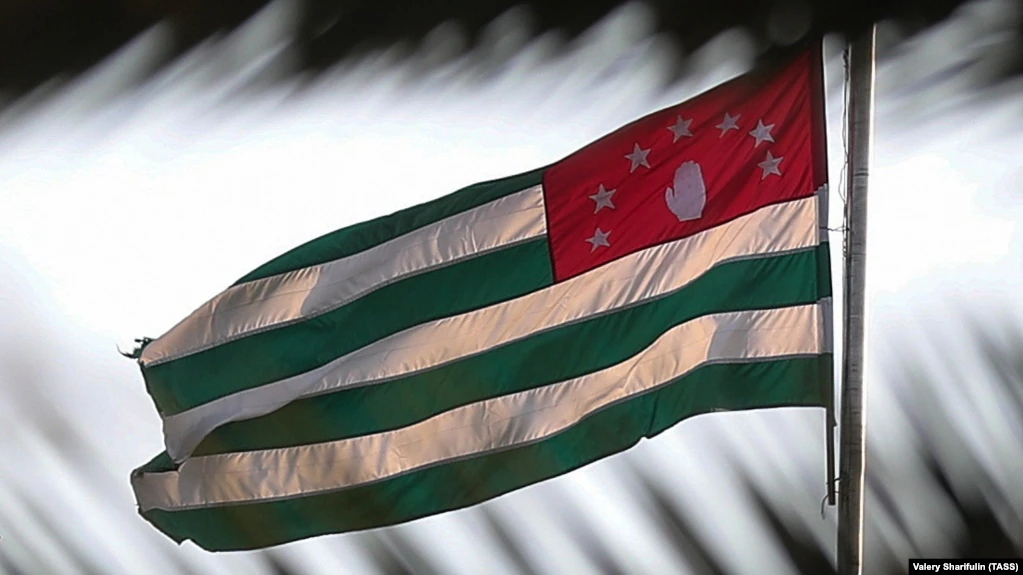
Abkhazia 2024: The upcoming great disaster is no longer a feeling, but a reality
11/01/2024 05:54:51 Conflicts
It is customary to make wishes in the New Year and to wait for them to come true. This holiday is also accompanied by many gifts and joyful moments. However, I am already an adult, and no matter how much I would like to, I have long since stopped believing in fairy tales.
Personally for me, the new year 2024 has become the year when the approaching major disaster is no longer a feeling, but a given. And if a year or two ago I succumbed to skepticism only occasionally, now it has become a kind of constant state.
For readers who will most likely find my introduction unclear, I will explain: this is about Abkhazia and about what awaits the people living there already this year.
The long and persistent confrontation between Abkhaz society and the Kremlin political establishment has been definitively lost. Yes, not on all fronts yet, but the beginning has been made. And the most painful part is that this was done not by spies or enemies, but by Abkhaz figures elected by the people, who, in pursuit of a juicy morsel, sold not only Abkhazia to Russia, but also the future of its people.
A telling moment in this game called “friend, neighbor, and strategic partner” was a session of the Parliament of Abkhazia held behind closed doors, without media access, at which a decision fatal for the country was adopted. And the issue is not only the 184 hectares of Pitsunda land, but the fact that a fairly large territory under the jurisdiction of another country appeared on the territory of one state. From now on, every person living or working on this territory has diplomatic immunity, which no representative of Abkhaz state bodies will be able to violate. Moreover, even the President of Abkhazia will not be able to enter this territory without special permission from Moscow. In addition to the land, buildings, and nature reserve that were handed over, the Parliament also gifted part of the Pitsunda sea to Russia’s Federal Protective Service. And God forbid any resident or tourist accidentally swim there — they will immediately be sent to prison for violating the sovereign territory of the Russian Federation.
In fact, by its decision the Parliament of Abkhazia demonstrated to the entire Abkhaz people their future, which from now on is inseparable from Russia and depends on the will of Moscow.
If we recall the harmonization that preceded this parliamentary decision, the amendment of laws to please Russia, the airport, and much more, it becomes clear what the next step of the Abkhaz leadership will be. No one doubts anymore that it will most likely be connected with issues that are fateful for the republic.
For several decades, the leaders of the Abkhaz state avoided, as best they could, the issues “proposed” by Russia. It should be clarified — demanded for implementation — for which Moscow more than once blackmailed and punished the disobedient Abkhazians. But none of them gave in to the Kremlin and did not even allow these issues to be discussed.
Time passed, and the steadfast leaders (who departed this world in Moscow clinics) were replaced by “their own” — those who were tasked with carrying out Russia’s wishes in full.
Citizens dissatisfied with Russia’s policy toward Abkhazia were labeled not only by anonymous sources, but also by quite high-ranking state officials, as “anti-Russian” and “unfriendly” elements, “spies,” whose main goal is “to sow discord in the peaceful, good-neighborly relations between Moscow and Sukhumi.” Worth mentioning is the information that the Administration of the President of Abkhazia submitted lists of troublemakers to the Russian Embassy in Abkhazia for further transfer to Moscow. All those who so strongly oppose the assimilation and destruction of Abkhazia are to be deprived of Russian citizenship. The main goal of all these actions is intimidation in order to subdue. But instead, the authorities received a blow when they learned that most of these people are ready to give up a Russian passport and citizenship, but not their actions aimed at the future of Abkhazia.
The past few years have been difficult for Abkhaz society. A free country has increasingly begun to resemble a police state in which freedom of speech is an empty phrase. Unlike earlier times, today in Abkhazia the struggle for freedom and independence is equated with betrayal, as it runs counter to the policy pursued by Moscow. And all those who are ready to fight Russian influence should prepare themselves for the fact that in the coming months the Parliament of Abkhazia, at the initiative of President Bzhania, will adopt a number of other important and fateful decisions that will be fatal for Abkhazia and its people.
Kristina Avidzba
The text contains toponyms and terminology used in the self-proclaimed Abkhazia.