
Gali: Involuntary Abkhaz Identity
11/01/2024 22:54:55 Conflicts
On December 7, the so-called parliament of Abkhazia urgently, within a single day and in first, second, and final readings, adopted amendments to the existing Law “On Acts of Civil Status.” The changes affected the procedure for the “state registration of the restoration of Abkhaz national affiliation and surname.” In the new version, Chapter VIII of the law, devoted to this procedure, reads as follows:
“Stateless persons permanently residing in the territory of the Republic of Abkhazia, who are ethnic Abkhazians (Abaza), direct descendants of those who lost their Abkhaz national affiliation as a result of anti-Abkhaz national policy that took place in the 19th–20th centuries, have the right to restore their Abkhaz national affiliation and surname, in accordance with the list of authentic Abkhaz surnames approved by the Ministry of Justice of the Republic of Abkhazia upon submission by the Academy of Sciences of Abkhazia (hereinafter – the list of authentic Abkhaz surnames).”
In other words, people are being openly offered to change their national identity in favor of the “titular nation.”
What do these legislative innovations mean in practice, what goals does Sukhumi pursue, and how will they affect the situation of the Georgian population?
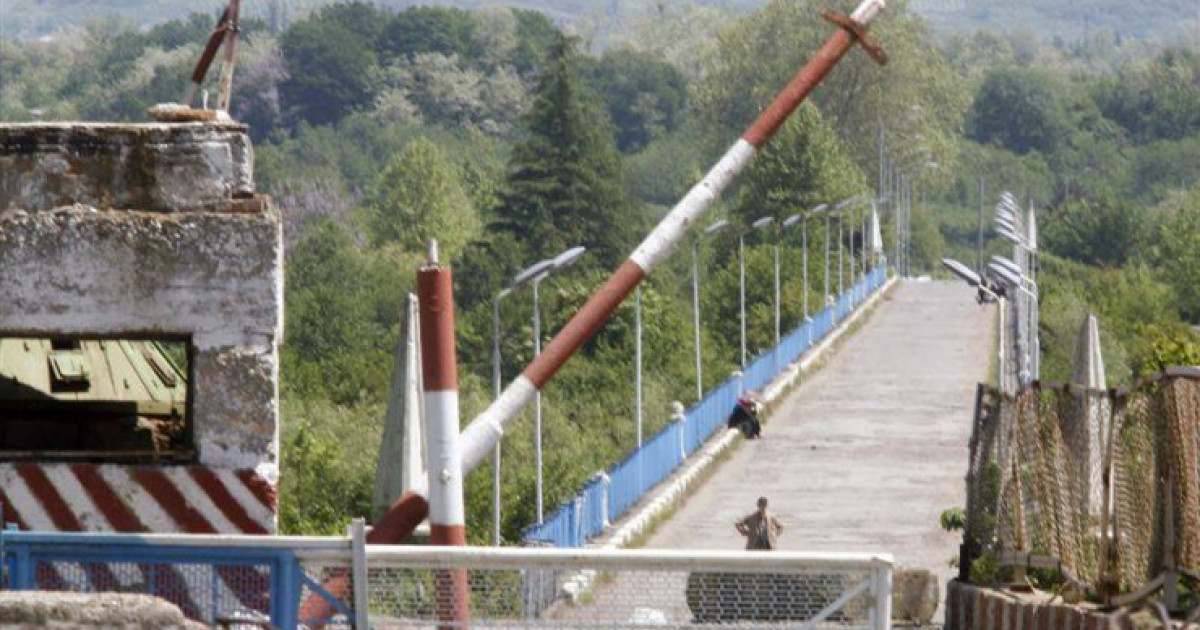
The order of life maintained by the de-facto authorities in Gali throughout the 30 post-war years represents a symbiosis of most of the anti-democratic practices known to humanity, expressed in mass violations of basic (political, social, and humanitarian) human rights on the basis of ethnicity. In particular, during the 2021 local self-government elections, out of a population of 30,000 people—98% of whom were local Georgians—only 872 people had the right to vote.
People live on their own land without legal security: for example, they cannot even purchase a house or a plot of land into ownership—they can only sell to a person holding “Abkhaz citizenship.” Their children are deprived of the right to education in their native Georgian language. In short, people live with a clear understanding that at any moment they may be expelled from their homeland, as has already happened twice—in 1993 and in 1998.
In fact, the essence of this discrimination is twofold. On the one hand, Abkhazians fear that if Georgians become equal in rights and acquire full “citizenship” of Abkhazia, the Georgian population will be able to influence from within the political course currently shaped exclusively by Abkhaz nationalists. On the other hand, for many decades Abkhaz society and politics have cultivated a competition in reproducing largely groundless anti-Georgian phobias, while Georgians long ago rid themselves of such pathologies.
The radical wing is the most uncompromising in its hostility toward Georgians. Today this includes, in particular, the veterans’ organization “Aruaa,” represented by its notorious leaders Temur Guliya and Temur Nadaraya, the active “public figure” Naira Amaliya, and others. The wing of moderate nationalists includes the current “president” Aslan Bzhania and former “president” Alexander Ankvab.
However, radical nationalists immediately accused Ankvab of betraying Abkhaz interests and, riding a wave of Georgian-phobic sentiment they stirred up, forced his resignation and the annulment of passports and “citizenship” issued to persons of Georgian nationality. In the snap elections that followed, the candidate of the radicals, Raul Khajimba, won.
After Georgian passports were annulled, a new problem arose: passports had replaced Form No. 9 certificates, which lost validity upon issuance of passports. As a result, Khajimba’s decision left Georgians without Form No. 9 and without passports—that is, without any local documents at all.
Later, under Khajimba, a new document was introduced: a “residence permit for non-citizens permanently residing in Abkhazia.” There are two types of residence permits: with a note indicating Georgian citizenship, and without it. The absence of such a note offers minor privileges: greater trust, better chances of employment and career advancement, the ability to resolve housing issues, and, theoretically, the prospect of eventually obtaining an Abkhaz passport and acquiring at least some basic human rights. Therefore, many wish to conceal the fact of Georgian citizenship. However, obtaining a residence permit without such a note is practically impossible—applications are delayed for years, leaving people once again without local documents. As a result, most residents of Gali are forced to obtain residence permits as Georgian citizens.
Conversion to Abkhaz identity opens the simplest and fastest path to obtaining an Abkhaz passport, since under local law any Abkhaz—regardless of birthplace, residence, or possession of other citizenship—has the right to automatic “Abkhaz citizenship” and a passport.
Before the amendments, different rules applied. A resident could not “restore” Abkhaz nationality without first obtaining local “citizenship,” which for ethnic Georgians and Georgian citizens was virtually impossible. Only after obtaining a passport could one change nationality—rendering the procedure pointless. Thus, Abkhazians both blocked passport issuance to Georgians and preserved “ethnic purity.” Now the policy has changed: people are directly offered to renounce their Georgian nationality and convert to Abkhaz identity in exchange for a passport and basic rights.
According to Temur Nadaraya, the parliamentary decision was “a bolt from the blue” and “the wind is blowing from certain Abkhaz NGOs.” He called the law “a threat to national security and a time bomb planted under Abkhaz statehood under the guise of patriotism and historical justice.”
This is not the first attempt to “Abkhazify” the Gali population. After Ankvab’s resignation, Raul Khajimba appointed Nadaraya as head of the Gali administration, during whose tenure attempts were made to impose a “return to Abkhaz identity” through surname and nationality changes. In 2014, under Nadaraya’s supervision, the public organization “Council of Samurzakano (Murzakano) Abkhazians” was created, but it failed to meet expectations. Only several dozen people changed nationality. The idea was rejected both by Abkhaz society and by Gali Georgians themselves.
Currently, the head of the Gali district, Konstantin Pilia, claims that about 6,000 “historical Abkhazians” live in the district who could become Abkhaz and obtain citizenship. Some cite figures up to 10,000 people—nearly a quarter of the region’s current population.
The decision was approved by the Public Chamber, a consultative body under the “president,” which stated that the law would facilitate integration and strengthen national security.
While authorities deny electoral motives, radicals argue that grateful new voters could back their opponents and even become deputies. Temur Guliya warned that changing nationality would not change political allegiance.
Razhden Kajaya