
Reformatting Abkhazia
15/01/2024 11:26:42 Conflicts
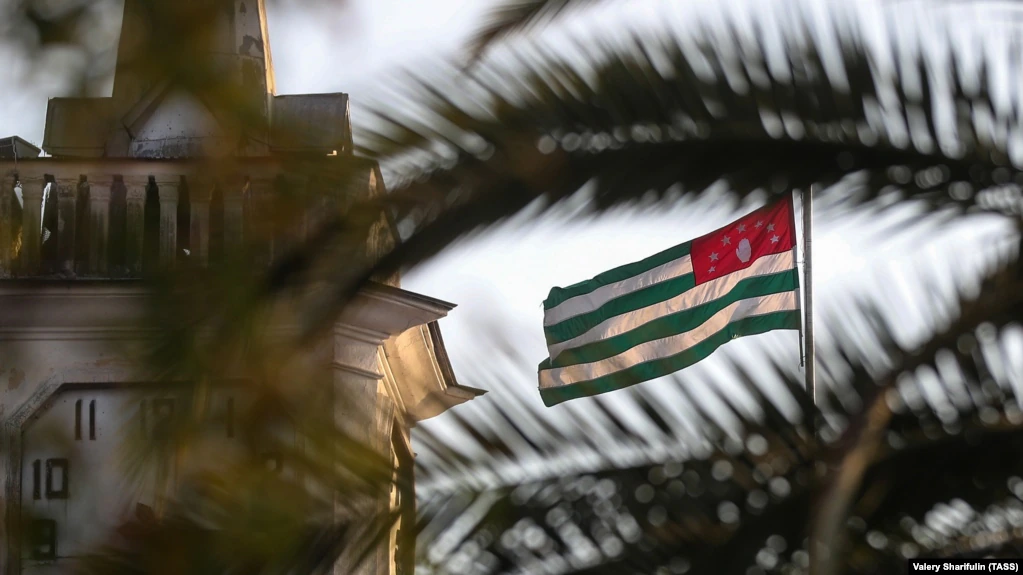
In Abkhazia, the authorities are approaching the adoption of a number of important decisions that would radically change the realities that have become familiar over the past 30 years. These concern the high-profile draft law “On Regulating the Legal Status of Apart-Hotels and Apartments” and two agreements with the Russian Federation: “The Intergovernmental Agreement on Mutual Recognition and Enforcement of Judicial and Arbitration Decisions in Economic Cases” and “The Agreement between the Governments of the Republic of Abkhazia and the Russian Federation on the Implementation of Investment Projects by Russian Legal Entities on the Territory of Abkhazia.” This package of legislative initiatives is being perceived ambiguously in Abkhaz society, where the consequences of their adoption have already been compared to the “reformatting of Abkhazia.”
The fact is that if adopted, the law on apartments would essentially lead to the opening of the real estate market in Abkhazia. This would be a revolutionary change, since to this day the region has a ban on the purchase of residential real estate by persons who do not hold local citizenship. In other words, no foreigner can legally acquire an apartment or house as property—only rent it. This feature of local legislation has proven costly for many Russians who wished to purchase relatively inexpensive property in Abkhazia. Because they could not officially register ownership, local sellers offered various gray schemes, which each time led to the same sad result: the buyer was left without money and without an apartment, while the quick-witted owner immediately began searching for a new client. Defrauded buyers have never managed to recover their money either through the courts or with the help of law enforcement.
Another feature of local legislation is that, unlike residential real estate, citizens of the Russian Federation even today have the right to legally acquire or build commercial real estate, although certain restrictions also apply here. For example, if it is a hotel or guesthouse, it must have at least 20 rooms or guest units. With some reservations, it is possible to attempt to convert a private house into commercial property for office use, but this is difficult, and such practice is rather rare in Abkhazia. According to the draft law awaiting its turn, apartments would be granted the status of commercial real estate. This means that Russians would be able to freely and legally register them as property, and unscrupulous real estate sellers would lose the opportunity to enrich themselves at the expense of deceived Russians.
The Sukhumi authorities insist on adopting this draft law, speaking of the need for development through attracting investments into the tourism sector and calling to put aside the fears fueled by part of the opposition and the public. In turn, Russian business has already voiced approximate scales of construction in the region. We are talking about at least 30,000 apartments in Sukhumi alone, with plans also including Gagra, Pitsunda, New Athos, Ochamchire, and beyond.
As for the other two agreements with Russia—the Intergovernmental Agreement on Mutual Recognition and Enforcement of Judicial and Arbitration Decisions in Economic Cases and the Agreement between the Governments of the Republic of Abkhazia and the Russian Federation on the Implementation of Investment Projects by Russian Legal Entities on the Territory of Abkhazia—these documents are necessary for Russia to provide legal backing for the complete economic absorption of Abkhazia. These two agreements must be viewed in conjunction with the law on apartments, since together they swing wide open the doors for Russian business to totally buy up in Abkhazia everything that has at least some value—above all strategic assets and entire sectors of the economy—and are designed to maximally protect the rights and future property of Russian investors.
The official narrative in Sukhumi claims that over the past two years, 11 applications have been submitted to the “Arbitration Court of Abkhazia” seeking recognition and enforcement of decisions by Moscow arbitration courts. These cases mainly concerned loans taken by Abkhaz citizens from Russian banks; however, due to the absence of an agreement, Sukhumi refused enforcement. Now, with the adoption of the law, an end can be put to the easy money obtained in this way.
On the one hand, the decision to recognize rulings of Russian courts in economic disputes would lead to the cessation of the entrenched practice of credit fraud involving Russian banks, which is certainly in the interest of the Russian side. On the other hand, it places local residents and businesses a priori in an unequal position vis-à-vis Russians and Russian business.
According to economist Akhra Aristava, the decision on mutual recognition of judicial rulings would first and foremost ensure protection for Russian banks, becoming a kind of banking guarantee for them. “This will again be unfair competition, unequal conditions. That is, a citizen of Russia will receive loans in Russia and invest money in Abkhazia, while a citizen of Abkhazia does not have the opportunity to obtain long-term loans at low interest rates, and this creates unequal conditions between citizens,” he said to Echo of the Caucasus.
Simply put, once legal acquisition of property such as apartments is permitted, any Russian will be able to take out a loan for it from a Russian bank on more favorable terms than an Abkhaz resident. Accordingly, it will be Russians who buy up all or almost all—tens of thousands—of apartments.
However, reducing everything merely to apartments would be unserious. What we see is legal preparation for large-scale “privatization” of Abkhazia by Russians. This is precisely why both decisions are needed—the agreements on courts and on Russian investments.
According to Bloomberg estimates, as of January 2, 2024, the combined wealth of the 25 richest Russians amounted to USD 328 billion. In total, the Forbes list for 2023 includes 110 Russian billionaires. Due to sanctions imposed on the Russian Federation and Russian business in connection with Russia’s aggression against Ukraine, wealthy Russians have lost the ability to operate in the West, and therefore their investment horizon has shrunk dramatically. So why not buy all of Abkhazia?
It would seem that investments are unequivocally a positive phenomenon; even the world’s most powerful economies—be it the United States, China, or the EU—compete to attract investments. But in the case of Abkhazia, this formula will not work. Moreover, Russian investments will turn into a complete catastrophe. Because very quickly everything that has at least minimal investment appeal—including small and medium-d businesses—will pass from the hands of the local population into the hands of aggressive Russian millionaires of all stripes.
In addition, it is easy to imagine that if even a third of the apartments are used by Russians for permanent residence, this will inevitably mean uncontrolled population growth, which will lead to an absolutely radical change in the existing demographic landscape. Such an influx of new residents will result not only in increased everyday tensions but also in the complete domination of Russians in all spheres of life—culture, education, and, naturally, the economy. As a consequence, within just a few years, over the course of a single decade, the key issue will arise squarely: granting political rights to a huge number of already permanent residents on an equal footing with “citizens of Abkhazia.” And the one who will defend the rights of the settled Russian population in Abkhazia, as well as Russian investors, will be none other than Putin himself and the Russian Federation.
Razhden Kajaya