
How Russia punishes Abkhazians resisting annexation with their last strength
02/02/2024 21:15:46 Conflicts
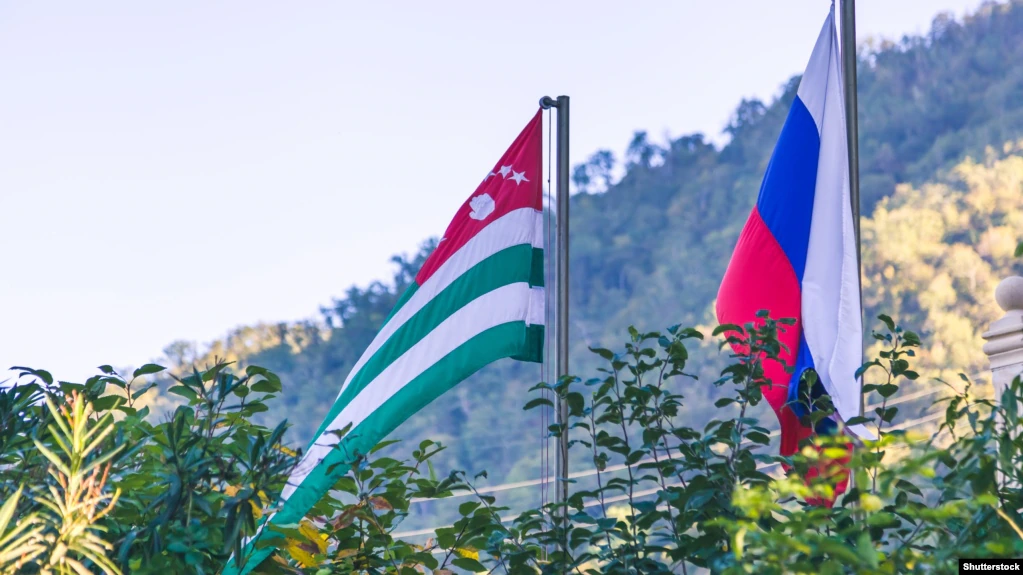
Throughout the past week, residents of Abkhazia, alongside the main problems—lack of water and electricity—have been discussing the new rules for crossing the state border with the Russian Federation.
One after another, posts began appearing on social media asking for clarification about the situation, stating that from March 1, citizens of Abkhazia who hold dual citizenship (of Abkhazia and Russia) would no longer be able to cross the border using an Abkhaz passport, but only with a Russian one.
“Dear relevant authorities! Please give us specific and accurate information regarding border crossings,” read almost all such appeals from citizens. However, Abkhazia’s official structures remained silent.
As a result, residents of Abkhazia began searching for information on the issue themselves. During these efforts, it became clear that the rules for entry into and exit from Russia had changed at the end of April 2023.
Information published on the website of the Border Service of the Federal Security Service (FSB) of Russia states that new border-crossing rules have been introduced, including for residents of the Republic of Abkhazia. In accordance with the provisions of Article 10 of Federal Law No. 138-FZ of April 28, 2023, “On the Citizenship of the Russian Federation,” a citizen of the Russian Federation who holds dual or multiple citizenship is regarded by the Russian Federation solely as a citizen of the Russian Federation, regardless of their place of residence. In short, the Russian Federation has concluded three international treaties with foreign states regulating issues of dual citizenship: Tajikistan, South Ossetia, and Abkhazia. The provisions of these treaties do not provide for the possibility of using an Abkhaz passport to cross the border. “Thus, departure from the Russian Federation and entry into the Russian Federation of a citizen of the Russian Federation who has dual or multiple citizenship is possible only with a document certifying his or her identity as a citizen of the Russian Federation,” the information on the FSB Border Directorate website states.
Despite the fact that the new rules were supposed to be applied from the end of April last year, they had not been enforced at the Abkhaz–Russian border. That is, a citizen of Abkhazia who also held Russian citizenship was able to cross the border using an internal or foreign Abkhaz passport.
Residents linked the fact that the rules for crossing the border for citizens of Abkhazia had suddenly tightened to the deteriorating relations with the strategic partner, which in recent months has increasingly demonstrated to disobedient Abkhaz a method of punishment widely known as the “carrot and stick.” And whereas previously Moscow applied various methods of pressure on Abkhaz society behind the scenes, fearing publicity, it is now doing so quite openly.
“Even a fool understands that it’s not for nothing that the Russians have suddenly tightened border-crossing rules for us. You know how many of our citizens the FSB officers have been detaining at the border lately. They hold people for hours, ask about our internal affairs. Apparently, the new rules are needed so that these detentions and lawlessness don’t look like pressure on Abkhaz citizens,” says our interlocutor Rauf.
“Many of our young people enrolled in Russian universities as citizens of Abkhazia under quota programs—what are they supposed to do now? They also have Russian citizenship, but the quotas allow them to study for free. With the introduction of the new border rules, the students will face difficulties, up to the point that they may have to give up studying in Russia. And this is a great disaster for our youth,” says our interlocutor Ada.
“The first thing that came to mind when I heard the news about the border was that the residents of Abkhazia are going to be conscripted into the army in order to be sent to fight in the war with Ukraine. They don’t say it out loud, but many people know that there is a hidden mobilization going on in Russia and that the Russians want to send more Abkhaz there. For our already small nation, this would be a catastrophe, since we have already lost some of our best young men in the ‘special military operation,’” says our interlocutor Timur.
There may be many reasons why the strategic partner, friend, and neighbor Russia has taken such a step, but the main one remains the desire to exert pressure on Abkhaz society, which is straining with its last strength to resist the annexation of Abkhazia. It is no secret that in the very near future the Parliament will consider a number of important issues such as the law on foreign agents, the law on apartments, and energy policy. All of these issues could radically change the future of the Abkhaz state and its people. And the fact that Russia has already limited electricity supplies to Abkhazia, which is already sitting without power for four hours or more a day, speaks volumes.
And the situation will only worsen. After all, Abkhaz still see no future without their homeland and every day increasingly wish to normalize relations with all neighbors and with the world. And the official Kremlin does not wish to allow this under any circumstances. This means that Abkhaz society still faces the main battle for its own freedom—and it appears that it will begin with power outages lasting 12 hours a day.
Kristina Avidzba
The text contains toponyms and terminology used in the self-proclaimed Abkhazia.