
Financial dependency: Comparing Sukhumi and Tbilisi
04/03/2024 06:38:44 Conflicts
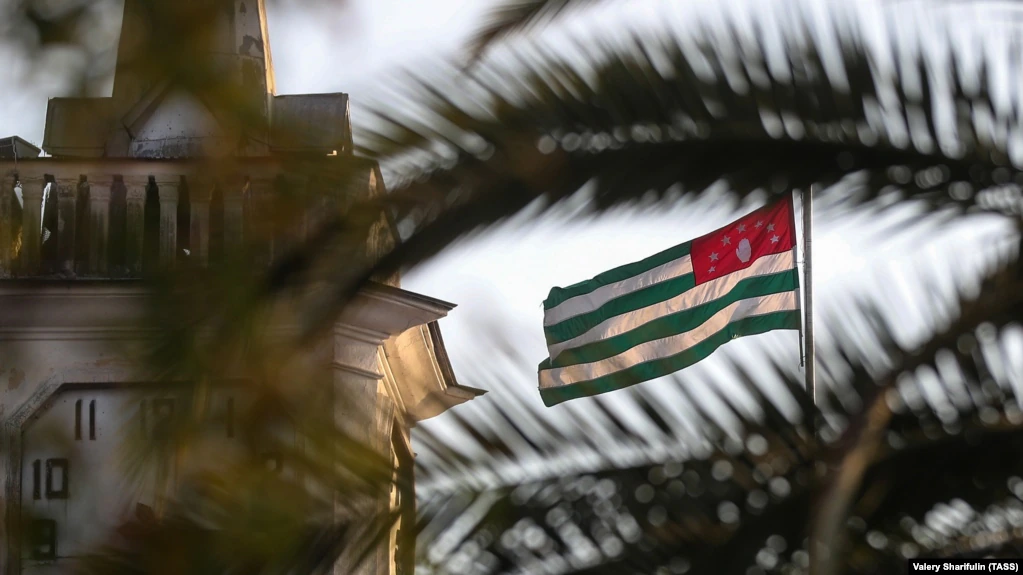
Recently, against the backdrop of growing tensions in relations between Russia and Abkhazia, the financial topic has become especially relevant. It is no secret that Sukhumi is totally dependent on Moscow, both in terms of the budget and the economy as a whole. It is clear that the budget is not the entire economy—there is also the private sector—but even there Russian money predominates, primarily in tourism. However, Abkhazians often counter accusations that they rely too heavily on the Russian financial needle, are accustomed to it, and have no intention of getting off it, by claiming that Inguria depends on the West no less than Abkhazia depends on Russia. “You yourselves are completely provided for by puppeteers from Europe and the United States—how are you any better than us?” they ask, and as a rule receive no clear answer. On the other side of the Inguri, no one even thinks of explaining what and how. As a result, it seems there is nothing to object to, and that things are more or less exactly so. In reality, however, the situation regarding Tbilisi’s financial dependence on the West is entirely different from how Abkhazians imagine it. And not because “everything is ambiguous” or “it’s completely different,” but because it is in fact different.
Well, let’s sort it out. First with figures, and then, after the figures, with the substance of the matter.
So, in 2024, Inguria’s budget in dollar terms will amount to about $9 billion, with a deficit of approximately $800 million. EU grants amount to $100 million, while external borrowing of $1.3 billion will be used to cover the deficit. At the same time, about $1.1 billion will be allocated to service existing debt.
Thus, in net terms, the external component in the $9 billion budget consists of $100 million in EU grants plus the net balance between borrowed funds and debt repayments—$200 million. That is, $300 million out of $9 billion. You can calculate for yourselves what share of total expenditures that is. It comes out to just a few percent.
The rest consists of tax revenues, customs duties, excises, and everything else.
How does the situation look in Abkhazia in this regard?
In theory, one can hear claims that Russia covers half of Abkhazia’s budget—but “half” is rhetoric. In reality, it might be 50%, or 46.5%, or 51.4%. Any figures can be squeezed into the purely journalistic notion of “half.”
So what is actually going on there?
Let’s take Abkhazia’s 2023 budget. You’ll understand later why 2023.
So. The main parameters of the RA budget for 2023 were as follows: total amount—14.2 billion rubles, Russian assistance—5.1 billion rubles. By the way, if anyone is interested, the ratio in the draft 2024 budget is approximately the same, so the essence of the matter has not changed much.
What is this? Where is the legendary “half” of the budget? After all, 5.1 billion can in no way be considered half of 14.2 billion. At best, it’s a little more than a third.
So does that mean the tale about “half the budget” is a lie? Has Abkhazia managed to get off the Russian needle and increase its own revenues? Hooray, hurray, throw your hats in the air!
But it’s not that simple.
First, even a third is far more than the 3–4% of foreign assistance in Inguria’s budget, $200 million of which is debt, and as follows from the budget parameters, it is constantly being repaid. Three percent in debt and thirty percent as a gift are, to begin with, incomparable things.
But that’s not all. Russian assistance to Abkhazia is structured very cleverly, specifically to improve statistics and cloud people’s minds.
The real picture emerges from a completely different set of statistics—the inflow of funds into Abkhazia through the republic’s banking system. It includes fairly neutral items such as remittances, transfers to legal entities’ accounts, and so on. That is not of interest to us—who knows what profits Abkhaz businesspeople receive.
What does interest us is something else—the Abkhaz budget received Russian financial assistance in the amount of 5.2 billion rubles. Those same 5.1 billion, just 100 million more… But let’s not quibble over small things.
And here comes the most interesting item on the list—ceremonial music plays, the host cuts the red ribbon, and—3.4 billion rubles for pensions to Abkhazia’s residents…
That is, to improve reporting, Russian financial assistance flows through two channels. One goes into the budget, everyone sees it, and everyone rejoices—look, let the Ingurian scoundrels choke on it, Russian assistance in our budget is not half, only a third. The second channel flows quietly—no announcements, no drum rolls— all financing of Abkhaz pensioners goes off to the side, with the budget being, as it were, not involved at all…
But we are experienced people and understand what is what, and to the 5.2 billion rubles officially shown in the budget, one must add those same 3.4 billion for pensions.
That is precisely why we compare the 2023 Abkhaz budget, because in 2024 the data on transfers are not yet available, and without them the picture is incomplete.
Altogether, this comes to 8.6 billion rubles, which can confidently be added to the official figures. Thus, the actual Abkhaz budget amounts to 17.8 billion rubles, of which 8.6 billion are Russian money. Nearly 50 percent. Those very ones.
And at the same time, compare—$100 million as a gift and $200 million in debt within a $9 billion budget on the one hand, and 8.6 billion within a 17.8 billion budget on the other… Draw your own conclusions. You don’t need to be a great mathematician.
But even these are just numbers. The main thing lies not in them, but in something entirely different. The European Union spends more than $100 million on Inguria, but there is a crucial difference.
Western assistance to Ingurians is investment—for example, in the activities of the Association of Women Farmers: funds are allocated to support women farmers, repay loans, and purchase equipment.
Western money goes toward introducing more modern methods of growing nuts, which will improve their quality and, accordingly, increase incomes.
Western money goes toward implementing energy-saving technologies in small and medium-d businesses.
Western money goes toward financing organizations that provide assistance to women victims of domestic violence.
The list could go on—various small sectoral organizations, such as associations of producers of this or that, exporters of this or that, students receiving education in the West, and so on.
What does Russia invest in? First of all, infrastructure—roads, bridges, sidewalks, schools, and so on. Naturally, a significant part of this money is stolen—some directly in Moscow, some already in Sukhumi—corruption has not been abolished, and in Inguria it is significantly lower. Nevertheless, something is still built, repaired, and renewed with this money.
But everything else is salaries, pensions, benefits. Eat—and don’t ask questions. And don’t you dare think about anything else.
The West finances the fishing rod. Russia gives Abkhazians the fish. Don’t even think about the rod—you should be satisfied with the fish.
That is the main difference. One that cannot be measured by the amount of money.
Tengiz Ablotia