

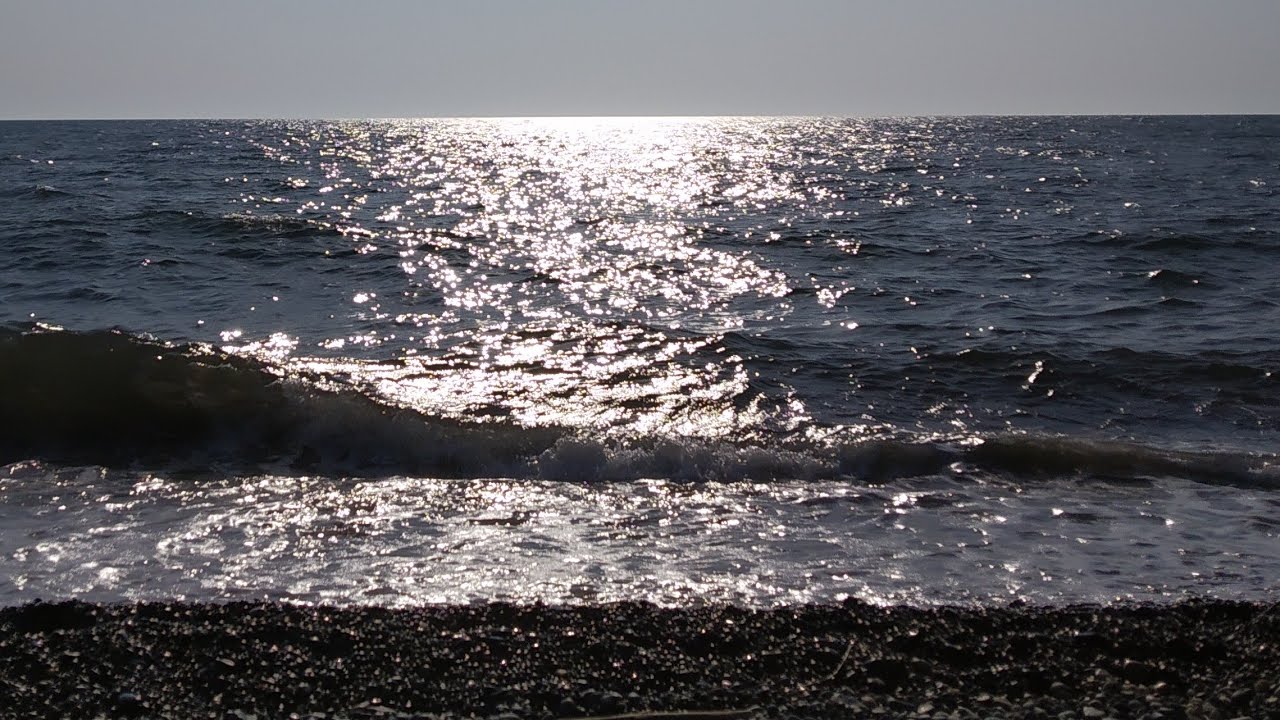
Over the past two months, Abkhazia has been concerned about the mass death of wild sea ducks—great crested grebes (pochards). In the perception of local residents, the situation has taken on the scale of an environmental catastrophe. Social media has been flooded with posts showing photographs of dead birds, whose number has reached into the hundreds.
However, despite the fact that the mass die-off of birds has continued for a second month, there is still no answer as to the cause of this phenomenon. Neither local ecologists, nor biologists, nor zoologists are able to properly explain the mass mortality of birds, while the authorities assure the population that nothing extraordinary is happening. Such a position taken by experts and officials, in turn, leaves room for speculation, fueling the emergence of various versions at the level of rumors and gossip.
One of the first theories voiced was the possible involvement of sailors in poisoning seawater, in particular with ammonia. Supporters of this version cite the recent death of three Turkish fishermen aboard a small seiner vessel that was fishing for anchovy off the coast of Pitsunda. As it turned out, the cause of their deaths was ammonia poisoning—the substance had been stored on board the vessel. This tragic incident drew public attention to problems in the fishing industry. People demanded that the authorities restore order and inspect vessels engaged in anchovy fishing. Local residents point out that the fishing industry is completely riddled with corruption and that seiners significantly exceed their catch quotas. Many suspected that because of inspections launched after the tragic incident, sailors from various vessels may have dumped hazardous chemicals and waste overboard, leading to the poisoning of anchovies and, through them, ducks that feed on small fish.
Another version concerns the possible infection of birds with some new virus; however, it cannot be tested in Sukhumi. As noted by Russian ornithologist Aleksandr Dvoretsky, neither Abkhazia nor even Sochi has a laboratory capable of determining the exact cause of bird deaths. Although, if there were genuine interest in understanding what is really happening, Sukhumi could seek assistance from Tbilisi. Georgia is home to the best high-level laboratory in the region. But political considerations, of course, will not allow either the Russians or the Abkhazians to use the services of the well-known Lugar Laboratory.
Meanwhile, the situation is worsening. In recent days, reports have emerged that in addition to grebes, seagulls and dolphins have begun dying en masse in Abkhazia. The geographic scope of the disaster has also expanded. Mass animal deaths have now been recorded in Russia’s neighboring Krasnodar Krai. Residents of the Russian region are posting videos on social media showing dead birds and dolphins found on beaches. According to Russian media, over the past several days approximately 600 dead grebes have been found in the waters off Sochi, Anapa, the Tuapse district, Gelendzhik, and Novorossiysk.
Russian authorities claim that the mass deaths of animals are caused by cold weather, weakness, and storms—that is, natural reasons—and that there is no cause for concern. The same is asserted in Sukhumi. According to the director of the local Institute of Ecology, Roman Dbar, winter is the most difficult time for all animals, so primarily old, weakened, and sick individuals perish. In his assessment, the unexplained bird deaths continuing for a second month are merely an ordinary phenomenon, even despite the fact that the number of dead birds has exceeded hundreds and that seagulls and dolphins have joined the dying grebes.
The situation is further aggravated by the fact that, unlike in Russia, dead animals in Abkhazia are poorly removed. This means that carcasses not only decompose directly along the shore, but also become food for other, still healthy animals. But if the birds did not die of natural causes but from some disease, this could lead to unpredictable and severe consequences, including for humans. Therefore, many residents of Abkhazia do not share the dismissive attitude of local authorities and scientists toward the problem of waterfowl mortality.
Columnist Aleksei Lomiya claims he has never observed such a large-scale die-off of seabirds. “With all due respect to these people, to their academic degrees and education, their comments did not satisfy me at all. Especially when they tried to reassure us by saying that this happens fairly often, once every few years. Here I can even argue. I have lived by the sea for all my conscious years. I have seen and observed dead birds, but never in such numbers,” the Abkhaz blogger wrote.
Razden Kajaya