
Abkhazia is looking for a mole who leaked the protest note of the Russian Foreign Ministry
14/03/2024 07:40:12 Conflicts
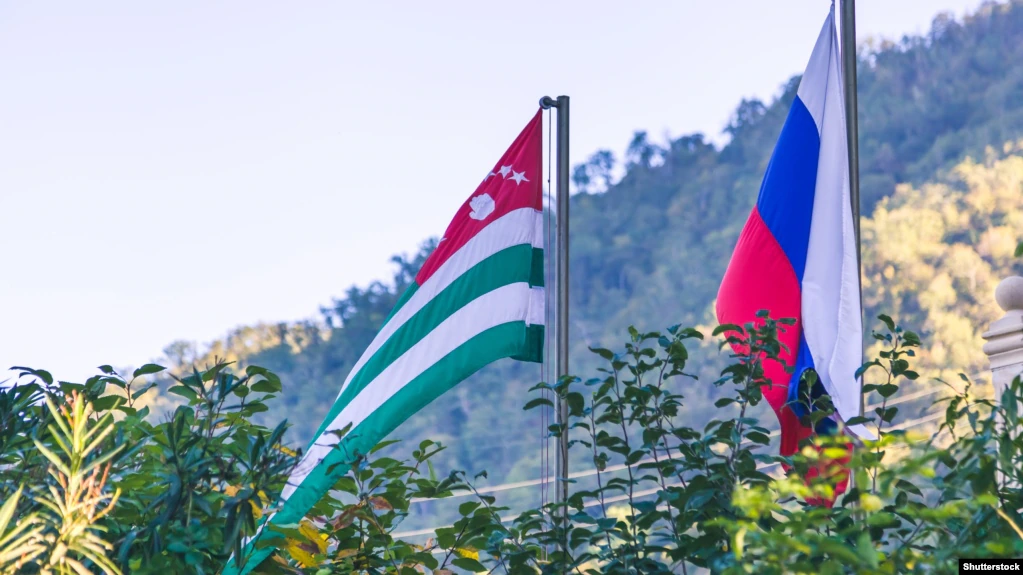
In Sukhumi, a political bomb known as the Pitsunda state dacha has exploded with renewed force. The issue concerns the “Russian–Abkhaz intergovernmental agreement on the transfer of ownership to the Russian Federation” of the former Soviet state dacha in Pitsunda, where party bosses of the USSR once vacationed and recovered their health.
Let us recall that after the end of hostilities in 1993, the then Abkhaz leader Vladislav Ardzinba transferred the territory of the Pitsunda dacha to the Russian Federation as a sign of gratitude for assistance during the war. Already after Russia’s recognition of Abkhazia’s independence in 2008, Moscow began raising the issue of formally legalizing ownership rights to this facility.
It is important to note that when speaking of this “facility,” what is meant is an entire complex occupying more than 180 hectares of protected territory along with a substantial portion of the adjacent marine area.
For a long time, Sukhumi stalled, trying to avoid losing “jurisdiction” over a significant and, moreover, one of the best plots of land. But after 2022, Russia moved to unprecedented pressure.
The point is that under the signed agreement, absolute jurisdiction of the Russian Federation extends to the transferred territory — no resident of Abkhazia will ever again be able to freely enter it. Roughly speaking, even the “president” would have to request a pass from the Russian Federal Protective Service in order to visit the Pitsunda dacha, let alone ordinary people, who will not be allowed anywhere near the facility or the adjacent coastline.
Aslan Bzhaniya signed this agreement during one of his frequent visits to Moscow and attempted to conceal this fact from the public. However, since the document required ratification by the “parliament,” it was impossible to hide its existence from the outset. News of the transfer of the Pitsunda facility into Russian ownership caused a wave of outrage in Sukhumi, but the Kremlin continued to apply pressure with renewed vigor.
In what seemed like a stalemate, the Abkhaz authorities resorted to trickery, pulling off a maneuver designed, on the one hand, to avoid popular anger, and on the other, to fulfill Moscow’s insistent demand. To do this, the “parliament” convened at dawn, practically at the crowing of the roosters — at 4 a.m. — and swiftly ratified the agreement, albeit with certain reservations.
Specifically, changes were introduced into the Sukhumi version of the agreement that had already been signed and ratified by Russia:
a ban on transferring the facility to third parties; and
the possibility of unilateral denunciation of the agreement and the return of the state dacha to Abkhaz ownership in the event that one of the parties fails to fulfill the terms of the agreement.
However, the trick did not work. The Russian Ministry of Foreign Affairs sent a note to Sukhumi demanding that the Abkhaz version of the ratified agreement be brought into conformity with the original document signed in Moscow. In particular, the Russian MFA indicated that Sukhumi must lift the ban on Moscow’s transfer of the Pitsunda facilities to third parties and remove the clause allowing for possible denunciation of the agreement.
The note was received in Sukhumi back in early February and was also carefully concealed from the public. However, rumors spread at lightning speed in small Abkhazia, and within just a week everyone already knew of its existence; a little later, the contents of the note also became known.
At first, the so-called “foreign minister” Inal Ardzinba denied receiving the note, but later was forced to acknowledge this fact. At the same time, despite protests, he still did not disclose its contents to the public, which only reinforced popular suspicions. And recently, someone desperate leaked a copy of the Russian note to the media, which once again stirred public outrage.
After this, the so-called minister of foreign affairs finally broke his silence on this pressing issue. However, it turned out that his main concern was not the essence of the problem — which lies in Moscow’s aggressive seizure of the Pitsunda state dacha — but merely the fact of the leak itself.
“One must take into account that this is a note of the Ministry of Foreign Affairs of the Russian Federation. How appropriate is this, how consistent it is with diplomatic etiquette and diplomatic practice — the publication of intergovernmental correspondence — this is an issue I would like to discuss specifically with the person who comes out and says: my name is such-and-such, first and last name, and I would like to communicate with this person. If he believes that he acted correctly, I would very much ask him to identify himself,” Ardzinba noted.
That is, the fact of state-level raiding is considered normal, while the main problem lies in identifying the “mole” who exposed the real and unsightly essence of the supposedly equal and allied Russian–Abkhaz relations.
In addition, according to Ardzinba, after receiving the note, a working group was created, which has already agreed on a preliminary version of the response note. It is “substantive and clear,” he says.
A strange situation is emerging, is it not? It took an entire month to prepare not a final response, but merely a preliminary one! Do true friends really make each other wait months for a reply?!
It is difficult to predict how the situation will develop further, and whether Sukhumi will once again manage to wriggle out of the Kremlin fraternity’s tenacious embrace. In any case, its outcome will set a precedent: if Moscow does succeed in bringing Sukhumi to its knees on this and several other issues troubling Abkhaz society (the draft laws on apartments, foreign agents, defamation, etc.), then it will only remain to acknowledge the sad fact that the process of Abkhazia’s de facto annexation has acquired threateningly concrete outlines.
Razden Kajaya