
Ukraine-Sanctioned Tanker Docked at Kulevi Port
05/02/2026 10:39:00 Analysis
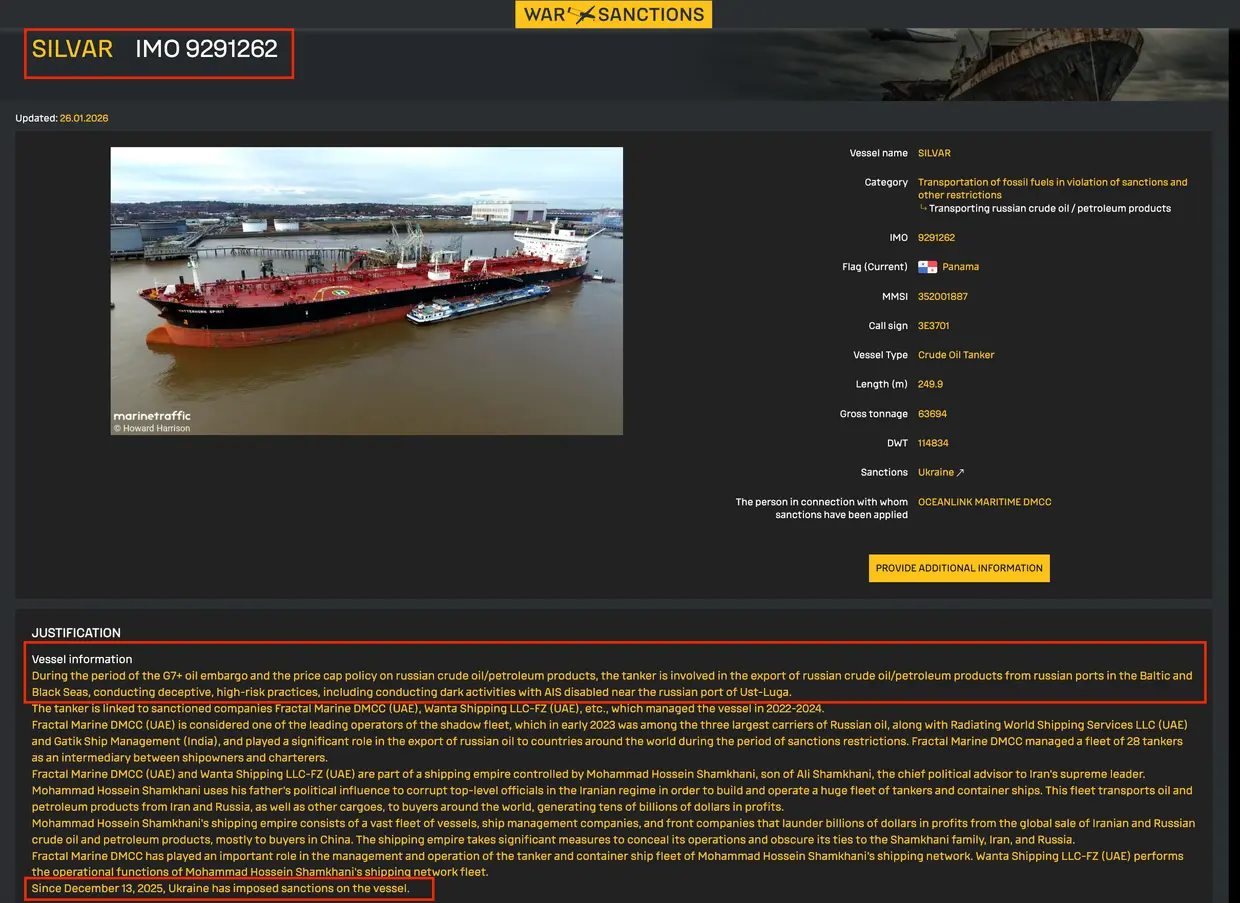
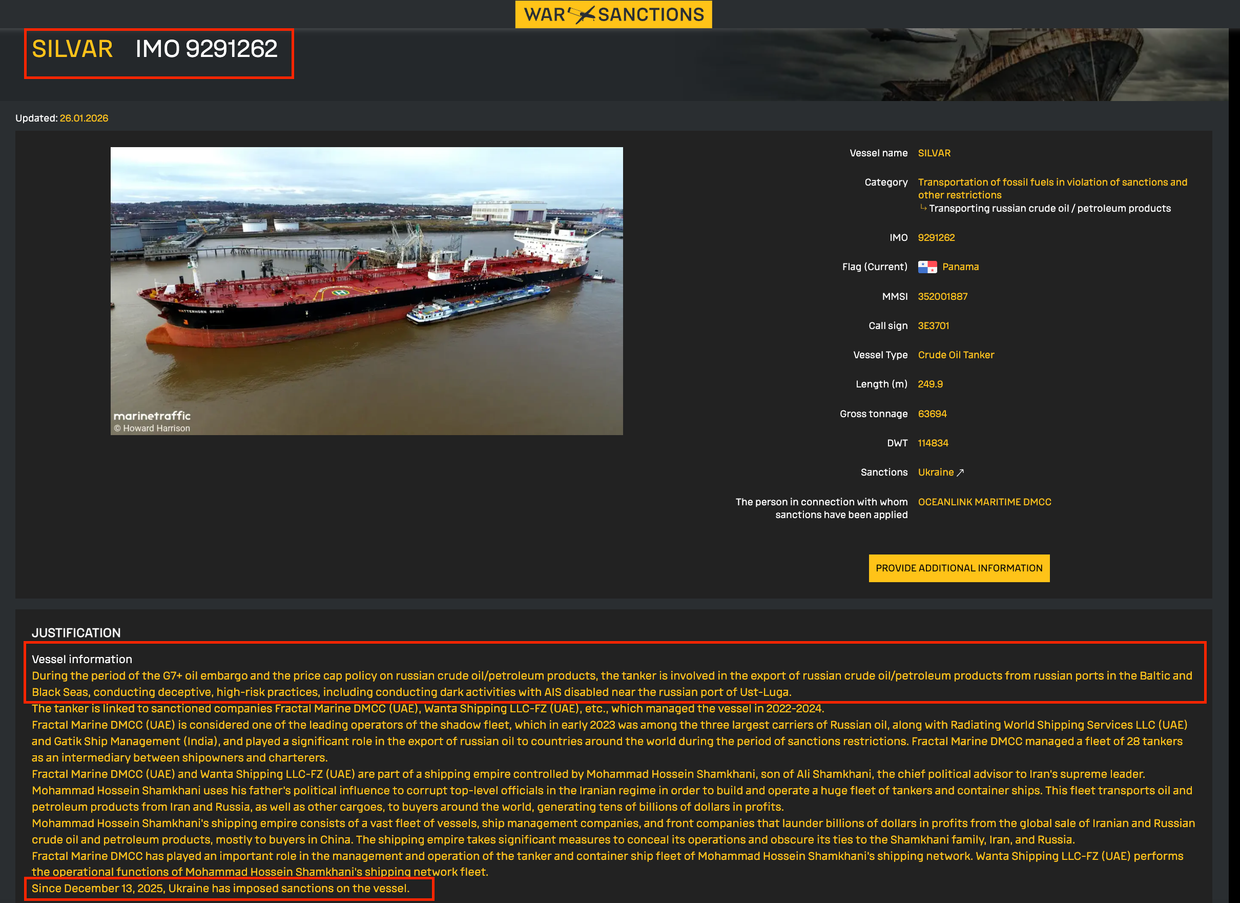
On January 30, 2026, the oil tanker Silvar (IMO 9291262) entered Georgia’s territorial waters for the first time. According to Ukrainian intelligence, the vessel is part of the so-called “shadow fleet.” Ukraine sanctioned the tanker on December 13, 2025. In 2024–2025, the vessel’s owner and management companies were also sanctioned by the governments of the United States and the United Kingdom. Following this development, the vessel was transferred to the ownership and management of an Indian company.
According to open-source data, the tanker departed Russia’s Novorossiysk oil terminal early in the morning on January 29. Its signal was first detected in Georgian waters at around 1:00 a.m. on January 30. No data is available prior to that point, as the vessel’s signal transmission system was switched off after leaving Russia. The tanker unloaded up to 24,000 tons of oil or oil products at the port of Kulevi. This estimate is based on the vessel’s draft: after unloading, the draft decreased from 12.6 meters to 9.5 meters.
Silvar is an Aframax-class oil tanker with a capacity of up to 115,000 tons. According to Ukrainian intelligence, it has been actively used to transport Russian oil and petroleum products through covert routes. The vessel has repeatedly been observed concealing its coordinates. Open-source data indicate that, prior to entering Georgian waters, the ship falsified its location data and switched off its AIS.
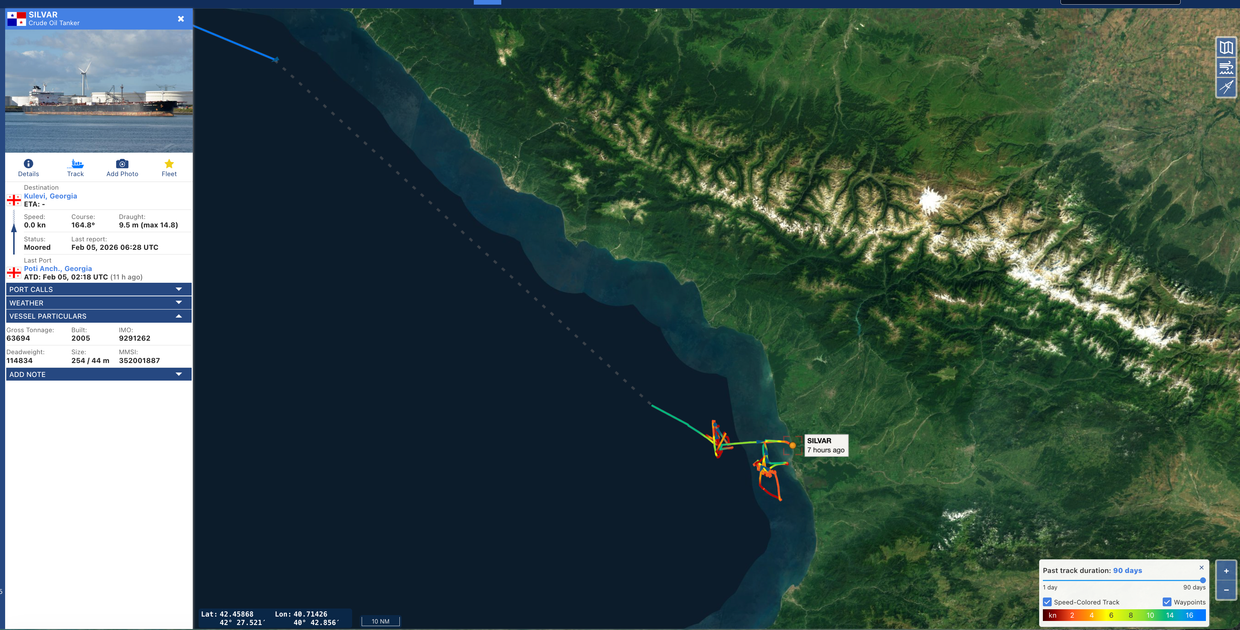
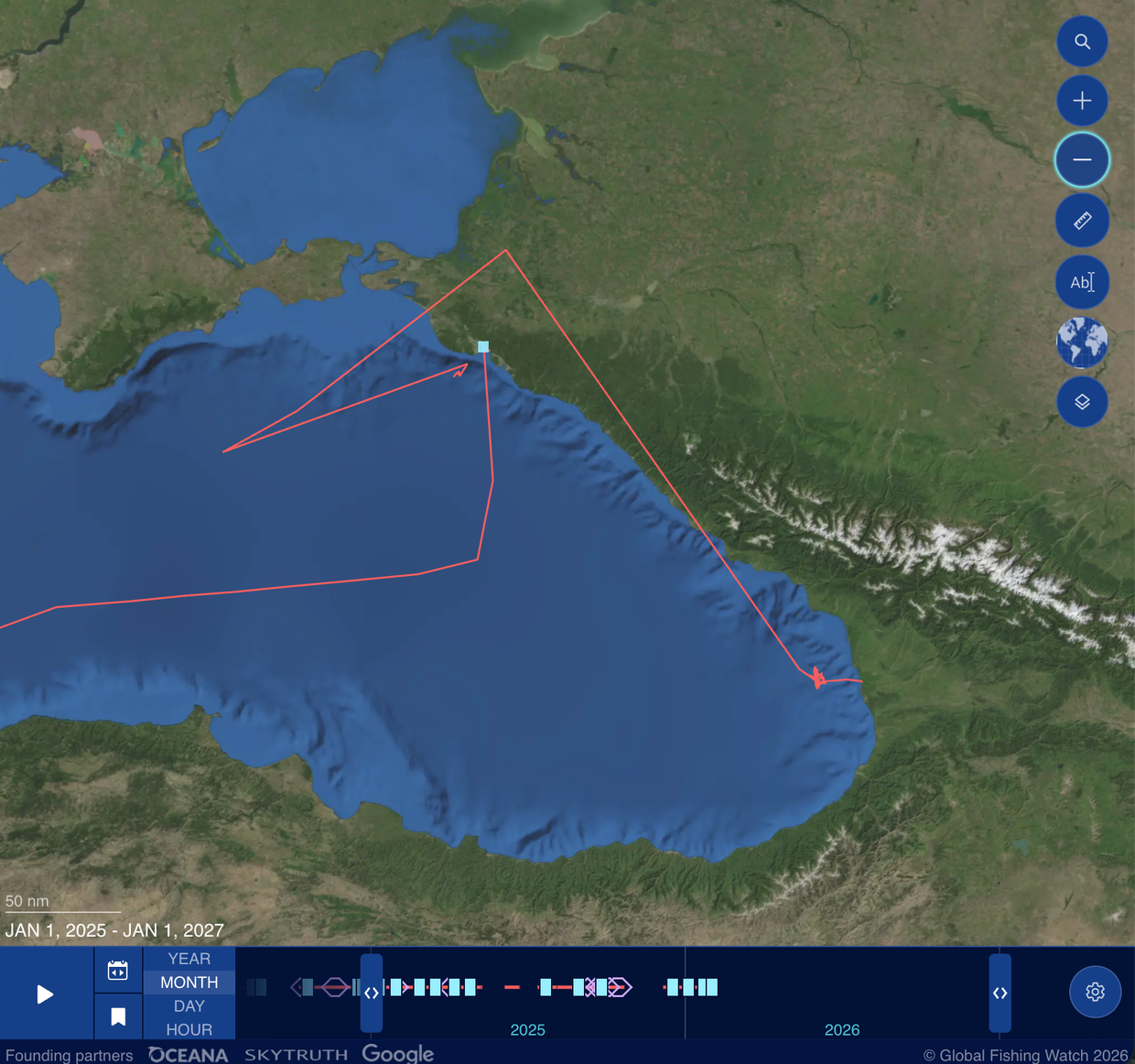
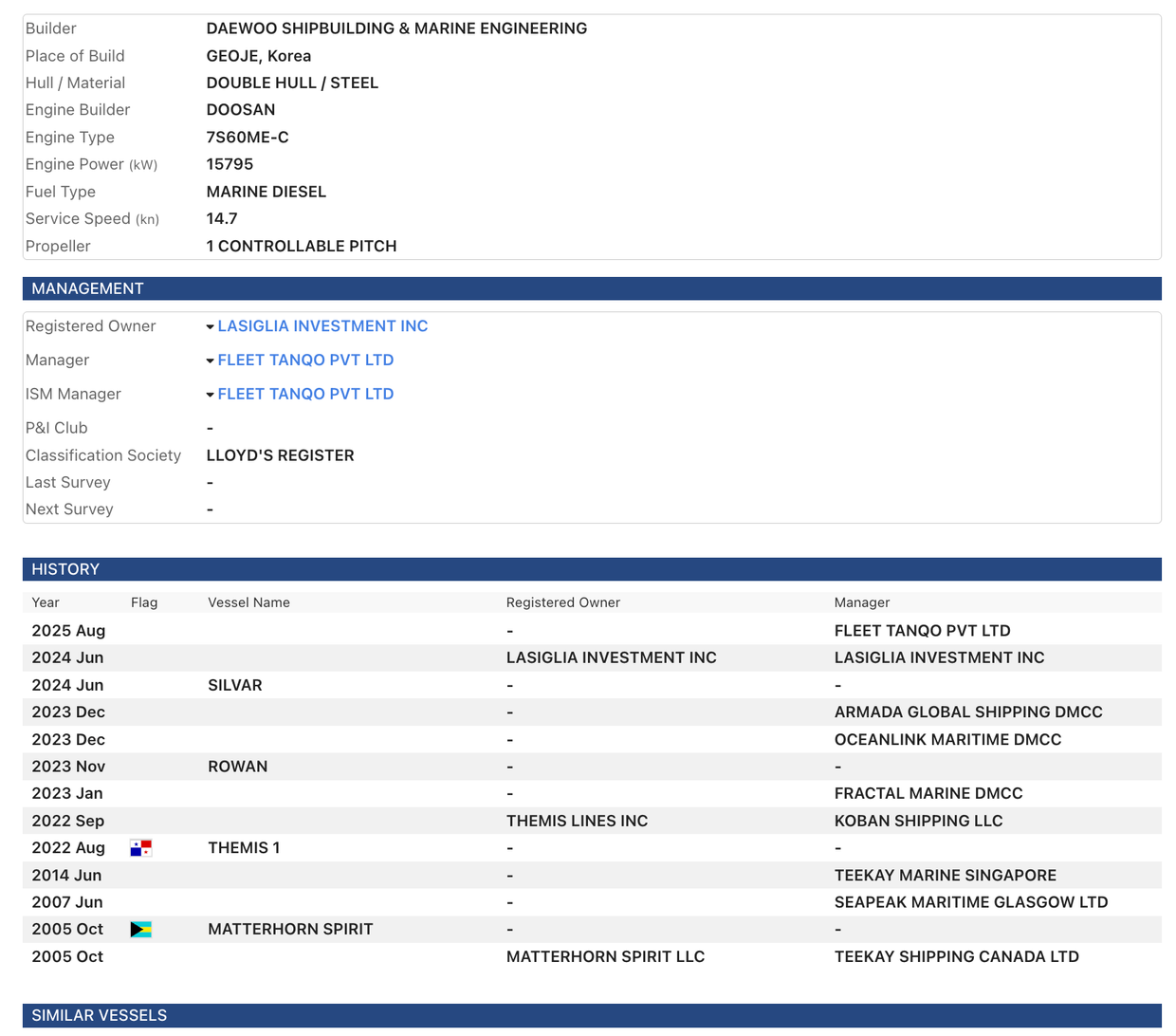
In addition to disabling its AIS system, the tanker meets several other criteria typical of the “shadow fleet.” No insurance issued by a reputable provider is listed for the vessel on Equasis.org. The tanker is 21 years old. Since 2022, it has changed its name three times, its management company six times, its owner twice, and its flag six times. From 2005 until August 2022, the vessel was named Matterhorn Spirit. In August 2022, it became part of an Iranian maritime network, was renamed Themis 1, and ownership was transferred to Themis Lines Inc., while management was taken over by Koban Shipping LLC. This management company is linked to an Iranian network.
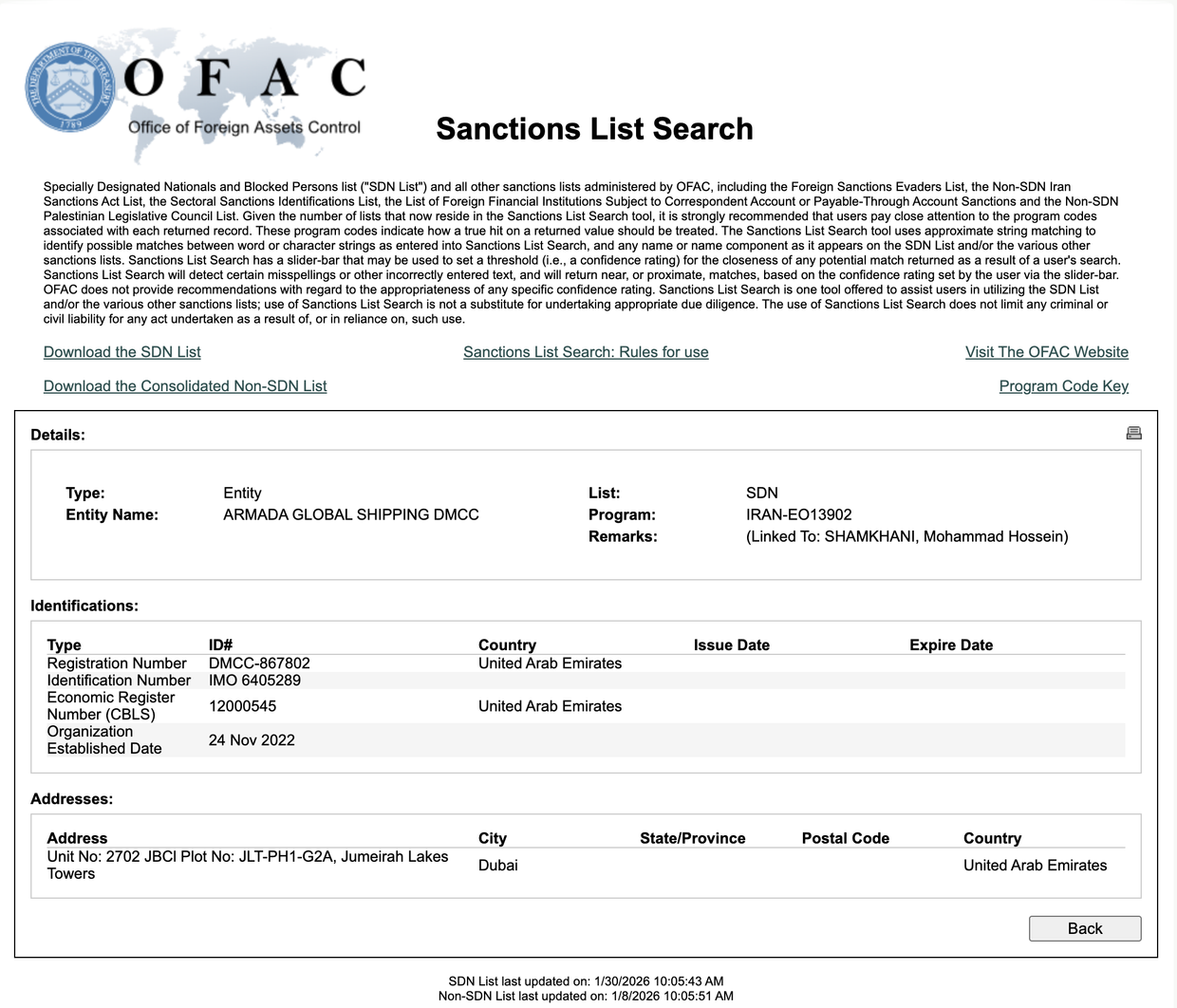
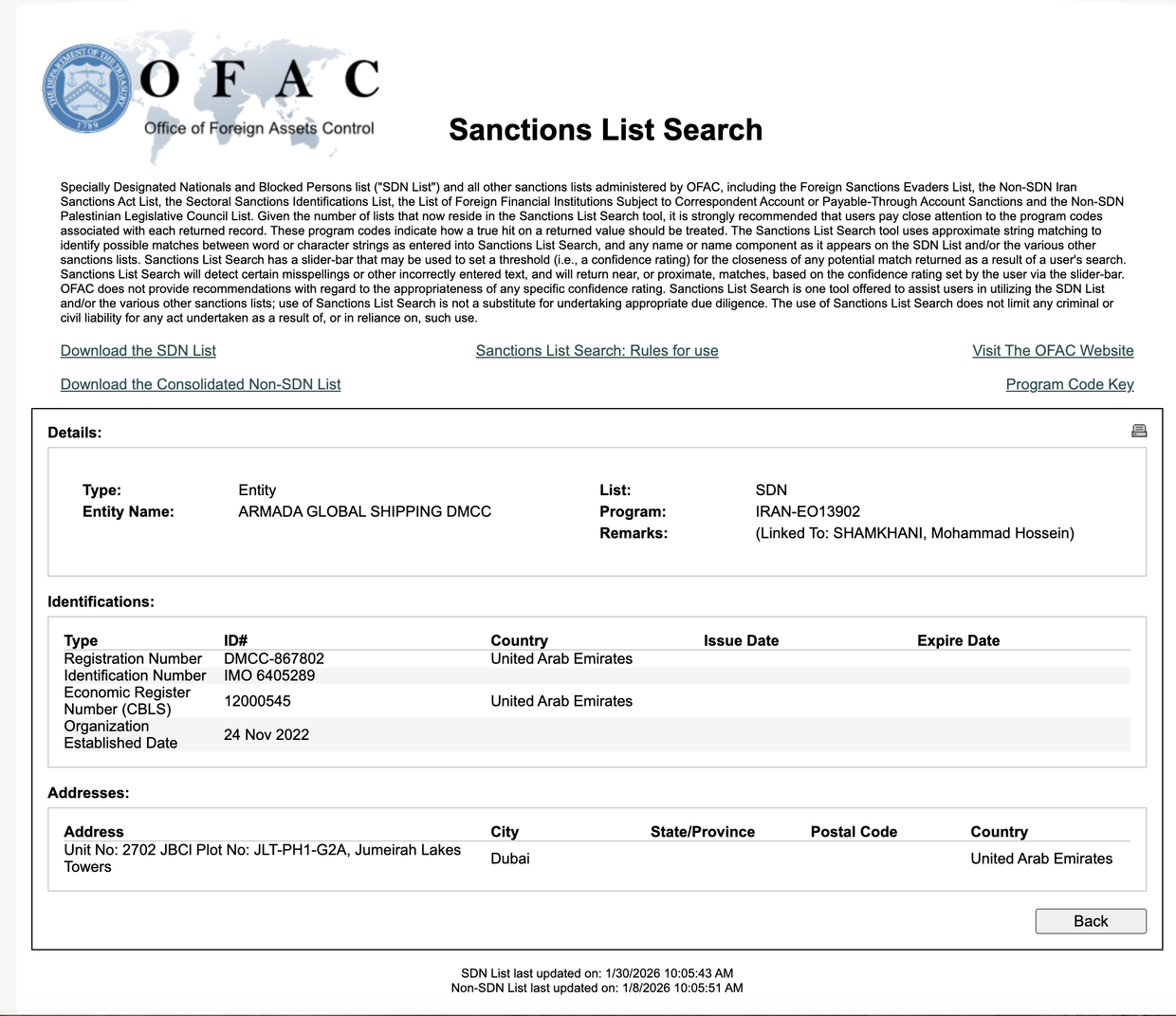
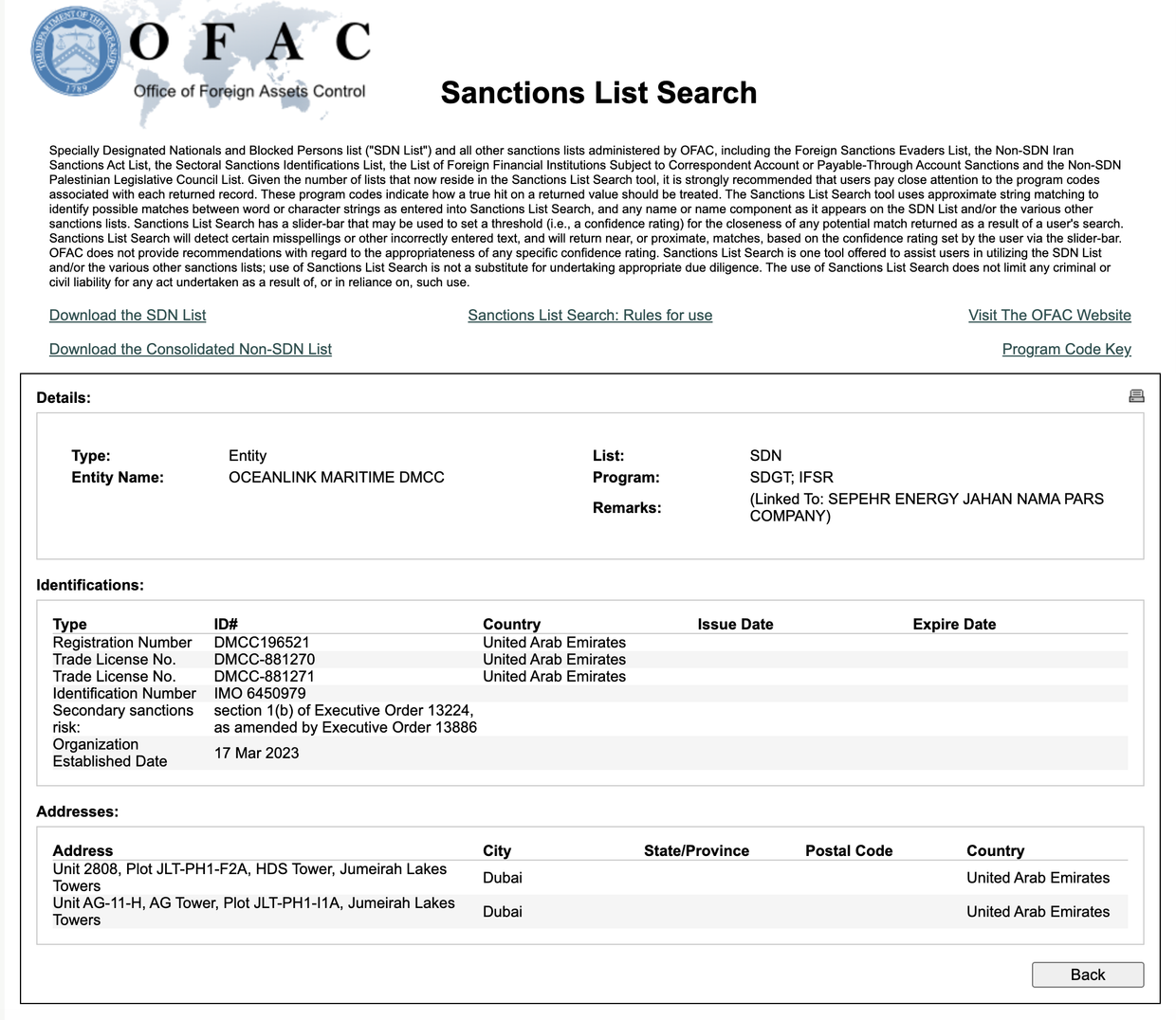
At various times, the tanker was managed by Fractal Marine DMCC, Koban Shipping LLC, Oceanlink Maritime DMCC, and Armada Global Shipping DMCC. All companies that owned or managed the vessel until June 2024 have been sanctioned by multiple jurisdictions, including the United Kingdom, the United States, and the European Union. The vessel is currently owned by the Indian company Lasiglia Investment Inc., with management handled by Fleet Tanqo Pvt Ltd.
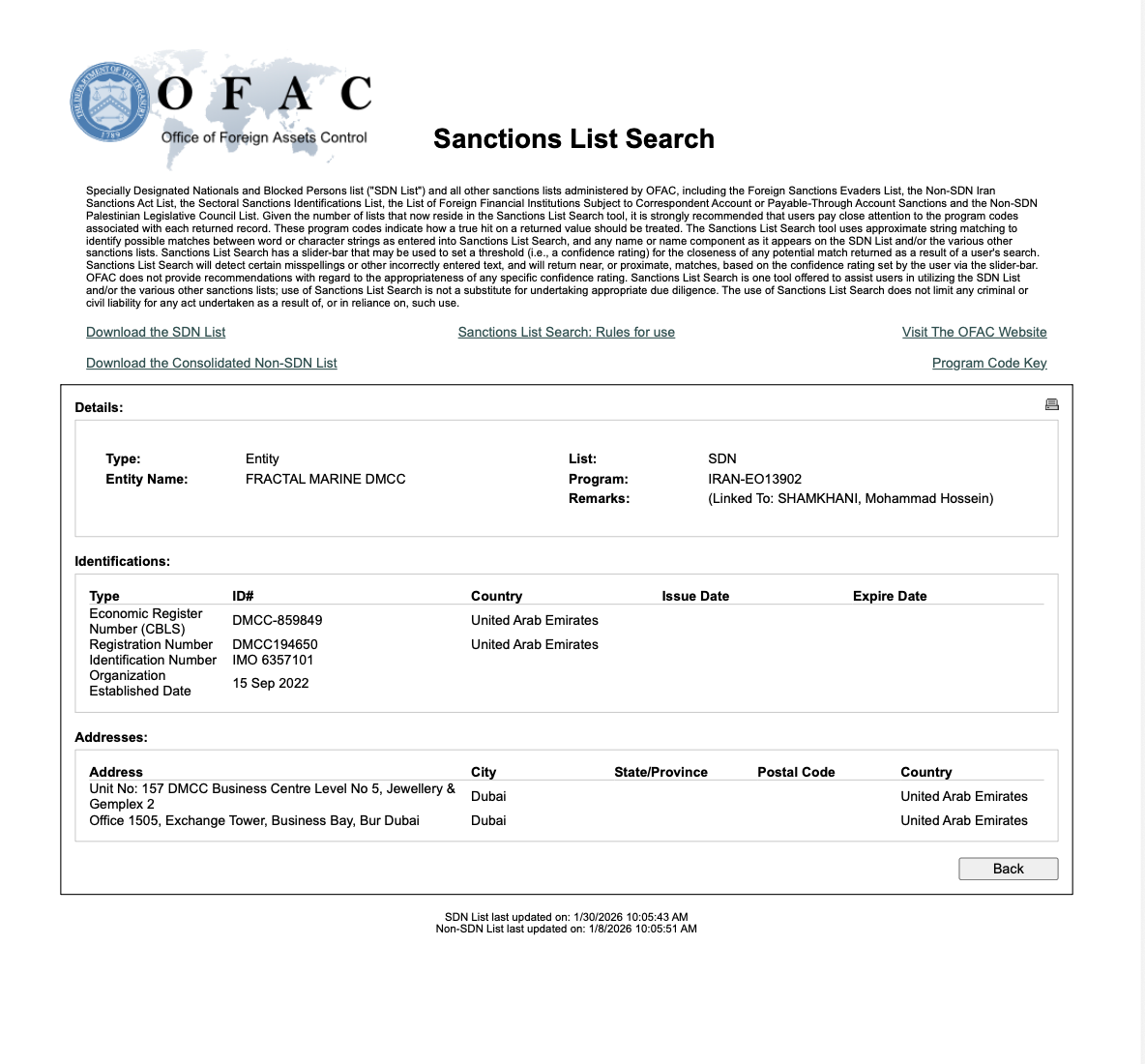
Particular attention should be paid to Fractal Marine DMCC, a Dubai-based shipping company operating in the United Arab Emirates. The Ukrainian government considers it one of the main operators of the shadow fleet. In early 2023, it ranked among the three largest carriers of Russian oil. Fractal Marine managed a fleet of 28 tankers involved in transporting Russian oil.
According to the governments of Ukraine and the United States, Fractal Marine DMCC is linked to Mohammad Hossein Shamkhani, the son of Ali Shamkhani, an adviser to Iran’s Supreme Leader. Ali Shamkhani served as Secretary of Iran’s Supreme National Security Council from 2013 to 2023. Prior to that, he commanded both the naval forces of Iran’s Islamic Revolutionary Guard Corps and the Navy of the Islamic Republic of Iran. Shamkhani Jr. is reported to have used his father’s political influence to build a shipping empire comprising vessels, management companies, and front companies used to launder billions of dollars generated from the sale of Russian and Iranian oil products.
A special report by the U.S. Department of the Treasury states that UAE-based companies —Armada Global Shipping DMCC, Koban Shipping L.L.C., Crios Shipping L.L.C. (Crios Shipping), and Fractal Marine DMCC — played a significant role in managing and operating the network’s fleet of tankers and container ships. In 2024, Hossein’s network, including Crios Shipping, was publicly exposed for its involvement in transporting missiles, drone components, and dual-use goods from Iran to Russia in exchange for shipments of Russian petroleum. The companies were later sold to overseas buyers, with the proceeds benefiting Hossein’s network.
On February 22, 2024, the United Kingdom sanctioned Fractal Marine DMCC. According to the UK government, Fractal Marine DMCC is involved in Russia’s energy sector and in the operations of “Putin’s shadow fleet.” The UK sanctions impose strict restrictions: any vessel owned or managed by the sanctioned company is prohibited from entering UK ports. In addition, individuals and entities under UK jurisdiction are banned from providing any technical assistance to such vessels. Fractal Marine DMCC attempted to legally challenge the measures imposed by London; however, a UK court rejected the company’s request to suspend the sanctions.
Regarding Silvar’s appearance in Georgian waters and the delivery of oil products to Kulevi, we sought comment from the Maritime Transport Agency. Phone communication was unsuccessful due to the agency’s failure to ensure proper communication. Questions were also sent by email, but no response has yet been received.
We then contacted Tengiz Ruseishvili, a representative of the State Control and Supervision Service at the Kulevi port. He stated that he was not aware of the cargo or the vessel, asked us to call back in a few minutes, and ended the call. Since then, Mr. Ruseishvili has not responded to further calls.
Since November 2025, iFact has been monitoring Georgian ports and documenting tankers suspected of engaging in questionable activities. In response to our previously published investigations, the Maritime Transport Agency issued public Facebook posts alleging that we spread disinformation. The agency claims it always investigates the background of vessels entering Georgian ports. We are confident that Silvar’s history is also well known to them. Nevertheless, the tanker was allowed to enter the port. This indicates that while authorities record such vessels, they still permit tankers with suspicious backgrounds to import Russian oil into Georgia.
Update – February 6, 2026
On February 6, Silvari discharged an additional approximately 7,750 tons of oil or petroleum products at the port of Kulevi, bringing the vessel’s draft to 8.5 meters. According to open-source data, the tanker’s draft in ballast condition is 8.2 meters. This indicates that the tanker is now almost empty, following the unloading of up to 32,000 tons of oil or petroleum products at Kulevi between February 2 and February 6.
The tanker departed the port of Kulevi around midday on February 6 and is currently heading toward the port of Istanbul, where it is expected to arrive on February 8. At this stage, the vessel’s AIS system is switched on and is transmitting navigational signals normally.
Against this backdrop, the Maritime Transport Agency has once again accused iFact of spreading disinformation and conducting a campaign against the state. The Agency has still not responded to the questions we sent prior to publishing this article, and continues to deliberately withhold information about the vessel’s past — specifically that between 2022 and 2024 the tanker was owned by a company linked to a sanctioned Iranian network and was involved in the transportation of Russian and Iranian oil. Instead, the Agency emphasizes that since 2025 the vessel has been owned by a different company that it claims complies with international standards.