
The cat-and-mouse game between Moscow and Sukhumi enters extra time
16/04/2024 08:54:11 Conflicts
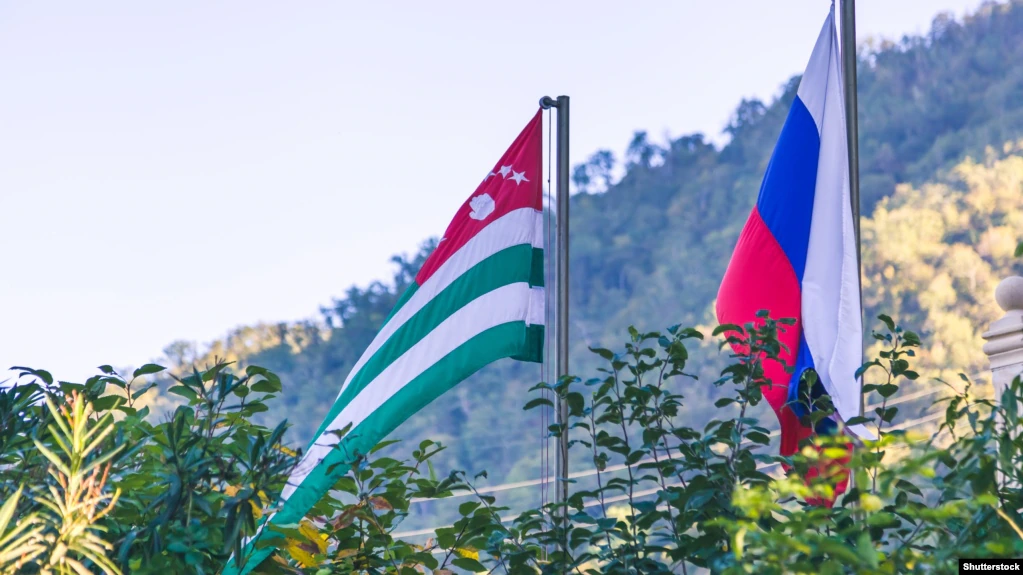
On November 12, 2020, Moscow and Sukhumi signed the “Program for the Formation of a Unified Socio-Economic Space Based on the Harmonization of Legislation.” As stated at the time in the Kremlin, the document was a logical continuation of the “Intergovernmental Treaty on Alliance and Strategic Partnership” of November 24, 2014. From a formal standpoint, implementation of all provisions of this main roadmap was supposed to ensure the rapid and unhindered integration of Abkhazia into the Russian statehood framework, while in practice it meant its velvet incorporation into the Russian Federation.
It should be recalled that the 45-point document obliged Sukhumi, within a period of two to three years, to carry out radical legislative and administrative changes in the political and socio-economic spheres, bringing them into strict conformity with Russian realities.
However, things turned out as usual—the deadlines were not met. And not because of a lack of capacity, but because Sukhumi adopted an openly defensive position, attempting to avoid total absorption.
When all reasonable deadlines had passed, at the end of March Moscow’s curator for Abkhazia, Deputy Minister of Economic Development of the Russian Federation Dmitry Volvach, arrived in Sukhumi. Following meetings with the de facto leadership, it was announced that the parties had approved a new stage of the legislative harmonization program for 2024–2025. Its implementation, according to the statement, would ensure Abkhazia’s “final adoption of regulatory acts aimed at strengthening the unified socio-economic space between the two countries.”
Since the sworn allies and partners have spoken of launching a second stage, everything that preceded it may be considered the first. So what remains in the final analysis of what Moscow sought to obtain and what it managed to achieve?
To begin with, in 2021 Moscow nevertheless pushed through the annexation of the border village of Aibga, which, according to the territorial division of the USSR, belonged to the Abkhaz Autonomous Republic of the Georgian SSR. This territory has now been transferred to Russia’s Krasnodar Krai, despite the fact that a year earlier Abkhazia’s de facto leader Aslan Bzhaniya, after meeting President Putin, assured that Russia had no intention of annexing Aibga and that Sukhumi and Moscow would resolve the issue as befitted their closest allies.
The second issue that can be credited to Russia is the transfer of the territory of the Sukhumi airport to a Russian investor—not merely on preferential terms, but on terms extremely disadvantageous for Abkhazia.
Third is the transfer into Russian ownership of the so-called Pitsunda state dacha—186 hectares of a unique relict nature reserve with extensive maritime waters, which under the principle of extraterritoriality have officially been removed from local jurisdiction and placed under Russian jurisdiction. To be frank, Abkhazians resisted this to the end, but Moscow ultimately forced compliance with its “persistent request.” It is important to note, however, that in this case Abkhazians kept a fig in their pocket, unilaterally attaching such undesirable reservations to the agreement that the Kremlin lost its temper in relations with Sukhumi. The Russian Ministry of Foreign Affairs issued an official note notifying Sukhumi of the unacceptability of such behavior. What the Abkhaz side will do next remains unclear, but this issue can also be counted as a gain for Russia.
Fourth, in September 2023, following another visit by Bzhaniya to Moscow, plans were announced to deploy a new permanent Russian Navy base in the Ochamchira district. Construction has not yet begun, but design work is underway. In Abkhaz expert circles, attitudes toward this issue are mixed. Some explain the construction as necessary for ensuring security, while others are aware of the inherent risks and believe Ochamchira could become a legitimate target for Ukrainian armed forces, especially given statements by Ukrainian officials.
Thus, with varying degrees of effectiveness, Moscow managed to pressure Sukhumi on four issues. Now let us consider the fronts of harmonization where Sukhumi has so far managed to avoid suffocation in the Kremlin’s embrace.
An unequivocal victory can be considered the adoption of the law “On the Ratification of the Agreement between the Russian Federation and the Republic of Abkhazia on the Settlement of Issues of Dual Citizenship” on Sukhumi’s terms. In particular, Sukhumi rejected simplified procedures for granting Abkhaz “citizenship” to Russian citizens, which would have enabled Russians to purchase real estate in Abkhazia, altered the demographic balance, and ultimately deprived Sukhumi of its last levers of resistance to Russian absorption. The simplified citizenship procedure provides only for Abkhaz residents obtaining Russian citizenship.
As for the remaining issues Moscow sought to impose, Sukhumi has so far managed to delay. First and foremost, this concerns the acquisition of real estate in Abkhazia by Russian citizens. Since the issue could not be resolved directly, active lobbying is now underway for the draft law “On the Legal Status of Apartments,” which would allow Russians to officially purchase so-called apartments—essentially standard residential units adapted for permanent living. Notably, all de facto leaders have consistently supported granting Russians the right to acquire real estate and promised Moscow to finally resolve the issue, yet each time the Abkhaz public strongly resisted these attempts. This time was no exception: the draft law on apartments became bogged down in “parliamentary labyrinths” and, despite Russian pressure, has still not been adopted.
In addition, together with this draft law, Sukhumi was supposed to adopt two more “intergovernmental” agreements: “On the Mutual Recognition and Enforcement of Judicial and Arbitral Decisions in Economic Matters” and “On the Implementation of Investment Projects in Abkhazia by Individuals.” Taken together, the apartments law and these agreements were intended to open the floodgates to both Russian demographic expansion and absolute dominance of Russian business in the local economy.
Another point of the 2020 Agreement on the formation of a unified socio-economic space also envisaged regulation of the activities of non-profit organizations and foreign agents. Despite energetic attempts by the de facto authorities to push this law through, it has so far met the same fate as the apartments law. At the same time, detentions of Abkhaz activists by Russian forces have begun in the Abkhaz sector of the Russian-Georgian border; these activists are critical of the deepening and already severe dependence on Russia. Clearly, this draft law is aimed at further isolating Abkhazia by suppressing alternative opinions, limiting the presence of international organizations, and strengthening Russia’s exclusive control over the region. If adopted, Abkhazia will definitively proceed along the path of so-called “Tskhinvalization”—that is, complete closure under a dense Russian cover.
The final and very important point concerns privatization of the energy sector, an issue on which Moscow also insists strongly. The prolonged collapse of the energy sector has a direct impact on Abkhazia’s internal political situation. One of the key promises made by Aslan Bzhaniya at the start of his “presidency” was to resolve energy problems. Russia, for its part, is exploiting growing public dissatisfaction stemming from the unresolved crisis. It is telling that one of the central provisions of the November 12, 2020 program is directly related to energy.
The de facto government proposes “de-statization” of the sector, including leasing the Vardnili hydropower cascade to foreign investors with prospects for subsequent privatization—effectively meaning the alienation of the energy sector in favor of Russian business. The most recent attempt took place last autumn but was also blocked.
It is clear that Russia’s actions are aimed at establishing full control over Abkhazia and preparing favorable conditions for its annexation—a danger that became evident after Russia’s large-scale aggression against Ukraine and the annexation of Ukrainian territories. In August 2023, speaking on the anniversary of the Russian-Georgian war, former Russian President Dmitry Medvedev, now Deputy Chairman of the Security Council, noted that “the idea of joining Russia remains popular in Abkhazia and South Ossetia, and its implementation is quite possible if Moscow has compelling reasons.”
At the same time, it is worth noting attempts by Abkhaz society—politically and economically dependent on Russia—to resist this development. Thanks to this resistance, Russia has in certain cases been forced either to abandon or temporarily retreat from its demands. However, as historical and current facts show, Russia is prepared to go to any lengths for its imperial goals and, if necessary, will not hesitate to reapply the harshest measures.
Moscow certainly understands that it is being led by the nose, yet continues to display an uncharacteristic indulgence. The cat-and-mouse game has entered extra time. The question now is whether the opponents will need a penalty shootout or whether the matter will be decided in overtime. Given that the leaders of one of the teams are already clearly playing along with the opponent, one recalls a gloomy line from an old song:
“Where can you go from a submarine? It’s iron, and water is all around.”
Still, history has seen many twists, and perhaps Abkhazians will manage to defend their interests—like Asterix and Obelix, inhabitants of a small village on the outskirts of the Roman Empire—against powerful Rome, though it will be extremely difficult.
Razhdеn Kadzhaya