
Soroptimist International: Global Goals and the Story of a Georgian Member
21/03/2026 19:29:00 Interview, Society
Women’s empowerment is not only part of the global agenda — it is a process grounded in experience, solidarity, and shared responsibility. Soroptimist International, which operates in more than 120 countries worldwide, brings together women who work collectively to improve the lives of others — through education, economic empowerment, and engagement in community life.
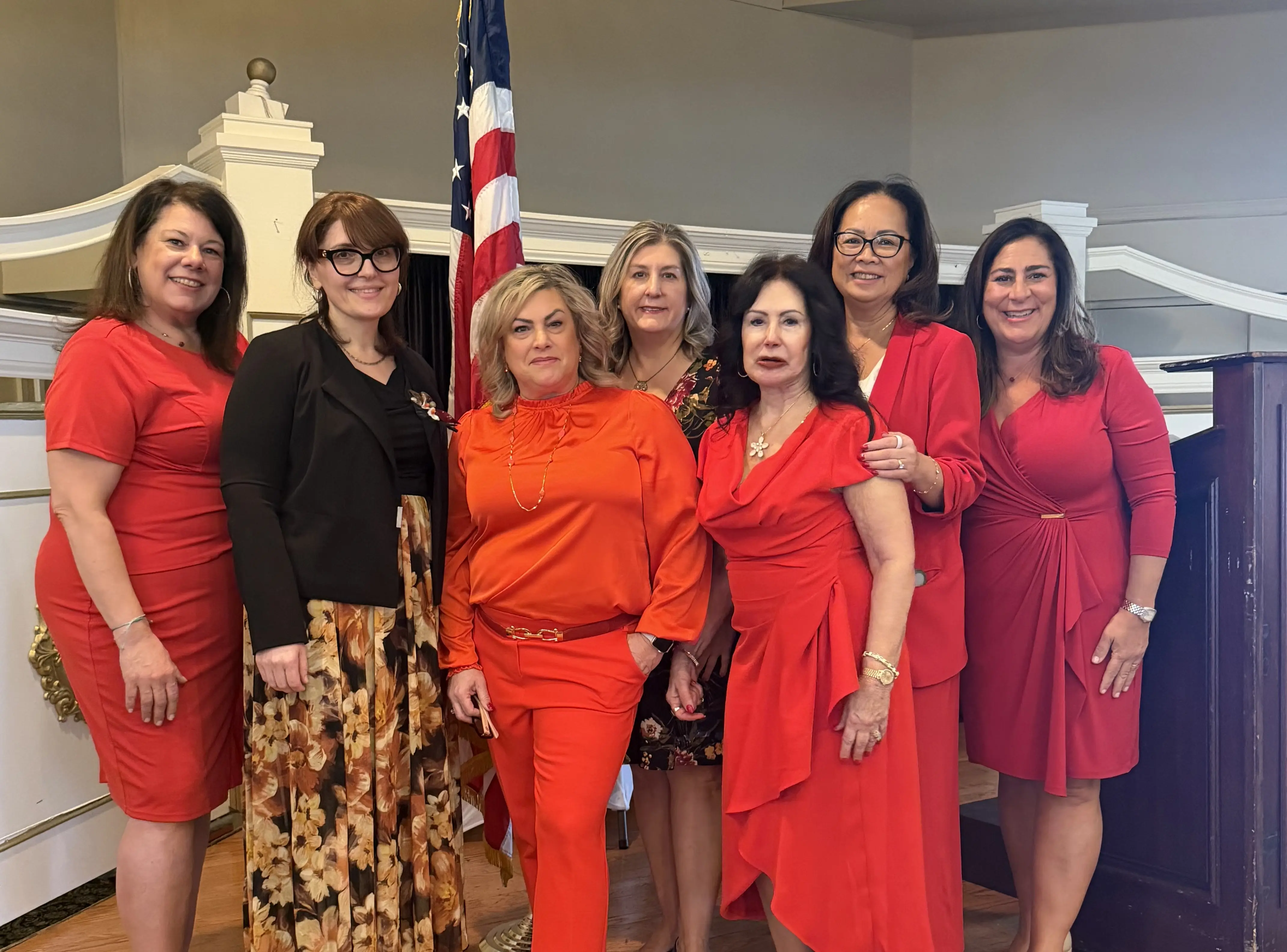
This article brings together the perspectives of the President of the Soroptimist International Staten Island Club, the organization’s Georgian member, and a representative of the board — creating a unified picture of the global mission, personal experience, and local impact.
 “Our main mission is to improve the lives of women and girls through strengthening education,” Tina Bilcher Murphy, President of the Soroptimist International Staten Island Club, tells Accent.
Ms. Tina, when and with what idea was Soroptimist International founded?
The idea of Soroptimist was formed in 1921, during the period of the struggle for women’s suffrage. The first club was founded by Stuart Morrow of Dublin, who was looking for members for an optimists’ club and, for this purpose, approached a secretarial school founded by women.
What is the organization’s main mission and goals today?
Today, the organization’s main mission is to improve the lives of women and girls through the promotion of education.
In how many countries does the organization operate, and approximately how many women have you helped over the course of its existence?
Soroptimist was initially established in Great Britain and across various European countries, and in 1928 Soroptimist International was founded. Today, the organization operates in 121 countries and helps approximately 48,000 women each year.
What types of programs do you offer to women in need of support?
We offer “Dream” programs at both the school and college levels:• Dream It, Be It — the program was launched in 2015 and has already reached more than 138,000 participants;• Live Your Dream Award — the program was launched in 1972 and has helped more than 47,000 women.
These programs help women overcome poverty and domestic violence through grants and educational scholarships.
Can you recall a story of a woman whose life was significantly impacted by your organization’s support?
A few years ago, we met a regional winner of the “Live Your Dream” award — her story was especially moving. She was a veteran whose abusive husband shot her in the face from very close range, as a result of which she lost an eye. Despite this, she managed to escape the abusive relationship and protect her children, and then continue her education with the support of this program.
What is the situation of women today, and what are the most pressing problems?
Today, the greatest challenge facing women and girls is economic inequality. Specifically, the insufficient level of women’s economic empowerment, caused by poverty, unequal pay, and limited access to education and professional development.
How can women participate in your programs and receive support?
There is an application process with specific requirements and criteria outlined on each club’s website, as well as on the official platforms of Soroptimist of the Americas and Soroptimist International.
How important is the involvement of women from different cultures to you?
The involvement of women from different cultures is especially important to me, as diverse perspectives make our impact stronger and more meaningful. When women with different experiences come together, we learn from one another, broaden our perspectives, and create solutions that truly reflect the communities we serve.
What role can immigrant women play in strengthening local communities? And I would also like to ask about the organization’s Georgian member — in your opinion, what example does Lia Kiladze set for other women, especially immigrant women?
The inclusion of diverse cultures is not just a value — it is a key foundation for growth and real impact. Lia’s membership was a pleasant surprise for our club. She is an important asset to our club — bringing a rich cultural perspective that significantly strengthens our work. We are very interested in getting to know her cultural circles more closely and finding ways to connect them with Soroptimist in order to expand our reach and impact.
How do you evaluate her role and contribution to the organization’s work?
Lia’s approach to membership is active and engagement-oriented. She is a smart and strong volunteer who is consistently involved and participates in every event with a high sense of responsibility and exceptional dedication.
The essence of Soroptimist International’s work is reflected not only in its programs, but also in how its members themselves perceive it and turn it into lived experience.
“Support for women becomes most effective when it takes a collective form,” says Lia Kiladze, a community development expert, social entrepreneurship researcher and practitioner, and a Georgian member of the organization, in an interview with Accent. 
Ms. Lia, what was your main motivation for joining an international organization supporting women?
For me, women’s empowerment has never been just a value; it is part of the practical work I have been carrying out for years, both as a researcher and as a leader of social projects. My membership in the Soroptimist International Kutaisi-Kolkha Club in Georgia (since 2019) showed me that support for women becomes most effective when it takes a collective form. As soon as I arrived in the United States, I joined the Staten Island club of Soroptimist International, where I was welcomed with such warmth and sincerity from the very beginning that I felt at home.
Based on your experience, what type of support do women most often need?
In my experience, women lack neither skills nor motivation; most often, they lack access to opportunities. This is often reflected in very practical needs: for example, a mentor who can share experience and help with decision-making; professional connections that can play an important role in building a career path; or financial support to begin something they have wanted to pursue for a long time.
Unfortunately, women sometimes face much more difficult realities — including violence, social exclusion, or situations in which they simply have no one to turn to for help. In such cases, a woman is left without not only resources, but also a safe space and support. Women with young children are in an especially difficult position. They must take responsibility not only for themselves, but also for their children’s future. This responsibility makes decision-making even more difficult, as uncertainty and fear about the future are directly connected not only to their own lives, but also to their children’s well-being.
Often, in such situations, women try to cope with their problems quietly and on their own. From the outside, everything may even appear in order, but in reality, they face serious barriers. These barriers create self-doubt and further increase their vulnerability.
That is why organized support is so important. The Soroptimist women’s club is a space where women are not left alone — here, their individual efforts are transformed into collective strength.
In your opinion, what challenges do immigrant women face in the United States?
In my observation, beyond missing family members and loved ones, one of the most difficult challenges for immigrant women is rebuilding their professional identity. Many of them have education and experience that cannot be fully realized in a new environment. In addition, there are language and communication barriers, a lack of social capital, difficulty entering the labor market, the pressure of cultural adaptation, and often a doubling of responsibilities, where family and economic self-sufficiency are equally important.
What does women’s solidarity and mutual support mean to you?
For me, women’s solidarity is a conscious choice. It means rejecting a model of competition that places women against one another, and instead developing a system based on mutual empowerment. This means recognizing and strengthening each other’s success, sharing resources, passing on experience, and, when needed, protecting one another.
In real life, solidarity becomes visible precisely when a woman is not left alone at a critical moment — whether the challenge is professional, social, or personal.
What would you say to women who are currently in a difficult situation and are looking for support?
First of all, I would say that asking for help is a sign of strength, not weakness. The biggest mistake women can make is to remain in isolation. In my experience, change begins with acknowledging the problem, seeking help even from just one person, and taking small but consistent steps forward.
“The Ruby Award is presented to women who make exceptional efforts to improve the lives of others and inspire others through their own example,” Angie DePompo Seff, event organizer and a member of the board of the Soroptimist International Staten Island Club, tells Accent. 
Ms. Angie, what is the “Ruby Awards,” and what significance does this award hold?
The Ruby Award is given by Soroptimist members to women who demonstrate exceptional effort in improving the lives of others. Specifically, it is presented to women who inspire and encourage others through their actions. The award was established to recognize these women’s significant impact on society and is associated with values such as wisdom, strength, and love.
What criteria do you use to select the women who receive this award? How many women were awarded this year, and in which fields are they active?
The women are selected by members of the community based on their outstanding contributions to society and their efforts to improve people’s lives. This year, we had six honorees, including one junior honoree. They are active in many different fields and involved in multiple organizations, which makes it difficult to define their work within a single area.
What was the most important challenge in organizing this year’s event?
Every year, we aim to surpass the previous year’s results — both in terms of the total funds raised (which are used for scholarships) and the number of attendees. One of the main challenges is securing donations and gift cards from businesses. We are constantly working to come up with new and innovative ideas to achieve this goal.
What does supporting women mean to you in today’s society?
Supporting women means actively defending their rights, recognizing their achievements, and working toward building a society where everyone, regardless of gender, has equal opportunities and respect. It also involves acknowledging the systemic barriers women have faced both in the past and today, and taking active steps to overcome them. Genuine support means listening to women, taking their experiences into account, supporting policies that promote gender equality, and recognizing the challenges faced by women from different social backgrounds.
How important is cultural diversity for your organization, and what does it mean when women from different countries serve a common purpose?
Cultural diversity is extremely important, as it enriches society with diverse perspectives, values, and practices, creating a more inclusive and equitable environment. When women from different countries serve a common purpose, it reflects the strength of unity and cooperation among diverse cultures. Such collaboration leads to innovative solutions, strengthens problem-solving capacity, and contributes to building a more harmonious global society.
How would you evaluate the work of the organization’s Georgian member, Lia Kiladze?
As a new member of our organization, Lia Kiladze is always willing to help wherever she is needed most.