
Russia – Abkhazia: A Type of Absorption – “Partner-Friendly”?
30/10/2020 08:38:05 Conflicts
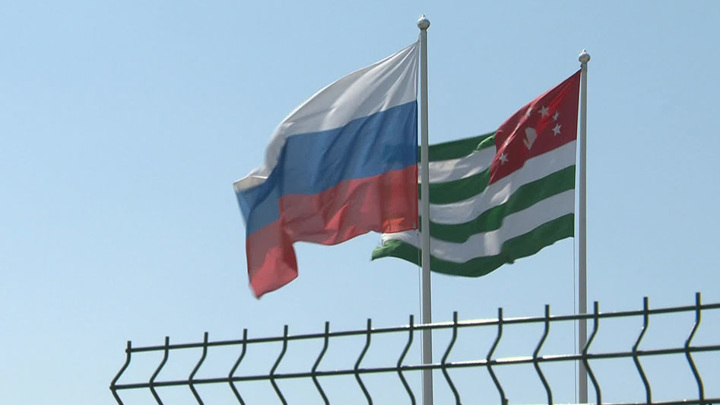
The end has not yet come—it still lies ahead. But the last (or at least the penultimate) phase of the process has already been launched: 27 years after the end of the war and 12 after recognition, Russia, which all these years presented itself to Abkhaz society as a “security guarantor,” an “equal strategic ally,” a “reliable friend,” a “main hope and support,” has moved to practically open absorption of Abkhazia.
As to why—two main versions are currently being discussed in the media and on social networks:
When it became clear that the Kremlin’s Plan “A”—the creation of its own “Kosovo” “in spite of America”—had failed miserably (apart from the Russian Federation, Abkhazia was recognized only by a small group of its overt satellites, while Kosovo has been recognized by half of UN member states and the overwhelming majority of EU and NATO members), Moscow launched Plan “B”—a scenario tentatively called “final absorption.”
Now, when Abkhazia is trying to survive in the fight against coronavirus, it is easier for the Kremlin to achieve its political goals without “unnecessary attention and noise.”
It is possible that Moscow, in choosing the moment, took both these factors into account. Perhaps there were other reasons that determined the timing… But analyzing this now makes little sense—the process, as they say, has already begun.
It would have made sense—and indeed was necessary—to analyze what was happening much earlier, from the mid-1990s, when Russia’s fragmentary absorption of Abkhazia only began. The risks should have been calculated over all subsequent years, while the Kremlin successfully and steadily implemented this task, and Abkhazia (willingly or unwillingly) gratefully agreed to the Russian ruble as the sole means of payment, to direct subsidies of the Abkhaz economy and social sphere from the Russian budget, to the possession of Russian passports by the majority of the population, to the deployment of Russian military bases, to the guarding of the “borders of an independent state” by Russian border guards, to the signing in 2014 of the so-called major Russian-Abkhaz agreement, which provided for the merger of a number of state structures and created the legal foundation for everything that followed…
It is unlikely that no one in Abkhazia noticed that this process was called “cooperation between two sovereign states” only formally. And it is unlikely that over the years no one thought of creating any kind of strategy for socio-economic and political development—one that today could be used to oppose Moscow more effectively. Although, as world experience has shown more than once, no strategies, constitutions, laws, or norms are an obstacle for Moscow; for it, the end always justifies the means—and this principle applies even to its own people, let alone others.
Be that as it may, the phase of active absorption has already begun. And almost everyone in Abkhazia notices this. First, statements began to sound from Moscow (by Zakhar Prilepin, Alexander Prokhanov, Vladimir Zhirinovsky, and others) about the need to incorporate Abkhazia into the Russian state. And although these calls were seemingly non-binding and marginal, the “president” of so-called “South Ossetia,” Bibilov, hurried to support the initiative with “both hands,” while Abkhazians met it “with bayonets.” The “Parliament” in Sukhumi stated that such initiatives are “extremely negatively perceived by the people of Abkhazia” and “do not contribute to strengthening genuinely good-neighborly and friendly relations” with Russia, while the “MFA” declared that “the political status of the Republic is not subject to revision and is irreversible.”
Therefore, at this stage, Russian Plan “B” for Abkhazia is being implemented at the level of intensified socio-economic “integration.”
Thus, in December of last year, a draft “Plan for Harmonization of Legislation for the Development of a Common Social and Economic Space” was handed over from Moscow to Sukhumi. How the de facto authorities at that time perceived it is difficult to say: amid protests in Abkhazia (formally over entirely different issues), they resigned, elections were held, and new figures came to power. At first, they received Moscow’s “partner-friendly” initiatives without enthusiasm, until the Kremlin “clearly explained” to President Bzhania—summoned to Moscow—that this was not an offer Sukhumi could refuse. Now the non-public package of “harmonizing” laws is under consideration in the Abkhaz “parliament.”
According to information leaked to Abkhaz Telegram channels, the document concerns matters covering the most important spheres of Abkhazia’s life, including:
The privatization of the energy system (clearly by Russian investors);
The currently prohibited sale of real estate to foreigners—intended to prevent the “purchase of all Abkhazia by Russian oligarchs,” something Abkhazians have tried to avoid in recent years (recently, however, in Sukhumi itself an initiative was voiced suggesting that the de facto authorities may be retreating—creating so-called special economic zones with preferential tax conditions and simplified procedures where, in essence, property could be sold to Russian citizens bypassing current legislation);
The introduction in Abkhazia of Russia’s practice of persecuting international and local NGOs and media dealing with grants (Abkhazia’s NGO and media sector has been more open to cooperation with Western foundations than Russia’s, and this freedom will now end—Moscow no longer wants to see “enemy spies” and “competitors” implementing humanitarian projects without its oversight).
In addition, the 46-point document addresses citizenship, the “state” border, customs regulation, and many other issues vital for the Abkhaz side.
Despite numerous demands on social media, no one has explained Russia’s detailed “proposals” to Abkhaz residents. Yet it is clear that after this “harmonization,” Abkhazia’s “integration” into Russia will deepen, expand, and accelerate. At some stage of Plan “B,” factual absorption may become so profound that consenting to final annexation, confederation, or whatever the Kremlin devises could turn into a simple and unnoticed formality. Even if public resistance becomes a genuine obstacle, attempts may be made to overcome it by force—Moscow has more than enough means on the ground for that.
“Abkhazia has found itself in an extremely difficult position. Our strategic partner has decided to move toward annexation. Of course, we will protest, but will it succeed? Russian military bases with modern weapons and soldiers are stationed in every district! These troops will suppress any attempts at resistance, leading to conflict that Russia may present to the world as a ‘fight against terrorists,’ and the subsequent annexation as our own ‘humble request,’” says one Abkhaz interlocutor.
There is little hope of protection from local security forces. On October 23 in Moscow, an agreement was signed between the “MFA” of Abkhazia and Russia’s Ministry of Internal Affairs to co-finance the gradual improvement of technical equipment, salaries, and social guarantees for Abkhaz law enforcement—further strengthening Russian influence.
Judging by alarmist social media commentary, Abkhazia understands that urgent action is needed—but few know what exactly to do. Confidence in both the de facto authorities and the opposition is low.
The current Sukhumi leadership has tried to hold its ground but now finds itself between society and the Kremlin. The opposition (particularly the veteran organization “Aruaa” and former officials), while calling for consolidation to “save statehood,” often demoralizes both the authorities (criticizing any alternative attempts) and society (acknowledging unequal relations with Russia while presenting Russia as the “only salvation” and fueling fears about the “collective West” and Georgia’s “engagement without recognition” policy). Their goal appears aligned with the Kremlin’s—to prevent dialogue between Sukhumi and Tbilisi.
According to Paata Gaprindashvili, director of the Georgian Reforms Associates (GRASS), delay is no longer an option; the Abkhaz de facto leadership must begin implementing cooperation with Tbilisi in trade, agriculture, healthcare, municipal development, and education. Only through such cooperation can living standards improve, businesses strengthen, and jobs be created. “Everyone understands that job creation will not come from investments by Moscow-backed Venezuela or Nauru but through free movement of citizens, goods, and business across the Inguri,” he notes.
He believes that Aslan Bzhania must now show political courage—defend his position and secure at least implicit consent from Moscow for cooperation between Sukhumi and Tbilisi. Simultaneously, Abkhaz political leaders must prevent corrupt and revanchist forces from hijacking the agenda.
As for Tbilisi, Gaprindashvili says it must recognize the danger of Moscow’s annexation policy and take more energetic diplomatic steps with Sukhumi and international partners to prevent Russia’s annexation of Abkhazia and the Tskhinvali region. The issue must be firmly placed on the international agenda, including the need for Moscow to ease restrictions on Georgian–Abkhaz relations and allow freedom of movement across the Inguri, which ordinary people on both sides desire.
Gvantsa Pipia
The material was prepared within the framework of a joint project of the news agency “Accent” and the non-governmental organization GRASS, implemented with the financial support of the Embassy of the Czech Republic in Georgia.