
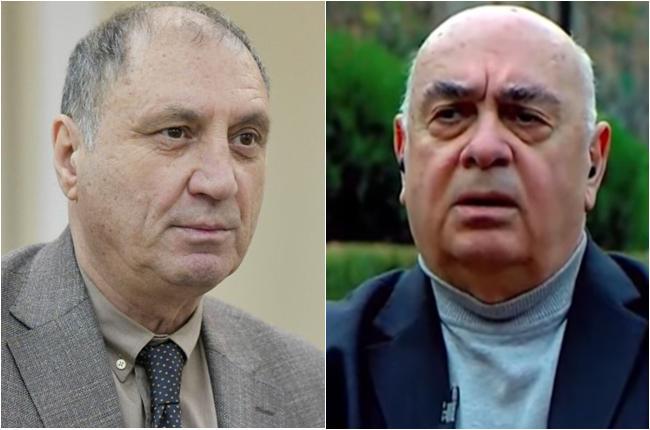
A surge of emotions in Sukhumi was triggered by an unexpected online interview in which Vakhtang Kolbaya, a member of the Supreme Council of the Abkhaz Autonomous Republic (in exile), and Sergey Shamba, Secretary of the Security Council of the self-proclaimed Republic of Abkhazia, participated together. A new nuance was that representatives of Sukhumi had previously never sat at the same table — even a virtual one — with representatives of the government in exile, which Tbilisi recognizes as the legitimate authority of Abkhazia.
Overall, the interview was not a revelation of any kind. Shamba repeated his vague formulations about the need to seek mutual understanding. According to him, the Georgian–Abkhaz conflict “should not be left to children and grandchildren,” it is “necessary to look for opportunities for peaceful coexistence,” and after thirty years “some movement toward mutual understanding can begin.” However, knowing Shamba, it is obvious that he is speaking about dialogue and coexistence between two neighboring, independent states — a notion that is not new, including for Tbilisi.
However, the mere fact of this routine interview was seized upon by the veterans’ organization “Aruaa,” which is in opposition to the current de facto leadership of the republic. It rejected the very idea of any dialogue and once again launched criticism against the de facto authorities.
“I had a question: ‘Was this dialogue sanctioned by the leadership of our country?’… Issues related to the negotiation processes between the Republic of Abkhazia and Georgia were presented by the president in the foreign policy concept of the Republic of Abkhazia, where there was a point on multi-level negotiations with Georgia. However, our society responded to this issue with protest… Ultimately, President Aslan Bzhania and his administration were forced to remove this unacceptable point for the Republic of Abkhazia,” said Temur Gulia, the leader of “Aruaa.”
Moreover, he may have been among the first Abkhaz politicians to state that Sukhumi is not interested even in recognition of independence by Georgia. And this already sounded like genuine news in Abkhaz politics.
“If we assume that Georgia recognizes us, this carries major risks and threats at this stage. What could happen? Georgian business, using Western financial support, will start buying everything up, investments will be attracted, integration processes will begin both at the state level and at the level of ordinary citizens. I believe that the Republic of Abkhazia today does not need negotiations with enemies or recognition by Georgia,” Gulia stated.
In Tbilisi, this unexpected attempt at dialogue was received with restraint, one might even say coolly. However, whereas several years ago the authorities did not respond at all to Sukhumi’s proposal to begin a dialogue, this time they spoke in a positive vein.
Parliament Speaker Shalva Papuashvili stated that he welcomes contacts with Abkhazians, noting that the main goal is to build a single successful country together with Abkhaz fellow citizens.
“Time will show how this will happen, in what formats, through what steps and processes. There are various formats of contacts with our Abkhaz compatriots, including humanitarian contacts. We use all possible channels to show our Abkhaz compatriots the advantages of living in a single state,” Papuashvili said.
Other leaders of the ruling party expressed themselves in a similar spirit.
At the same time, the opposition questioned whether this interview was merely a coincidence aligned with certain important processes, or whether it signaled changes in Tbilisi’s tactics.
“Does this mean that ‘Georgian Dream’ is changing its approach? The publication of the dialogue occurred at a very strange time, when rumors are circulating about the opening of bridges and through transit across the Inguri. Dialogue around economic issues is a harmless thing, but when we see that policy is being shaped somewhere behind the scenes of parliament and members of the government are not aware of it, this is a problem,” said independent MP Teona Akubardia.
“This kind of initiative harms our strategic interests. For us, the only party in Georgia’s occupied regions is the Russian Federation, which single-handedly makes all military and strategic decisions in Sukhumi and Tskhinvali. Any attempts to return the process to the tracks of the 1990s and to qualify it as a purely ethnic conflict between Georgians and Abkhazians, in which Russia is supposedly not involved, contradict our national interests,” said Gigi Bokeria, leader of ‘European Georgia,’ adding that any attempts to revise the negotiation format currently represented by the Geneva mechanism are fraught with risks for Georgia.
The fact is that a formalized format of “direct negotiations,” in diplomatic language, would mean an increase in Sukhumi’s international status and would effectively negate Georgia’s policy of non-recognition of the occupied regions.
At the same time, this restriction in no way prevents conducting an informal “direct” dialogue, although for this at least mutual willingness and the absence of obstacles from the Russian Federation are required.