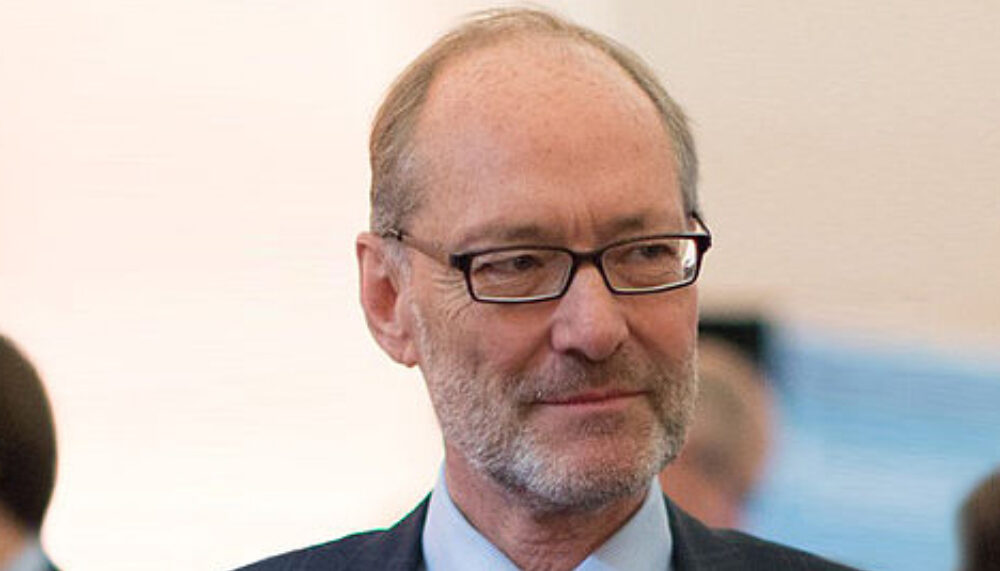

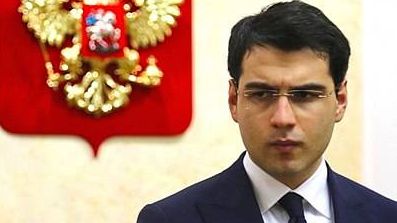
The other day, our Minister of Foreign Affairs, Inal Ardzinba, finally achieved the goal he had persistently pursued throughout his two years in the chair of Abkhaz diplomacy. Our “diplomat,” without exaggeration, declared war on a U.S. government organization — the United States Agency for International Development (USAID) — and declared its Regional Director for the South Caucasus, John Pennell, persona non grata. At the same time, he prohibited the establishment of contacts with Georgians and banned the financing of media projects covering issues of the country’s domestic and foreign policy.
One would not want to speculate about where such an initiative originated — whether this is how Inal himself envisions the role of diplomacy and his own role as minister, or whether it was suggested to him from above, from Moscow, from where he was, in fact, dispatched to Sukhum with such a clearly defined mission. Sorting out Ardzinba’s motivations, his inner experiences, if any exist, is not our concern. In the actions of all senior officials who make decisions and officially represent Abkhazia, we should be concerned only with the level of their competence and, most importantly, whether the decisions they make are beneficial for the country. Therefore, I suggest we examine this matter.
First of all, it would be useful to clarify the situation regarding Mr. Ardzinba’s citizenship. The public reliably knows only about the minister’s Russian citizenship. As for Abkhaz citizenship, as his detractors claim, he does not possess it. And if this is indeed the case, why does Inal Ardzinba occupy the post of chief diplomat of our country?!
The fact that the head of the Ministry of Foreign Affairs has a second citizenship is unpleasant, but not fatal: after all, almost all of our political leaders — perhaps all who have ever held senior positions — have a second Russian passport and, accordingly, Russian citizenship. Moreover, there are similar examples in the leadership of other countries. For instance, in neighboring Georgia, former Foreign Minister Grigol Vashadze renounced his second — Russian — citizenship only after the 2008 war, and the current President Salome Zurabishvili, in addition to Georgian citizenship, also holds French citizenship. But for one of the key ministries to be headed by a person holding only the passport of a foreign state, even the most friendly one — this is nonsense for any self-respecting state, especially given that 15 years have already passed since the recognition of our independence.
I think no one needs to be reminded that citizenship implies taking an oath of loyalty to one’s state and serving it above all else, even under conditions of a “forced assignment.” Therefore, the “murky issue” of Inal Ardzinba’s citizenship leaves a residue and gives rise to troubling thoughts.
The competence of this young man also raises very serious doubts. A protégé of the Kremlin, he was sent back to his homeland after a series of financial scandals in which he was implicated while serving as an aide to Vladimir Putin’s former “gray cardinal,” Vladislav Surkov. Incidentally, as malicious tongues in Russia claim, Surkov and his assistant embezzled funds in the topic most sensitive for Putin — Ukraine. And we are talking about colossal sums — possibly hundreds of millions of dollars.
Can the skills Inal acquired in Moscow be useful for the interests of Abkhazia? After all, the Ministry of Foreign Affairs is one of the most important agencies in the cabinet of any country. Its task is to lobby national interests at the international level, establish contacts, expand the circle of friendly countries as much as possible, reduce the risks of conflict escalation, and strive to maintain dialogue even with adversaries. And yes, this is exactly what Abkhazia needs today, but in practice, we see none of this under Inal Ardzinba.
Moreover, Ardzinba has encroached on the competence of state security agencies, searching for internal enemies and “spies” within our society, while simultaneously transforming the MFA from a conductor of the country’s foreign policy into a strange hybrid body that, for some reason, engages in media censorship, persecution of civil society activists, and harassment of the NGO sector.
At the same time, he considers it entirely acceptable to take trips in an official vehicle with diplomatic license plates and state symbols to nightlife outings in Sochi, to entertain himself in Moscow with VIP escorts, thereby damaging Abkhazia’s image. In addition, as the same malicious tongues claim, the young minister trades Abkhaz diplomatic car plates in Moscow…
To be honest, corruption does not surprise or intimidate us — we are accustomed to it. But it cannot fail to be alarming and disturbing that a young, educated, and seemingly promising Abkhaz man with such an eminent surname in the history of our state does not have a single genuine Abkhaz friend! And how is it even possible that, having spent two years in Abkhazia in the status of minister, he failed to make a single political ally or even partner?
Unfortunately, it is already obvious that for Inal, Abkhazia is something entirely alien, like a thorn in the flesh. In essence, we have a self-absorbed narcissist preoccupied with self-promotion, advancing Russian interests in Sukhum, including those that run counter to the national interests of Abkhazia.
The entire budget of Abkhazia, half of which is filled by Russia, barely exceeds the equivalent of 100 million U.S. dollars. To our great shame, our budget and our citizens are also indirectly subsidized by Georgia (for example, Inguri electricity, medical treatment of our citizens, assistance to our healthcare system with medicines and equipment). According to expert estimates, this amount — comparable to the entire revenue side of Abkhazia’s budget or even exceeding it — is twice as large as the direct assistance from the Russian Federation to our budget. And even this assistance is insufficient for the functioning of the state.
International non-governmental organizations, state and international agencies and institutions, including the now-banned USAID, as well as the European Union, the United Nations, the Red Cross, and many others, annually implement extremely important projects for our country worth between 40 and 50 million dollars. This year alone, these investments in Abkhazia will certainly decrease by several million dollars — funds that Inal Ardzinba rejected with a single stroke of the pen by banning USAID’s activities.
Who will suffer from this decision? Undoubtedly, thousands of our citizens who were beneficiaries of the work of these organizations, which perform many useful, including humanitarian, missions vital for the population. In addition, this also affects hundreds of our citizens who directly implement these projects. This is the flower of our nation, earning decent salaries that allow them not only to support their families but also to maintain independent and objective opinions, rather than depend on handouts from corrupt officials and fawn, like many of our bureaucrats, before any “Russian boss,” even one as minor as Margarita Simonyan.
Take a look at where our best, most experienced journalists work — are they not the most ardent patriots of the state?! And if anyone distrusts our media or representatives of civil society, let them provide at least one example of betrayal or even the slightest concession on their part regarding national interests over the past 30 years since the Georgian-Abkhaz war!
It is precisely thanks to the efforts of civil society that it has been possible not only to more or less normalize relations with our neighbors, but also to significantly reduce the level of aggression among the ordinary population of Georgia. Every year, citizens of Abkhazia make more than 1,500 trips to Georgia for medical purposes, and some have to travel several times. Over many years of this program’s operation, not a single Abkhaz has complained of undignified or hostile treatment, and no incidents are known to have occurred despite such a volume of visits. On the contrary, the attitude toward our people is emphatically benevolent, although it is not customary to speak about this aloud. And yes, this is largely the merit of our NGO sector.
But the worst possible consequence of the logical development of Inal’s initiatives would be the disappearance of non-state Abkhaz media outlets independent of Russian money and Kremlin “curatorship.” Beyond this line, there will be no one left to defend the national interests of the country — both from the Russian Federation itself and, unfortunately, from our own authorities represented by such “strategists” as the embezzling “debtor” of the Kremlin.
Of course, Inal Ardzinba did not ban the activities of international NGOs, agencies, and organizations without reason. In his statement, he noted that USAID’s activities have been banned in the Russian Federation since 2012, and in the Republic of Belarus since 2019. The minister referred to the “opinion of Russian and Belarusian colleagues,” according to whom “the activities of the network of Western NGOs are aimed at changing value orientations and development models, discrediting cultures, religions, and civilizations, falsifying history, and disrupting spiritual and moral ties between brotherly peoples.”
Inal Ardzinba is also concerned about the “anti-Russian” orientation of certain activities, which in reality consists of an accurate reflection of Russian foreign and domestic policy, the fight against propaganda and disinformation, and support for independent Abkhaz journalists, whose criticism still enables the people to restrain the authorities in their drive to push our Homeland deeper into Russia’s embrace.
It is hardly even worth recalling the list of countries where, alongside Russia, Belarus, and now Abkhazia, they fight civil society and independent media. Among recent examples are Niger, Afghanistan, of course Iran, North Korea, and so on.
Does our government want us to see the world exclusively through the eyes of Simonyan and Solovyov and read only “Sputnik”?! I do not think anyone would like the prospect of becoming a standard Russian backwater and living by the rules and orders under which our North Caucasian brothers are forced to live.
The “cherry on top” of Ardzinba’s harmful initiatives was the ban on projects aimed at establishing contacts between citizens of the Republic of Abkhazia and Georgia, which received approval from certain ultra-patriots like Temur Nadaraya.
What are these gentlemen offering us — eternal hostility and a life modeled after Hamas?! And why should we not instead follow in the wake of the Kremlin, which is right before our eyes actively building relations with Tbilisi?!
In general, this idea, which runs counter to humanism, is not only savagery that seriously harms the foreign policy image of our state, but is simply unworthy of any Abkhaz! Someone who wishes good for our long-suffering land and people would never forbid the establishment of good-neighborly relations — only a common enemy of all Abkhaz could do that!
According to the logic of Inal Ardzinba and his associates, if we make peace with the Georgians, all Abkhaz will instantly renounce their Abkhaz identity and betray their Homeland?! This thought is simply insulting in its grotesquely distorted perception of our nation!
Inal Ardzinba is often reminded that while working in Moscow under the patronage of the influential Surkov, he promoted in every possible way the idea of Abkhazia’s accession to Russia. Therefore, as journalists write, he has long been branded a “traitor” in Abkhaz society.
I can agree with this characterization only partially, because if Inal does not have an Abkhaz passport, then he is no traitor at all, but simply a citizen and patriot of Russia acting exclusively in its interests — even, if necessary, to the detriment of Abkhazia. He can become a traitor only after he is able to present an Abkhaz passport to the public.
Akhra Sangulia
The text contains toponyms and terminology used in the self-proclaimed Abkhazia.