
A new verse of the old song about Sukhumi airport
19/02/2024 23:16:17 Conflicts
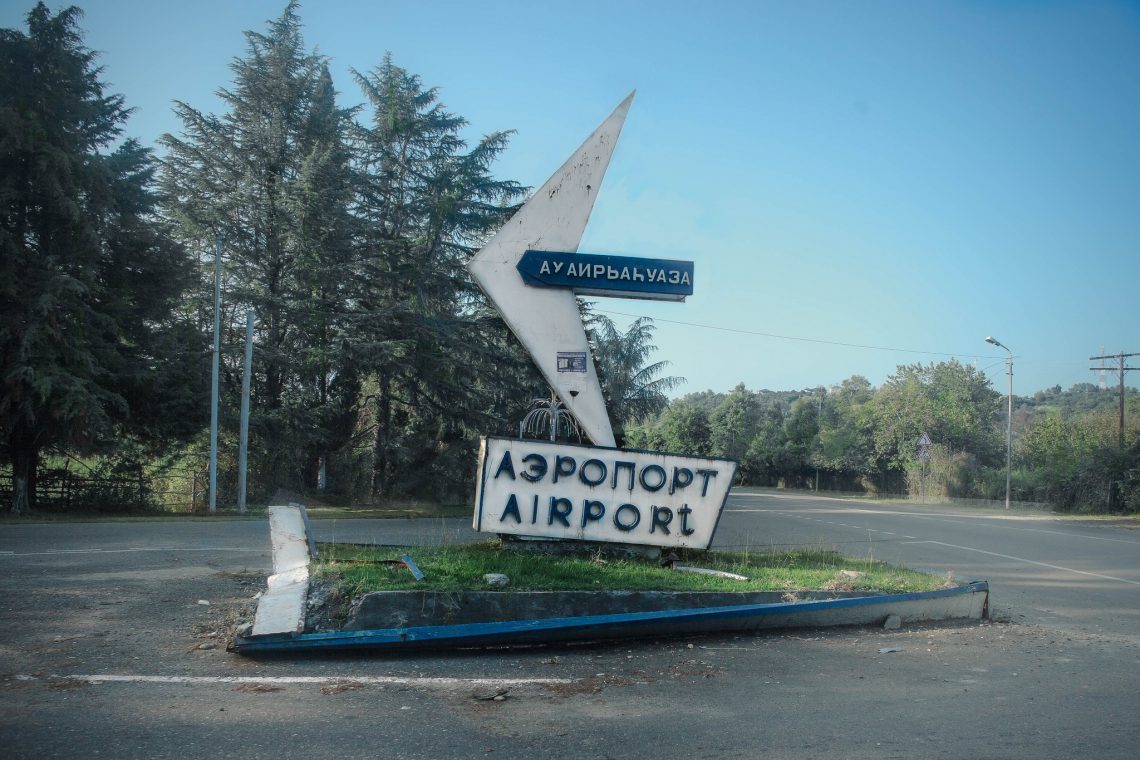
An investor is carrying out the demolition of dilapidated buildings on the territory of Sukhumi Airport; construction equipment will be delivered in the near future and workers will arrive, stated Abkhazia’s Minister of Energy and Transport, Jansūkh Nanba, a few days ago at a meeting with President Aslan Bzhania.
According to the press service of the Abkhaz leader, the president instructed the minister to provide him with a timeline and schedule of the construction works.
And that is all. Once again, no details.
Under such conditions, in order to get to the core of the matter, one has to delve into an equally obscure past and recall the history of the issue.
We have been hearing promises for a long time that within a year or two an airport would start operating in Abkhazia and Abkhaz aircraft would fly around the world. With enviable regularity, the authorities would begin telling this wonderful tale just before elections or during them. But the years passed, and the airport never appeared.
Another episode of the myth about an airport that would allegedly enrich the Abkhaz economy in an unprecedented way was presented to Abkhaz society sometime around 2021. True, at that time the authorities made a misstep in the form of the clumsy “Miss Economist” Kristina Ozgan, who leaked to journalists the real picture of what would remain under the control of the Abkhaz state after the implementation of the “brilliant” project to launch Sukhumi Airport.
If one recalls that document roughly, then after the transfer of the facility into the hands of a Russian investor, the property rights of the Abkhaz state were supposed to extend only to the access road leading to the terminal building, the front door of building No. 5, and perhaps even the chandelier in the main hall.
The scandal that arose at the time was managed to be hushed up, attributing everything to a “misinterpretation” of the documents seen in Kristina Ozgan’s possession. However, as is well known, there is no smoke without fire; doubts in Abkhaz society did not dissipate, and the negative attitude toward the project remained.
Nevertheless, on June 16, 2023, at the St. Petersburg International Forum, the same Ozgan, on behalf of the Abkhaz state, signed the document that decided the fate of Sukhumi Airport named after V. Ardzinba.
Who became the owner of the air harbor, as well as the details of the conditions under which the facility was transferred into the ownership of a certain Russian oligarch, once again remained unknown.
In 2022, in this context, the name of Kremlin oligarch Oleg Deripaska was mentioned several times. Later, however, in the autumn of 2023, information emerged that Sukhumi Airport would be restored by LLC “Infrastructural Development,” a company belonging to Rashid Rashidovich Nurgaliev, the son of former Russian Interior Minister Rashid Nurgaliev, who currently holds the post of First Deputy Secretary of the Security Council of the Russian Federation.
In short, Sukhumi Airport (as well as other assets of Abkhazia in recent times) has come under Russia’s control.
One might ask why Russia needs this. After all, the International Civil Aviation Organization, adhering to the principle of Georgia’s territorial integrity, does not recognize Sukhumi Airport as an international airport, has annulled its airport code, and since 2006 has removed information about it from its documents. That is true. However, under the current circumstances, when Russia’s logistical cooperation with other states has become significantly complicated, bypassing Western sanctions and ensuring the import and export of goods are primary objectives for Russia. And Kremlin millionaires will buy up everything that can be purchased in Abkhazia—they have, after all, a lot of freed-up capital, and given the political situation in the world, they will have nowhere to invest it for a long time.
Thus, Russia’s interest is more or less clear. But what is our—Abkhaz—interest?
From the outside, the protest of our society against the airport investment project may appear somewhat strange. After all, what normal person would refuse construction? That’s right—no one. But in the case of Abkhazia, this story could mark the beginning of the end. For those unfamiliar with the issue, I will briefly explain the reasons.
To begin with, an airport is a strategic facility. In the case of Abkhazia, it is also a dual-use facility: in peacetime, it serves civil aviation, and in wartime, it performs strategic tasks to ensure the security of the state. Such facilities, I empha—ALWAYS—must be in state ownership. If Abkhazia cannot afford the reconstruction and launch of the airport on its own, then by handing such a facility over to an investor, it must retain a dominant equity stake for the state. This was not done. Accordingly, this investment project is only detrimental to the state and brings it no benefit, including economic benefit. The authorities have simply begun to gamble with the future of Abkhazia on a large scale, putting strategic state assets up for auction.
Most recently, President Bzhania stated that technical flights from Sukhumi Airport would begin no later than July 2024, with the full launch planned for the end of December.
Well then, all that remains is once again to sit and wait. After all, the Russians have no intention of asking the opinion of the people, since they have long considered Abkhazia their territory, and our authorities have, for some time now, ceased to hide the fact that Moscow’s wishes are law for them—and that law stands far above the interests of the Abkhaz people.
Kristina Avidzba
The text contains toponyms and terminology used in the self-proclaimed Abkhazia.