
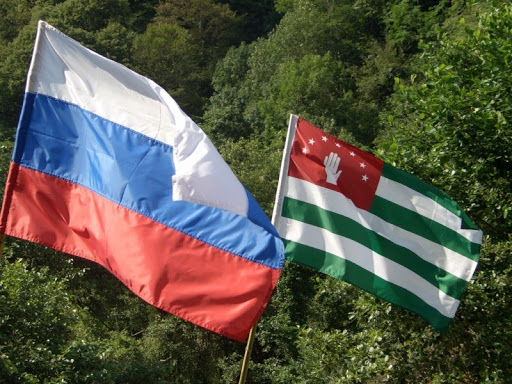
So many Russian delegations of all kinds have visited Abkhazia over the past month that one can only marvel. Either Abkhazia’s affairs are so bad, or some kind of world-shaking upheaval is brewing, that time and again economists, energy specialists, and medical officials from the neighboring state feel it necessary to conduct yet another important inspection in the republic, discussing pressing issues and problems with the leadership.
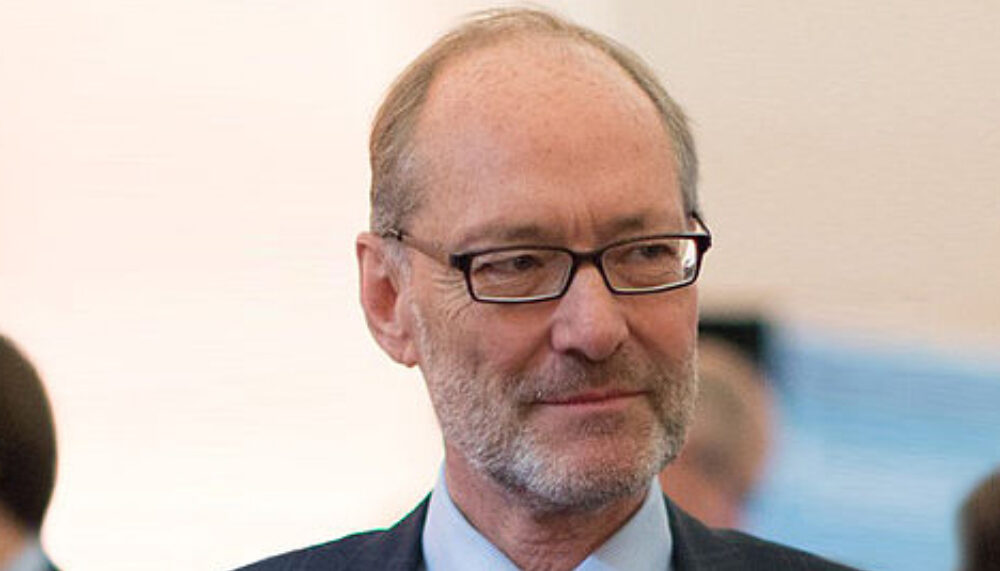
The most recent such visit seriously alarmed Abkhazia’s residents. A Russian official who was not of the highest rank moved around the country with such an enormous amount of security that even the Queen of England would have envied it. As some media wrote, the place where Deputy Minister of Economic Development Mikhail Babich decided to have a meal was cordoned off by gunmen within a radius of three blocks.
Such unprecedented precautionary measures would be understandable in a country where, for example, a war is underway, or some armed conflict is about to break out. But Abkhazia is Russia’s friend, there is no war here, and the average Russian official did not come here for untold riches or to sign a multi-billion contract. That is how residents of the republic reason, and this tactless behavior by the Russian delegation caused a certain degree of dissatisfaction.
After digging a bit in the internet space, it was possible to find out that Mikhail Babich is not quite an ordinary official. He was appointed to the Ministry of Economic Development, as a close friend of the President of Russia, precisely to put things in order. And not only that. It is to him that the head of the Russian state most often entrusts the resolution of important issues, because Mikhail Babich is known for his ambiguous approach to achieving assigned tasks.
According to official information, the reason for Babich’s visit to Abkhazia is the harmonization of the legal frameworks of the two countries and mutually beneficial cooperation in the tourism sector. In Abkhazia, in 2020 within the framework of the Investment Program, it is planned to complete the construction of 48 facilities, including in the sphere of transport and electric grid infrastructure, water supply and sewage, waste management, improvement works, and engineering infrastructure. Flood-control measures and work to укреплению shores will also be carried out.
The Russian delegation inspected numerous facilities throughout the republic, met with the prime minister and the head of state. However, not everything that the Russian official discussed with the President of Abkhazia became known to the public and media representatives.
It turned out that behind closed doors, for a long time, Mikhail Babich in a very harsh manner reproached Aslan Bzhania, expressing his dissatisfaction on a number of key issues for Russia. “Many different topics were raised by Babich. He spoke about energy—or rather, he proposed quickly resolving this issue. The discussion was about selling the entire system to the Russians. He was also outraged that the issue of selling real estate to Russians has not moved forward and demanded that this issue also be settled by the end of the year. In exchange for Russian citizenship and a good attitude,” our source in the Administration of the President of Abkhazia reported.
But that is not the most important part. According to our interlocutor, the Russian official threatened Abkhazia with all kinds of sanctions and tightening measures, going so far as to say that the post-war blockade would seem like child’s play if the leadership of Abkhazia does not stop showing any interest in establishing any kind of relations with Georgia and other states of the world. “What kind of trade relations did you decide to conduct with the Georgians without our knowledge! Do not forget who extended a helping hand to Abkhazia in difficult times, who is helping it now!”—this is how our interlocutor describes Babich’s dialogue.
Behind closed doors, the Deputy Minister of Economic Development of Russia proposed that the leadership of Abkhazia фактически reconsider the existing borders of the state, disguising it as simplifying the crossing of the Russian–Abkhaz border. In essence, Mikhail Babich demanded that the checkpoint be moved deeper into the republic, into the Gagra district, so that “people gradually get used to the fact that there will no longer be a border; it will be erased.”
This is not the first case when Russian officials of various kinds demand that Abkhazia, to the detriment of the country and the people, cede some territory or sign this or that document. Yes, most often this was done behind closed doors. But never before has any representative of Russia spoken to the Abkhaz in the language of demands and orders.
As for establishing relations, Russia’s position here is entirely unclear. Can a strategic partner—the first to recognize Abkhazia’s independence, striving so that as many countries of the world as possible support this recognition and establish relations with a small republic—regulate with whom, when, and how?! Absurd! But that is in the classical sense. If we proceed from realities, then prohibiting the establishment of dialogue is a common Russian practice, because only by this method can it keep its strategic partners under full control—so to speak, on a short leash. By depriving Abkhazia of the chance to see the world, develop, and grow stronger, Russia tries to keep the situation under control in order to continue unilaterally deciding whether this state is to be or not at all, with whom and how it should communicate, and—most importantly—against whom it should be friends.
“Does Russia need real diversification of Abkhazia’s international ties—a small country from which, at the will of the rulers of the great neighbor, one can painlessly take away both property and territory? It is unequivocal that any ‘third’ who wishes to разобраться in the relations between Moscow and Sukhumi will be ‘superfluous.’” These words were written back in 2011. And, unfortunately, since then little has changed. Ах, yes, I almost forgot—this time the issue has been entrusted to Mikhail Babich, the best friend and associate of Vladimir Putin. And this means that in the near future Abkhazia may be facing even harder times. Because, as is known, quarrelling with Russia costs more. And if you nevertheless decide to do so, you will not avoid a Maidan or some other color revolution. Here Abkhazia is in an absolutely losing position: go to the right—you will find death; go to the left—you will lose the Motherland.
P.S.
In Abkhaz society, there is once again a tense situation. This time its виновником became a certain secret dinner of representatives of the Georgian party “Alliance of Patriots.” In our republic little is known about this organization, and there had been no interest among residents in this Georgian political structure until today. And to make it clearer who they are, I will only say that an active member of it until recently was, for example, the well-known Emzar Kvitsiani, the former “overseer” of the pre-war Kodori Gorge, who, after the coming to power in Georgia of “Georgian Dream,” as if rehabilitated himself and, together with comrades from the mentioned under-party, found a place in the Georgian Parliament. In Georgia these gentlemen are considered a pro-Russian “opposition” force, while at the needed moments, on the needed issues, perfectly getting along with the ruling “Georgian Dream”—that is, a kind of “pocket opposition” to maintain weak but still pro-Russian sentiments in the country, and often traveling to Moscow...
So, according to various reports, representatives of the “Alliance of Patriots of Georgia” met with the adviser to the President of Abkhazia, Lasha Sakania. He himself disavowed this meeting, demanding that he not be accused of treason.
“Alliance of Patriots of Georgia” is a party that is small in number and, interestingly, is perceived крайне ambiguously in Georgian society. Its “attempts” to achieve the restoration of diplomatic and good-neighborly relations between Georgia and Russia, which, according to the party’s leaders, will lead to “Russia returning Abkhazia to the Georgians,” look entirely absurd. But it is exactly in this way that the “patriots,” time after time, try to earn at least some points for themselves, especially now—on the eve of elections to the Parliament of Georgia.
As for Lasha Sakania, in the republic he has a reputation as a sort of fixer, able to pass needed information, finances, documents, and much else from hand to hand. Becoming an adviser to the President of Abkhazia did not greatly strengthen his status so as to become interesting even to the weakest, yet still political party of Georgia.
Few people thought about the fact that this whole “secret meeting” happened too much at the right time and in the right place. Exactly during the period of the official visit to Abkhazia of a Russian official from among the friends of the President of Russia.
Most likely, it is about the fact that representatives of the “Alliance of Patriots of Georgia,” who although hide from their compatriots their allegiance to Russia and quietly support its policy toward the Georgian state, on the eve of elections were supposed to be handed some “humanitarian aid” from Russian “friends.” The arrival in the republic of Mikhail Babich is precisely such a удачная opportunity to hand over the present. But how to do it without attracting attention? This is where the professional skills of Lasha Sakania came in handy—who perhaps himself did not know what dirty game he was getting involved in.
Oh Pushkin, oh what a fine fellow. How skillfully they both did their job and put sticks in the wheels. I am not now concerned with the political life of Georgia. I am thinking about us, about the residents of Abkhazia.
Just think: as soon as we began openly talking about the need to establish dialogue with Georgia—trade, economic relations—immediately hysteria about treason appeared. But for some reason it seems that, hiding behind all pseudo-patriotic slogans at someone’s direction, Abkhazia may lose something greater than freedom.
It is vitally important for the people of Abkhazia not to forget their own history and to remember the “love” of the empire, which although now called differently, and seems to be our friend and strategic partner, still has not stopped wishing for the уничтожение of rebellious горцы.
Astanda Bganba
The text contains toponyms and terminology used in the self-proclaimed Republic of Abkhazia